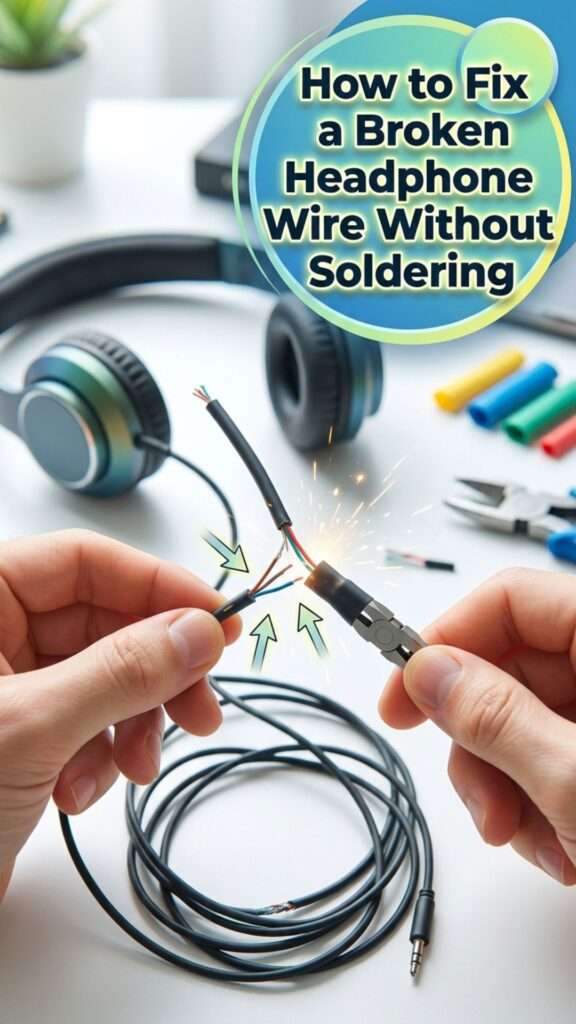
You walk down the street, completely lost in your favorite playlist. Suddenly, the right earbud drops the bass, the vocals, and everything else. You wiggle the cable near the plug.
The music comes back for a split second before vanishing again. Because clearly, the universe waits until you hit your personal best on the treadmill to kill your audio.
We all know the frustration of throwing away perfectly good gear just because one side went quiet :/. I experienced this exact tragedy last month with my favorite pair of wired studio monitors during a long flight.
I refused to let a tiny break in the copper ruin my trip. You might think you need a soldering iron, a degree in electrical engineering, and dark magic to fix this problem. You absolutely do not.
I will show you exactly how to fix a broken headphone wire without soldering. We will use simple tools you probably already have sitting in a kitchen drawer.
IMO, replacing a $150 pair of headphones over a tiny broken wire borders on insanity. Grab your broken gear, and let us restore your music.
1. Diagnosing the Silent Treatment
Before you start cutting cables apart, you must find the exact location of the break. Headphone wires usually fail in high-stress areas.
You will almost always find the culprit right near the headphone jack or right where the main cable splits to go to your left and right ears.
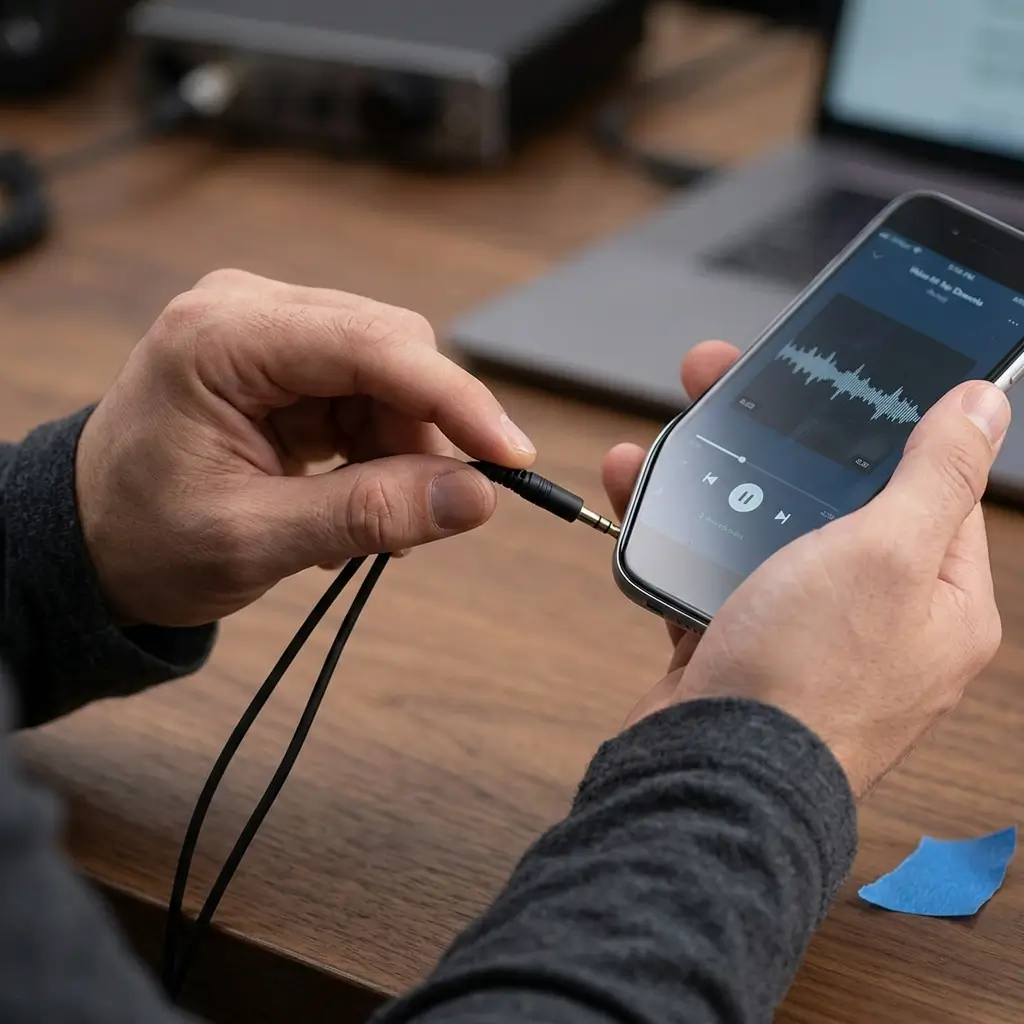
Plug your headphones into your phone or computer. Play a track with a continuous, loud beat. Bend the wire gently back and forth, starting at the plug and moving slowly up the cable.
Listen closely for any crackling, popping, or sudden bursts of music. When you bend a specific spot and the sound abruptly cuts in or out, you found your target. Mark that exact spot with a piece of tape or a marker so you do not lose it.
2. Gathering Your MacGyver Toolkit
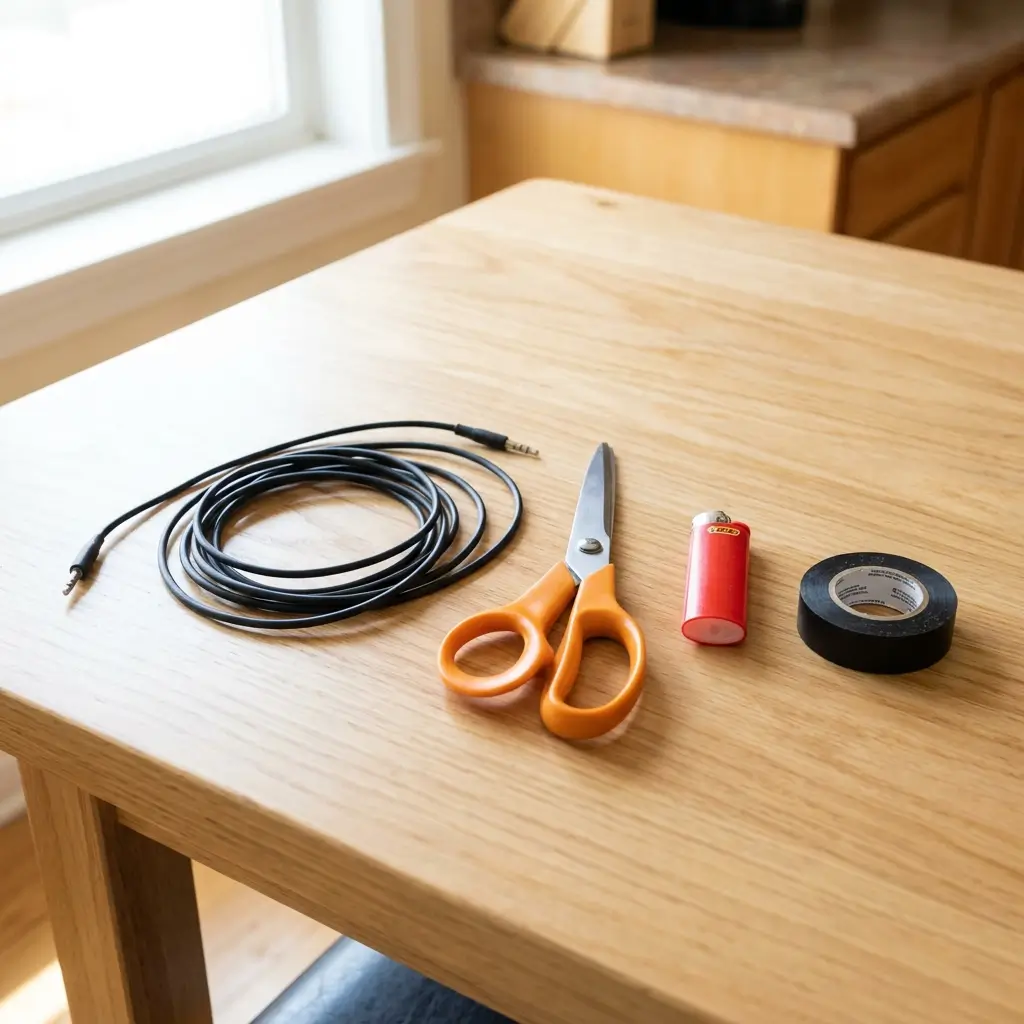
You do not need fancy electronic equipment for this repair. You just need a few basic household items. I recommend clearing off a well-lit table so you do not lose track of the tiny wire strands.
Grab the following items before you begin:
- Sharp scissors or wire strippers: You need these to cut the cable cleanly and strip the outer rubber.
- A simple lighter: Use this tool to burn off the invisible enamel coating on the inner wires.
- Electrical tape: This tape will isolate the tiny wires and prevent them from shorting out.
- Fine sandpaper (optional): Grab this instead of a lighter if you prefer not to play with open flames.
3. Understanding Headphone Wire Anatomy
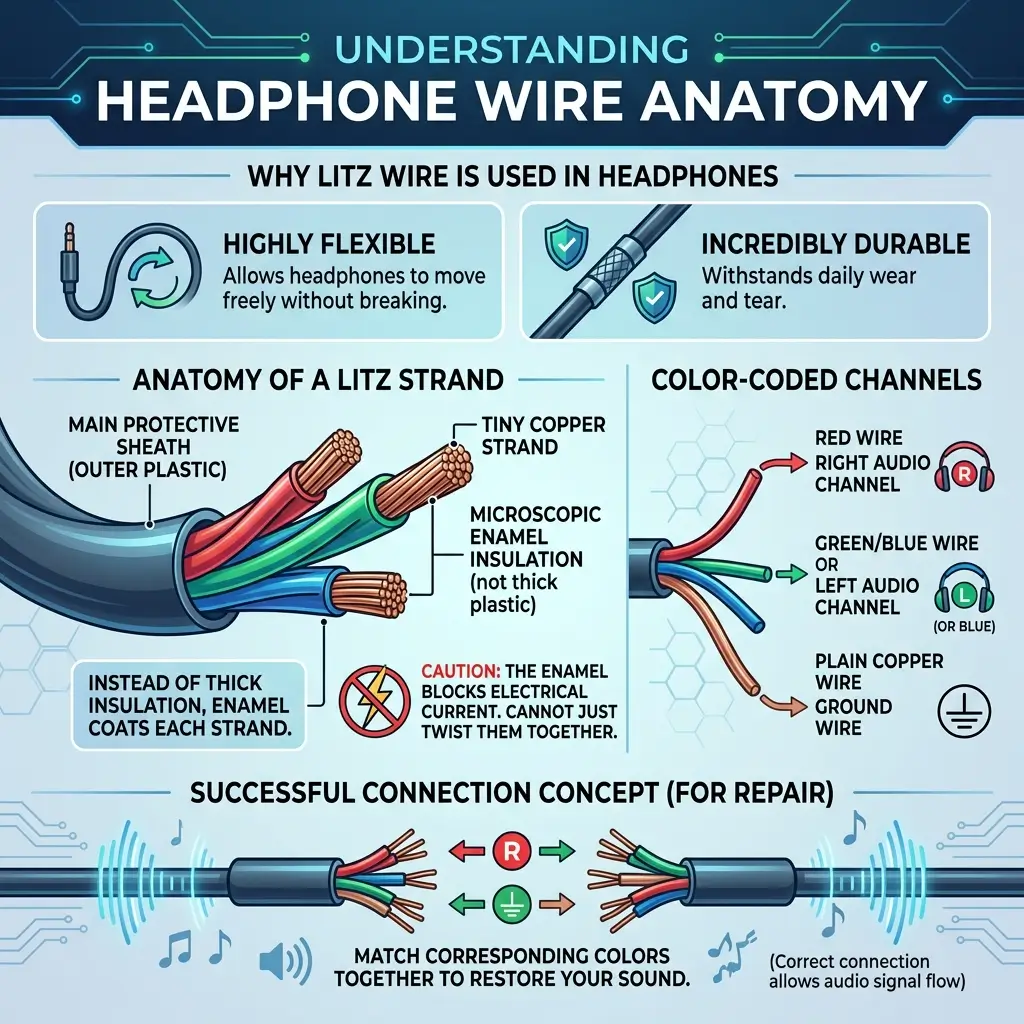
Have you ever cut open a headphone cable and found weird, colored string inside instead of normal copper wire? Manufacturers use Litz wire for headphones. This specific design makes the cables highly flexible and incredibly durable.
Instead of wrapping the wires in thick plastic insulation, manufacturers coat each tiny copper strand in a microscopic layer of colored enamel.
This colored enamel acts as the insulation. You cannot just twist these colored wires together and expect them to conduct electricity. The enamel blocks the electrical current completely.
You will usually see three distinct colors inside the main cable. Red indicates the right audio channel. Green or blue indicates the left audio channel. The plain, copper-colored wire acts as the ground. You must connect matching colors together to restore your sound.
4. Step-by-Step: The Fix
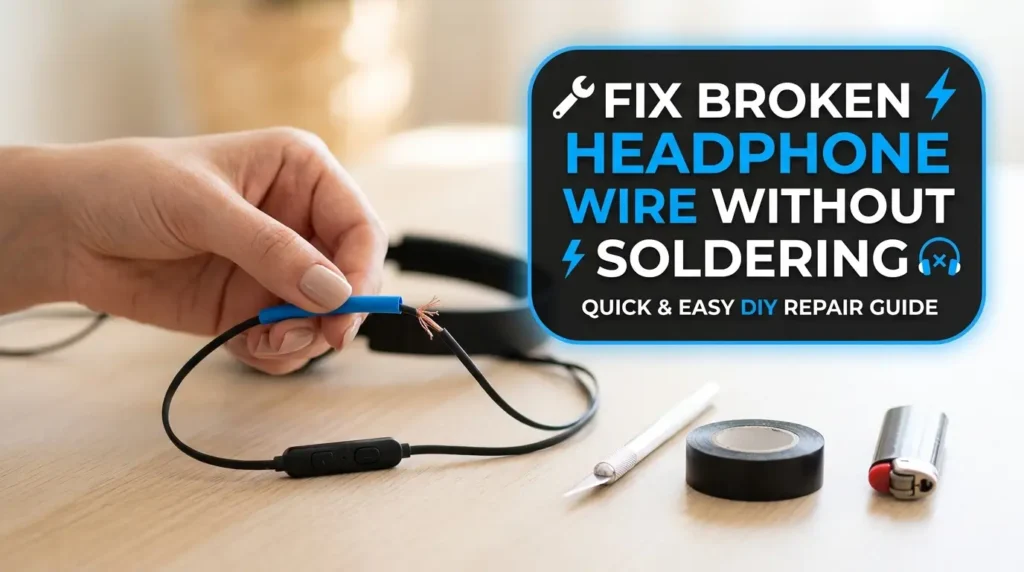
Follow these steps carefully. You will need a steady hand, but I promise the process feels completely straightforward once you understand the mechanics.
Step 1: Making the Cut
Take your scissors and cut the headphone cable completely in half, right at the spot you marked earlier. Yes, this feels terrifying. Do it anyway. You just removed the broken section of the wire from the equation.
Now, cut about an inch of cable off each newly severed end. This ensures you remove any frayed or internally damaged copper. You want fresh, healthy wire for your repair.
Step 2: Exposing the Wires
Use your wire strippers or scissors to carefully remove the thick rubber outer jacket from both ends of the cable. Expose about an inch and a half of the inner colored wires.
Work slowly here. If you squeeze the scissors too hard, you will cut right through the delicate inner wires and ruin your progress. I usually score the outer rubber gently and pull it off with my fingernails.
Separate the colored wires on both sides. You should see your red, green, and copper strands looking like a frayed, colorful rope.
Step 3: Beating the Enamel Boss
This step separates a successful repair from a frustrating failure. You must remove that colored enamel coating. If you skip this, your wires will never conduct audio.
Take your lighter and ignite it. Pass the tip of the flame quickly over the exposed ends of the colored wires for about one second. You will see the enamel flash and burn away.
FYI, holding the flame too close or too long will melt the copper into useless ash. Move quickly. Once the wires cool down, gently wipe away the charred soot with your fingers or a piece of rough cloth. You should now see shiny, bare copper at the tips.
If you hate using a lighter, grab your fine sandpaper. Gently scrape the colored coating off the tips of the wires until you reveal the shiny copper underneath.
Step 4: The Twist and Shout
Now you must reconnect the circulatory system of your headphones. Match the colors from one side of the cable to the corresponding colors on the other side.
Take the two red wires. Cross them over each other to form an “X” shape. Twist them together tightly, exactly like you would twist a bread tie. Make the connection as secure and tight as possible.
Repeat this twisting process for the green wires. Finally, twist the two plain copper ground wires together. Do you see how simple this is? You just created a physical bridge for your audio signals.
Step 5: Isolating the Connections
You have a new problem now. If these twisted, bare wires touch each other, they will short out. Your music will sound distorted, or it will disappear entirely. You must isolate them.
Cut tiny slivers of electrical tape. Wrap a small piece tightly around the twisted red connection. Wrap another piece around the green connection. Leave the copper ground wire bare for a moment.
Ensure no bare copper from the red wire touches the green wire. This step requires patience. Take your time and wrap the tape securely around each individual joint.
Step 6: The Final Wrap
Once you isolate the colored wires, gather all three connections together. Cut a larger piece of electrical tape. Wrap this piece tightly around the entire repaired section to seal it.
Stretch the electrical tape slightly as you wrap it. Stretching the tape activates the adhesive and creates a tighter, more permanent seal. You just built a custom, protective jacket for your repaired cable.
5. Comparing No-Solder Alternatives
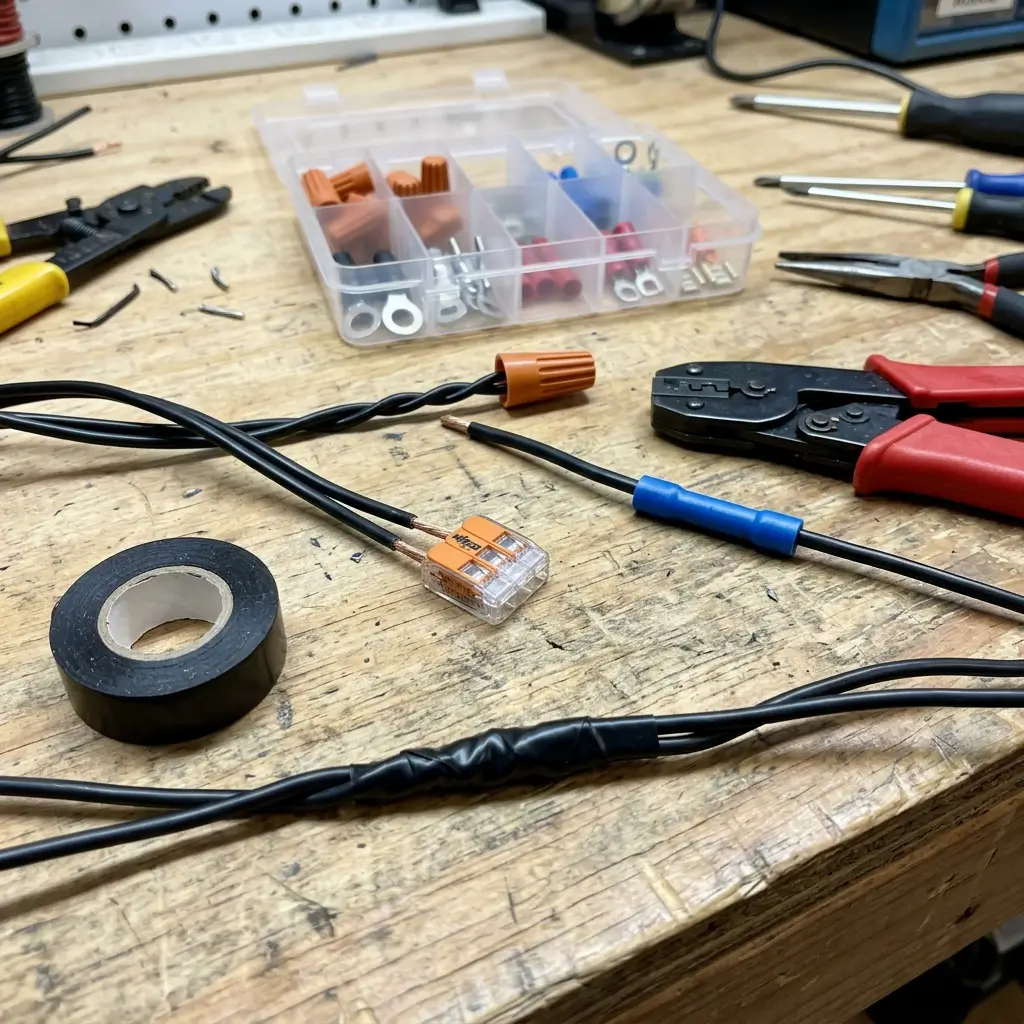
I prefer the twist-and-tape method because it costs absolutely nothing. However, you do have other options if you want a slightly more robust physical connection without buying a soldering iron.
- Crimp Connectors: You can buy micro-crimp tubes online. You slide the bare wires into a tiny metal tube and crush it flat with pliers. They provide a very strong physical bond. I find them a bit bulky for thin headphone cables, but they definitely work.
- Wire Glue: Companies sell electrically conductive glue. You twist the wires, paint the glue over the joint, and let it dry. This method provides excellent conductivity. Unfortunately, you still have to wait 24 hours for the glue to cure.
- The Twist and Tape: This method requires zero extra purchases. You complete the job in ten minutes. It lacks the brute strength of a crimped connection, but it gets you back to your music immediately.
Common Mistakes to Avoid
Even seasoned DIY enthusiasts make mistakes. Watch out for these common pitfalls to ensure your repair works on the first try.
- Burning the copper away: I mentioned this earlier, but I must repeat it. Headphone wires consist of incredibly thin copper. If you hold the lighter flame on the wire for more than a second, you will vaporize the metal. Use quick, sweeping motions with the flame.
- Forgetting to isolate the wires: Many people twist all the wires together and wrap one big piece of tape around the whole mess. This guarantees a short circuit. You must tape the red connection and the green connection separately.
- Using standard tape: Do not use scotch tape or masking tape for this job. Standard office tape lacks the necessary insulation properties and the stretchable adhesive required to seal the wires. Always use proper electrical tape.
Testing Your Handiwork
Plug your repaired headphones into your device. Play your favorite track. Do you hear the bass kicking in the left ear? Do the vocals sound crisp in the right ear?
If you only hear music in one ear, you likely have a bad connection on one of the colored wires. If the music sounds echoey or misses the main vocals, your ground wires probably came loose.
Do not panic if it fails on the first try. Unwrap the tape, burn off a little more enamel, and twist the wires together more tightly. I had to redo my first repair three times before I perfected the lighter trick.
6. Why You Should Fix Instead of Replace
Electronic waste presents a massive problem globally. Manufacturers design many modern accessories as disposable trash. By fixing your gear, you directly fight back against this wasteful culture.
Furthermore, repairing your own equipment gives you an incredible sense of satisfaction. You rely on your own two hands and your brain to solve a problem. Plus, you save a significant amount of money. You can spend that saved cash on new music or concert tickets instead of a replacement cable.
Do you really want to throw away perfectly good speakers just because a millimeter of copper snapped? I certainly do not. I want to keep my favorite gear running for as long as humanly possible.
Setting Realistic Expectations
I need to give you an honest warning here. A twisted and taped wire will never possess the same tensile strength as a factory-sealed cable. If you yank your headphones hard out of your backpack, you will likely pull your repair apart.
Treat your newly fixed cable with a little extra respect. Avoid bending the taped section sharply. If you want to reinforce the repair, you can slide a piece of heat-shrink tubing over the cable before you twist the wires, then shrink it down over the tape at the very end. This adds an excellent layer of physical armor.
Even with careful use, this fix might eventually come loose after a few months. When it does, you already know exactly how to fix a broken headphone wire without soldering. You simply repeat the process.
Wrapping Up Your Audio Adventure
You just learned a highly practical, incredibly useful life skill. You defeated the enamel coating, twisted the tiny copper strands, and restored the audio signal. You saved your headphones from an early grave in a landfill.
We covered the diagnostic process, the necessary tools, and the exact steps to strip and connect Litz wires. We also discussed alternative methods like crimping and conductive glue. You now possess the knowledge to keep your wired audio gear alive indefinitely.
Next time your friend complains about their broken earbuds, offer to fix them. You can show off your new MacGyver skills and save their day. Grab your scissors, light up that enamel, and keep the music playing!