
Choosing headphones for children is not quite the same as buying a pair for yourself. Kids need something comfortable enough for schoolwork, movies, games, and travel, but parents also have to think about listening volume, durability, fit, and how easily the headphones connect to their devices.
The good news is that there are several child-friendly models worth comparing before Black Friday. From the wireless Belkin SoundForm Mini 2 to the noise-canceling JBL Junior 470NC, these headphones offer different features for different family needs. Some are better suited to classroom tablets, while others make more sense for long journeys or children who prefer wireless listening.
In this guide, we look at eight kids’ headphones worth watching for Black Friday 2026. You will find their main features, potential drawbacks, intended users, and practical buying advice to help you choose a pair that suits your child.
Black Friday 2026 falls on Friday, November 27. Retailers may announce promotions before the official date, but prices and availability can change. The products below are recommendations to watch, not confirmed Black Friday discounts.
Disclosure: This post may contain affiliate links. If you purchase through these links, we may earn a small commission at no extra cost to you. This does not affect our recommendations. Check the retailer’s listing for current pricing, product specifications, warranty information, and availability.
Table of Contents
- Why Shop for Kids’ Headphones on Black Friday?
- 8 Best Kids Headphones to Watch for Black Friday 2026
- How to Choose the Right Kids’ Headphones
- Practical Tips for Getting the Best Black Friday Results
- Common Mistakes to Avoid
- Pros and Cons of Volume-Limited Kids’ Headphones
- Frequently Asked Questions
- Key Takeaways
- Conclusion
Why Shop for Kids’ Headphones on Black Friday?

Children use headphones for many reasons. One child might need them for online lessons, another might enjoy audiobooks during quiet time, and a third might want to watch cartoons without disturbing everyone in the living room.
Because of these different needs, it is worth comparing more than just the price. Black Friday gives parents an opportunity to look at wired and wireless models, check volume-limiting features, and compare products with additional conveniences such as detachable cables, built-in microphones, and active noise cancellation.
It can also be a good time to replace a pair that has become uncomfortable or damaged. Children can be rough with their belongings, so a well-built headband, replaceable cable, and foldable design may be more valuable than a long list of advanced audio features.
One feature deserves particular attention: volume control. Some children’s headphones include built-in volume limits, while others allow parents to choose between different listening modes.
These features can help, but they are not a guarantee against hearing damage. Listening volume and the amount of time a child spends wearing headphones both matter.
Before buying, consider your child’s age, head size, listening habits, and the devices they use. A comfortable, easy-to-control pair that suits everyday needs is usually a better purchase than an expensive model with features your child will rarely use.
8 Best Kids Headphone Deals to Watch for Black Friday 2026
The following eight models cover different budgets and listening situations. Rather than assuming one pair is perfect for every child, consider what each model offers and whether its limitations matter for your family.
1. Puro Sound Labs BT2200-Plus – Best for Parents Prioritizing Volume Limiting
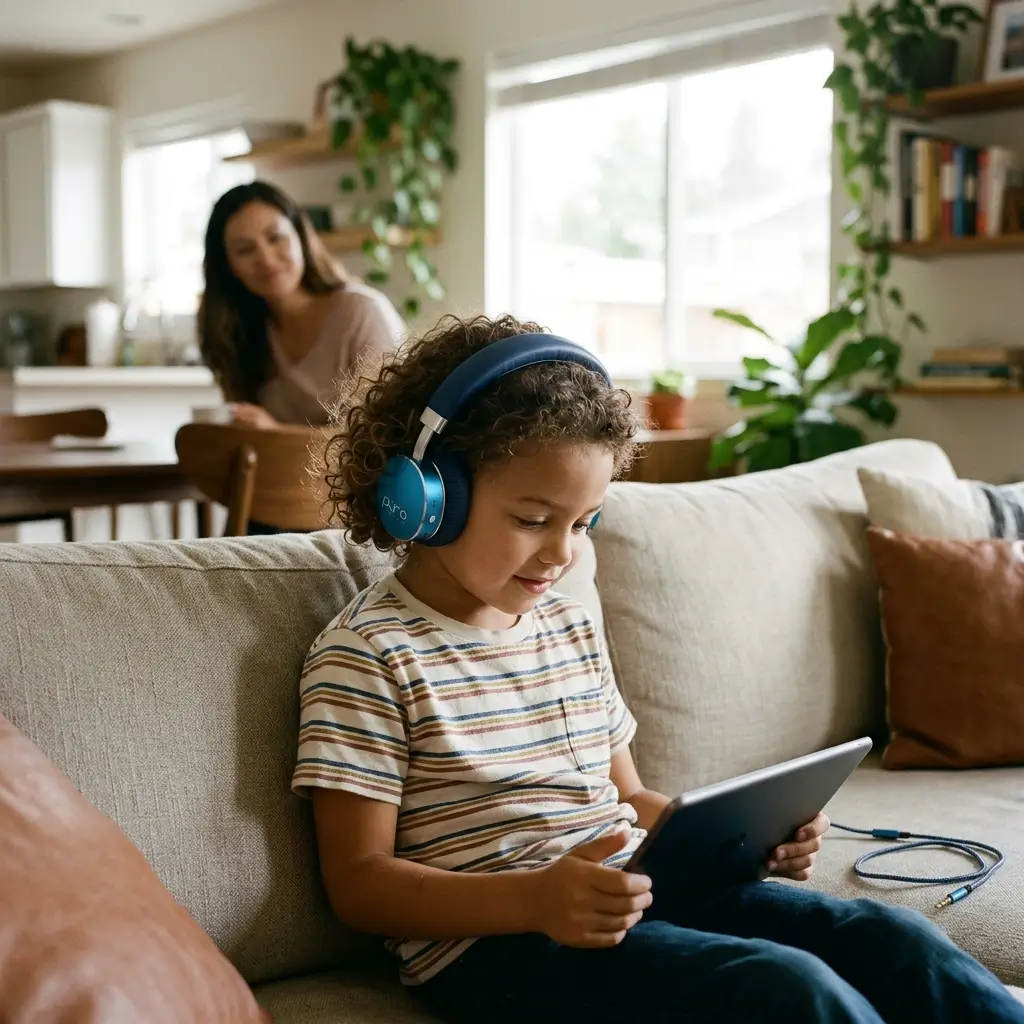
The Puro Sound Labs BT2200-Plus is worth considering if you want children’s headphones with both wireless and wired listening options.
Its design is intended for younger listeners, with padded ear cushions and a headband made for everyday use. The headphones also include a volume-limiting feature designed to help keep listening levels under control. This is an important consideration for children who regularly use tablets, computers, or phones for entertainment.
Another useful feature is the ability to listen wirelessly or connect using the supplied audio cable. That flexibility is convenient when a child uses different devices, particularly when Bluetooth is unavailable or the battery needs charging.
The BT2200-Plus is also worth comparing if you want a more substantial alternative to very inexpensive plastic headphones. However, do not assume that its construction makes it indestructible. Children should still be taught to handle the headband and earcups carefully.
What makes it worth watching:
- Wireless and wired listening options.
- A volume-limiting feature intended for younger listeners.
- Padded earcups for everyday comfort.
- A practical option for schoolwork, travel, and home entertainment.
Potential drawback: It is important to check the current product listing for battery condition, included accessories, and the exact volume-limiting behavior in both wired and wireless modes.
Best for: Parents looking for a versatile pair with a volume-limiting feature and more than one connection option.
Black Friday buying tip: Compare its price with other hybrid models, especially the Belkin SoundForm Mini 2. Check whether the included audio cable and protective accessories are part of the package.

2. iClever BTH20 – Best for Family Travel
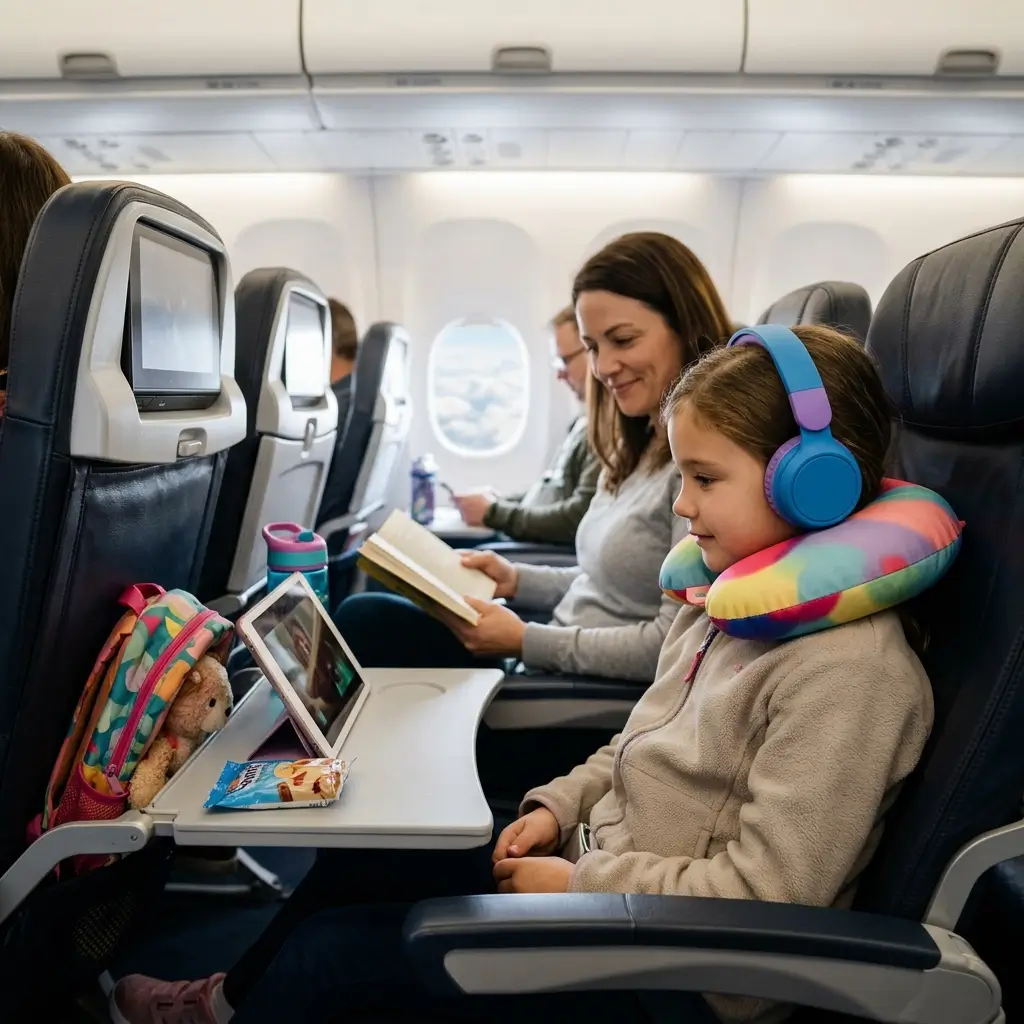
Long car journeys and airplane trips can be tiring for children. The iClever BTH20 is worth considering if you want wireless kids’ headphones with active noise cancellation.
Active noise cancellation, or ANC, uses microphones and electronic processing to reduce certain background sounds. It can be useful when traveling because it helps reduce steady noise from airplane engines and other surroundings.
This matters because children sometimes turn up their headphones when they struggle to hear a movie or story over background noise. A quieter listening environment may make it easier to hear audio without constantly increasing the volume.
The BTH20 also offers a foldable design and wireless connectivity. These features make it convenient to pack in a travel bag or use with compatible tablets and smartphones.
However, ANC does not eliminate every sound. Children should still be able to hear important announcements and instructions, particularly when traveling through airports or other public spaces.
What makes it worth watching:
- Active noise cancellation for selected background sounds.
- Wireless listening for compatible devices.
- Foldable construction for easier storage.
- A useful option for longer journeys.
Potential drawback: ANC adds another feature that parents need to understand and supervise. Check the manufacturer’s instructions for the available volume settings and battery performance when noise cancellation is enabled.
Best for: Families who travel frequently by airplane, train, or car.
Black Friday buying tip: Compare the BTH20 with the JBL Junior 470NC. Look at the actual volume-limiting settings, battery performance with ANC switched on, and comfort before choosing.
3. Belkin SoundForm Mini 2 – Best Everyday Wireless Kids’ Headphones
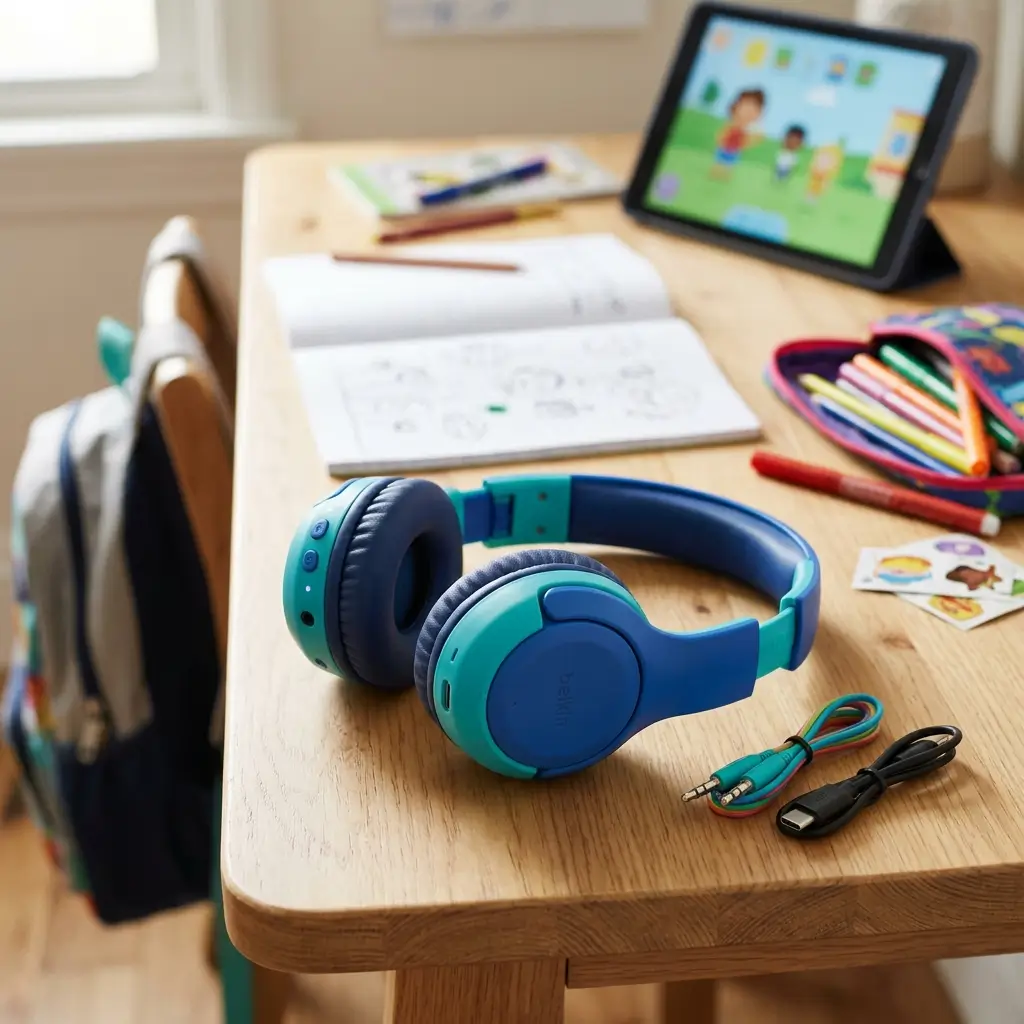
The Belkin SoundForm Mini 2 is one of the most practical models to compare if your child uses headphones for school activities, videos, games, and everyday entertainment.
Its kid-sized on-ear design has an adjustable headband and cushioned earcups. The headphones are also foldable, making them easier to store in a school bag or travel case.
Belkin lists up to 55 hours of battery life, although actual playback time depends on usage and settings. The model also includes a built-in microphone, a 3.5mm audio cable, and a feature called RockStar Mode for sharing audio with another listener.
One important detail is that Belkin specifies its 85 dB volume limit in Bluetooth mode. Parents should not automatically assume that the same limit applies when the headphones are connected using the wired cable.
The SoundForm Mini 2 is therefore a convenient option, but it is still worth supervising listening volume and checking the connection mode.
What makes it worth watching:
- Up to 55 hours of advertised battery life.
- Adjustable headband and kid-sized earcups.
- Wireless and optional wired listening.
- Built-in microphone for calls and online learning.
- Audio-sharing functionality.
Potential drawback: The on-ear design may not suit children who dislike having cushions rest directly on their ears. The stated volume limit also needs to be understood in relation to Bluetooth and wired use.
Best for: Children who regularly use headphones for school, videos, games, and family travel.
Black Friday buying tip: Compare the SoundForm Mini 2 with other wireless models based on battery life, comfort, included accessories, and the actual volume limit in the connection mode your child will use.
4. JLab JBuddies Studio Wired – Best for School and Classroom Use
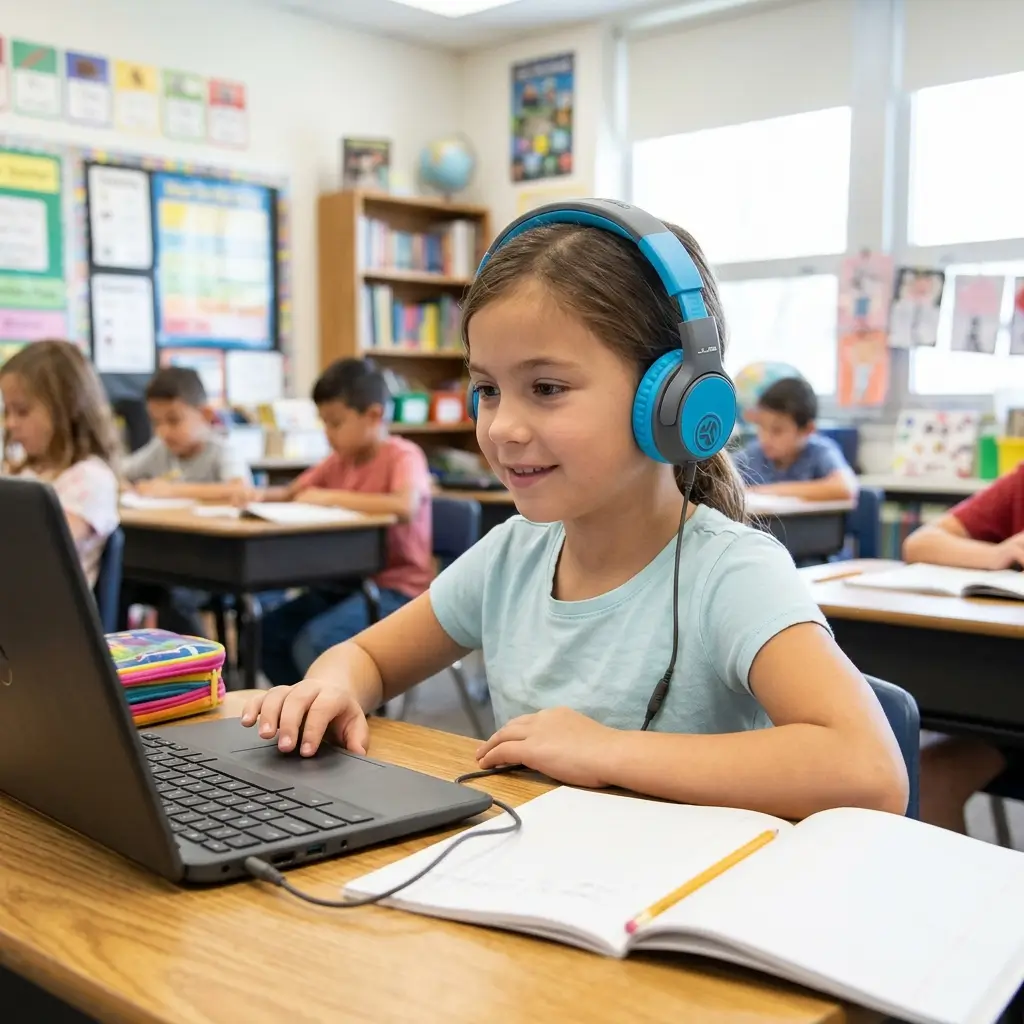
If you want to avoid charging another device every evening, the JLab JBuddies Studio Wired is a practical option.
These wired headphones connect through a 3.5mm audio jack, making them suitable for compatible tablets, laptops, and classroom devices. Because they do not rely on an internal rechargeable battery, children can use them without worrying about whether the headphones were charged the night before.
The model has a padded headband and cushioned earcups, with a foldable design that makes storage easier. JLab also lists an 85 dB volume-limiting feature for this model.
One thing to check before purchasing is whether your child’s school device has a 3.5mm headphone connection. Some newer tablets and laptops require an adapter, and the correct adapter depends on the device.
What makes it worth watching:
- Wired connection with no battery charging required.
- 85 dB volume-limiting feature listed by JLab.
- Foldable design for storage.
- Useful for compatible classroom computers and tablets.
Potential drawback: The cable can become tangled or damaged if it is pulled repeatedly. It also cannot connect to a device that lacks a compatible audio port without an adapter.
Best for: Schoolchildren, classroom activities, and families who prefer simple wired headphones.
Black Friday buying tip: Compare the price of the wired JBuddies Studio with wireless alternatives. If your child mainly uses headphones at a desk, the wired model may be all you need.
5. BuddyPhones Explore+ – Best for Sharing Audio
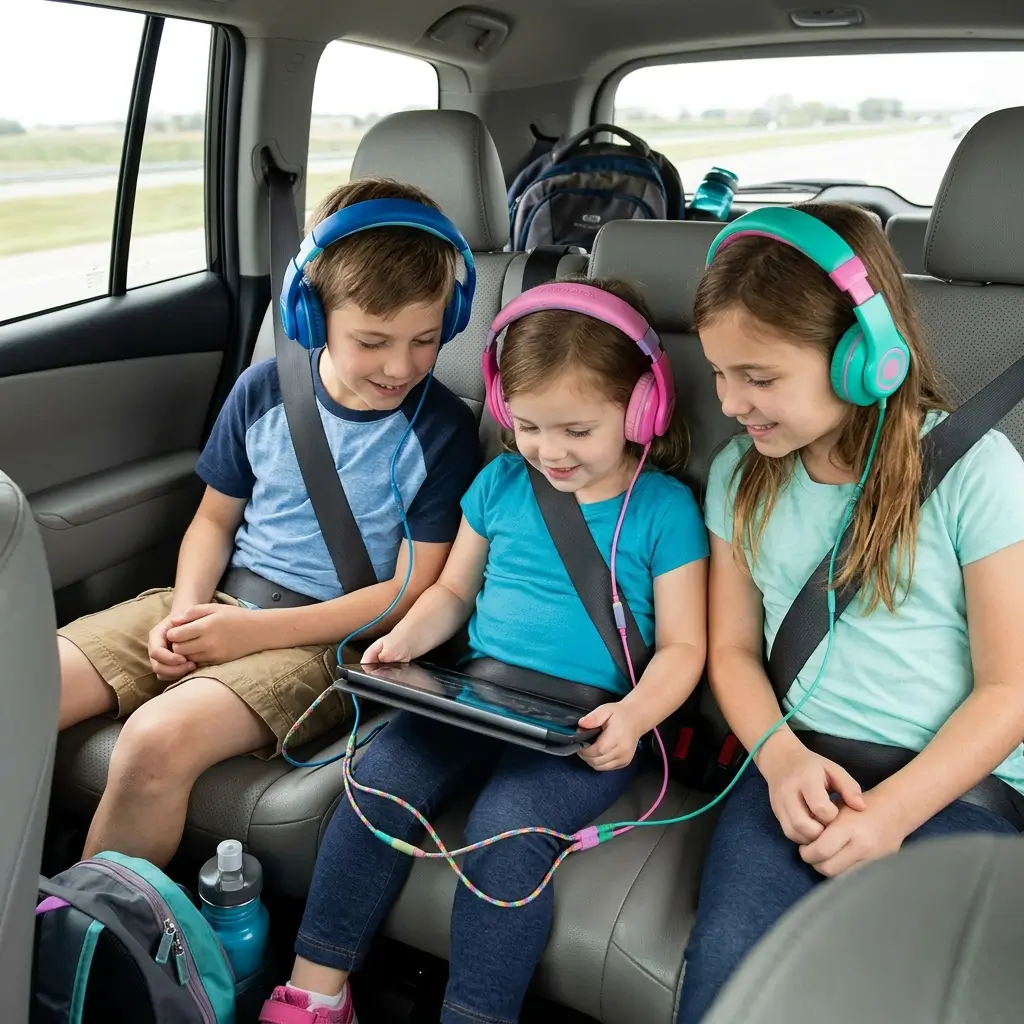
The BuddyPhones Explore+ is a useful option for families with siblings who regularly share a tablet or watch movies together.
One of its standout features is the BuddyJack audio-sharing system. The supplied sharing cable can connect additional compatible BuddyPhones, allowing up to four children to listen from one device when the appropriate cables are used.
This can be particularly helpful during long car journeys. Instead of passing one pair of headphones between children, everyone can listen to the same movie or educational program.
The Explore+ also has a foldable design, padded headband, detachable cable, and a volume-limiting feature advertised at 85 dB. The detachable cable is useful because it can be replaced if it becomes damaged.
Its wired design means you do not have to worry about charging. On the other hand, you will need to manage the cables, especially when several children are listening together.
What makes it worth watching:
- BuddyJack audio sharing for multiple compatible headphones.
- Detachable audio cable.
- Foldable design for easier storage.
- Volume-limiting feature.
- No rechargeable battery required.
Potential drawback: The sharing system requires the appropriate compatible cables. It is also a wired model, so children need to be comfortable managing the connections.
Best for: Families with siblings, shared-tablet users, and parents who want a simple wired listening solution.
Black Friday buying tip: Check whether the retailer includes the BuddyCable sharing accessory and stickers. Compare the complete package rather than looking only at the headphone price.
6. EarFun K2 Kids – Best for Adjustable Volume Modes
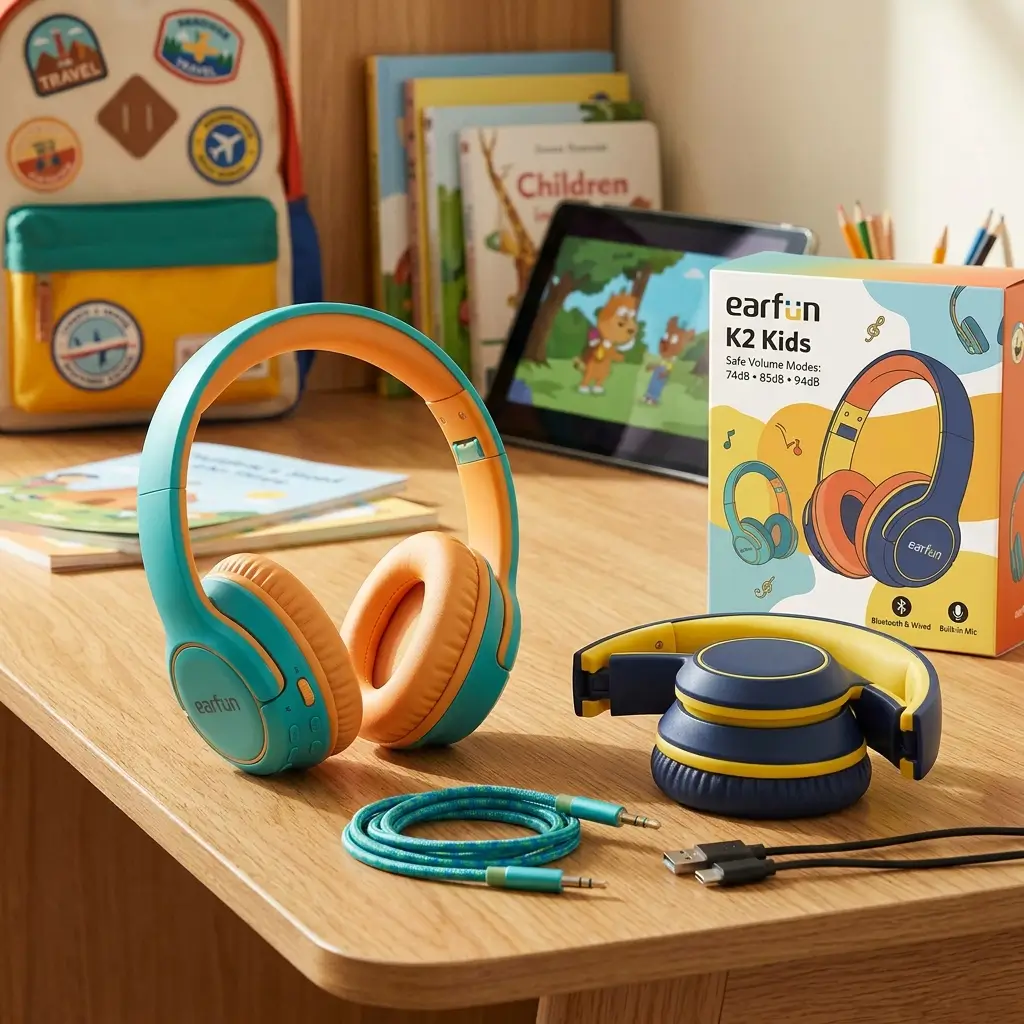
The EarFun K2 Kids is worth comparing if you want wireless headphones that offer several selectable volume modes.
Unlike products that provide only one advertised volume limit, the EarFun K2 offers different settings listed as 74 dB, 85 dB, and 94 dB. This gives parents more than one setting to consider, but it also means you need to understand exactly which mode is active.
The 74 dB option is particularly worth considering for more conservative listening. The 94 dB setting should not be treated as a safe everyday option for children simply because the manufacturer labels it for travel. Higher sound levels increase the risk associated with prolonged listening.
The K2 also offers Bluetooth connectivity, a built-in microphone, a foldable design, and a wired connection option. These features make it versatile for children who use headphones at home and while traveling.
What makes it worth watching:
- Selectable 74 dB, 85 dB, and 94 dB volume modes.
- Bluetooth wireless connectivity.
- Built-in microphone.
- Wired listening option.
- Foldable design for storage.
Potential drawback: The different volume settings require parental attention. Do not leave the headphones in the 94 dB mode for routine use. Check the current manual to understand how to select and verify the volume setting.
Best for: Parents who want selectable volume modes and flexible wireless and wired connectivity.
Black Friday buying tip: Compare the available volume modes and the ease of parental control with other children’s headphones. A lower maximum setting may be more useful than a long list of features.
7. Skullcandy Grom Wireless – Best for Older Children Who Want a Modern Design
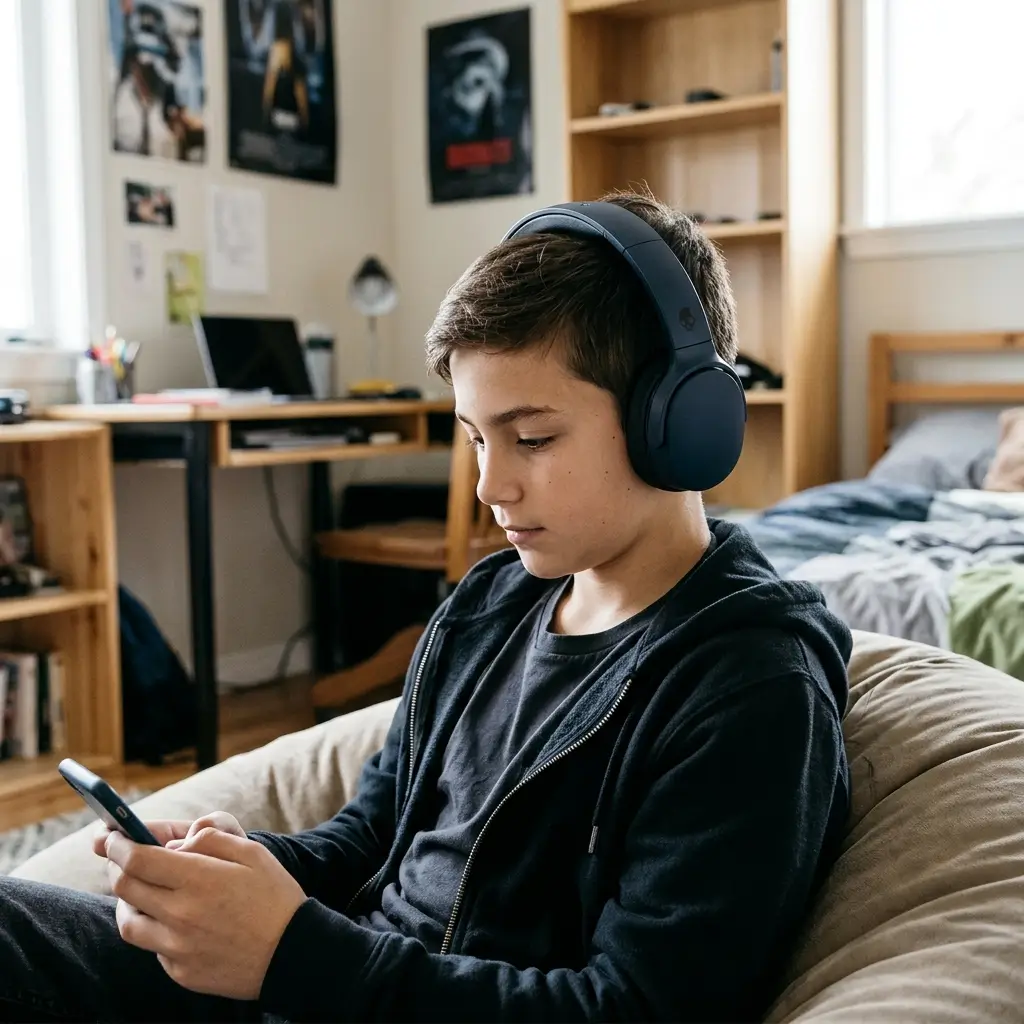
Some children outgrow brightly colored cartoon-style headphones and want something that looks closer to the headphones used by adults. The Skullcandy Grom Wireless offers a more modern over-ear appearance while retaining several child-focused features.
It includes Bluetooth connectivity, an adjustable headband, foldable construction, and a built-in microphone. Skullcandy also lists up to 45 hours of battery life, a removable AUX cable, and a share audio port.
The model is advertised with an 85 dB volume limiter, but parents need to pay attention to its override function. Skullcandy explains that the override can disable the volume limit, allowing higher output. This is not a feature to leave enabled for children without supervision.
The Grom can be a practical option for older children who want wireless listening and a less childish appearance. Its adjustable design also makes it easier to store and carry.
What makes it worth watching:
- Wireless Bluetooth connectivity.
- Up to 45 hours of advertised battery life.
- Foldable design and adjustable headband.
- Removable AUX cable for wired listening.
- Audio-sharing port.
- Built-in microphone.
Potential drawback: The volume-limit override can allow listening above the advertised limit. Parents should understand how the feature works and ensure it is not accidentally activated.
Best for: Older children who want a more grown-up design and wireless convenience.
Black Friday buying tip: Check the exact Grom model and included accessories. Pay particular attention to the volume-limit override rather than assuming the 85 dB feature cannot be bypassed.
8. JBL Junior 470NC – Best Premium Kids’ Headphones for Noise Cancellation
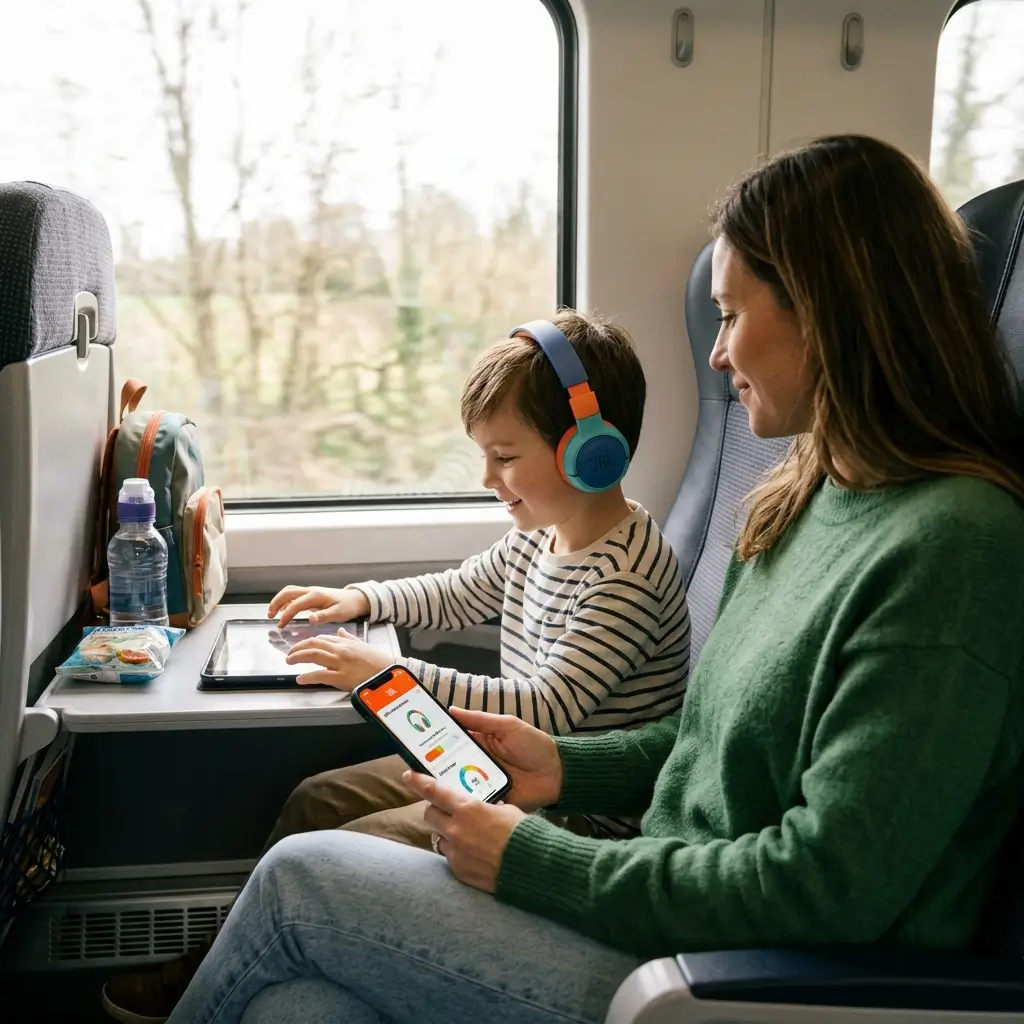
The JBL Junior 470NC is a strong option to compare if you want children’s headphones with active noise cancellation and parental listening controls.
One of its most useful features is the JBL Headphones app. Parents can use the app to customize the maximum volume and set daily listening-time limits. The app also provides listening activity reports, making it easier to monitor how long a child uses the headphones.
JBL lists up to 50 hours of playback with ANC switched off and up to 28 hours with ANC switched on. The headphones also include a microphone, foldable design, and a detachable 3.5mm audio cable.
Noise cancellation may be helpful during flights or noisy journeys, particularly when children struggle to hear audio over background sounds. Still, it should not replace supervision or reasonable listening breaks.
What makes it worth watching:
- Active noise cancellation.
- JBL Safe Sound with a listed maximum output below 85 dB.
- App-based parental volume and listening-time controls.
- Listening activity reports.
- Up to 50 hours of playback with ANC off.
- Wired listening option and foldable design.
Potential drawback: It is a more feature-rich option, so it may cost more than simple wired children’s headphones. ANC also reduces the advertised battery life.
Best for: Parents who want more control over listening volume and time, particularly for children who travel regularly.
Black Friday buying tip: Compare the JBL Junior 470NC with the iClever BTH20 and other noise-canceling models. Check whether the parental controls work with your phone and whether the extra features justify the price.
Quick Comparison: Which Kids’ Headphones Should You Buy?
| Model | Best for | Main feature |
|---|---|---|
| Puro Sound Labs BT2200-Plus | Volume-limiting features | Wireless and wired listening |
| iClever BTH20 | Family travel | Active noise cancellation |
| Belkin SoundForm Mini 2 | Everyday use | 55-hour advertised battery life |
| JLab JBuddies Studio Wired | School | Simple wired connection |
| BuddyPhones Explore+ | Siblings | Audio sharing |
| EarFun K2 Kids | Adjustable volume modes | 74/85/94 dB settings |
| Skullcandy Grom Wireless | Older children | Modern design and wireless listening |
| JBL Junior 470NC | Parental controls | ANC and app-based listening limits |
Specifications and features are based on manufacturer information and available product documentation. Confirm the exact model, connection mode, included accessories, and current specifications before purchasing.
How to Choose the Right Kids’ Headphones
Not every pair of children’s headphones is suitable for every age or activity. A model that works well for a child watching videos at home may not be the best choice for a long flight or a school computer.
Here are the main things to consider before buying.
1. Check the Volume-Limiting Feature
Volume limiting is one of the most important features to look for when buying headphones for children.
Some models include a fixed maximum output, while others provide different listening modes or parental controls. The important thing is to understand how the feature works and whether it can be bypassed.
An advertised 85 dB limit should not be treated as a guarantee of unlimited safe listening. The World Health Organization’s safe-listening guidance includes a more conservative listening allowance for children, and the American Academy of Pediatrics explains that exposure duration is an important part of hearing protection.
For this reason, consider a lower listening level where possible, supervise younger children, and encourage regular breaks.
2. Decide Between Wired and Wireless Headphones
Both wired and wireless headphones have advantages.
Wired headphones are useful for school and classroom devices because they do not require charging. They are often simpler to operate, but the cable can become tangled or damaged.
Wireless headphones offer more freedom of movement and avoid a cable getting caught on furniture or bags. However, they need charging and may require Bluetooth pairing.
Some models, such as the Belkin SoundForm Mini 2 and Puro BT2200-Plus, offer both wireless and wired listening. These hybrid designs can be convenient, but parents should check whether the volume limiter works the same way in both modes.
3. Choose the Right Fit
Children’s headphones should fit comfortably without pressing too tightly against the head or sliding off during movement.
On-ear headphones rest directly against the ears, while over-ear headphones surround them. Neither design is automatically better for every child.
A smaller child may find an adjustable on-ear model easier to wear, while another child may prefer the cushioning of an over-ear design. Try the headphones where possible and check that the earcups do not press uncomfortably against the ears.
Do not rely on age recommendations alone. Head size, ear shape, and personal comfort are more useful indicators.
4. Consider Active Noise Cancellation
Active noise cancellation can be useful when children travel frequently or listen in noisy environments.
It reduces certain background sounds, which may make it easier to hear a movie or audiobook without increasing the volume unnecessarily.
However, ANC is not essential for every child. For quiet homework sessions or occasional tablet use at home, a simple pair with suitable volume controls may be enough.
5. Check Battery Life
For wireless headphones, battery life can make a noticeable difference.
A pair that needs charging every few hours may become inconvenient during school holidays or long journeys. Compare the manufacturer’s advertised playback time and remember that features such as ANC can reduce battery life.
Also check the charging connection. USB-C is convenient because many modern devices use the same type of cable.
6. Check Device Compatibility
Before purchasing wired headphones, check whether your child’s tablet, computer, or school device has a 3.5mm audio port.
Some newer devices require a USB-C or Lightning adapter. Wireless headphones need compatible Bluetooth support and may require a companion app for parental controls.
If you are buying headphones for school, check the school’s device requirements before placing an order.
7. Look at Durability and Replacement Parts
Children may pull cables, drop headphones, or place them carelessly in backpacks. A flexible headband, foldable design, and detachable cable can make a product more practical.
Also check whether replacement ear cushions or cables are available. Being able to replace a damaged accessory can save money compared with buying an entirely new pair.
Practical Tips for Getting the Best Black Friday Results
Black Friday can bring attractive promotions, but it is easy to spend more than necessary when several products are advertised as limited-time deals.
Use these tips to make a more informed purchase.
Compare the Price Before Black Friday
Do not rely only on the percentage discount displayed on a product page. Check the model’s regular selling price and compare it across reputable retailers.
A product advertised at 40% off may not be a better bargain than another pair with a smaller discount but better features.
Check the Exact Model Number
Some headphone ranges contain several versions with similar names. One model may include ANC, while another may not. A newer version may also have different battery performance or volume controls.
Before purchasing, confirm the full model name and number.
Check Your Child’s Device Ports
If you are buying wired headphones, make sure the cable will connect to the device your child uses.
You may need a USB-C or Lightning adapter. Buying the correct accessory at the same time can prevent problems when the headphones arrive.
Read the Return Policy
Comfort is personal. A pair that looks perfect online may feel too tight or too heavy when your child wears it.
Check whether the retailer accepts returns on opened headphones, as some stores have special hygiene rules for audio products.
Compare Warranty and Seller Information
When buying through a marketplace, check who is actually selling the product. Look for clear warranty information, authentic product listings, and a seller with a reliable return policy.
An unusually low price from an unfamiliar seller is not always a bargain.
Check Charging Requirements
For wireless headphones, look at the charging port and the cable supplied in the box. USB-C is convenient for many modern households, but check the exact product rather than assuming all models use the same connection.
Common Mistakes to Avoid
Assuming 85 dB Is Automatically Safe
An 85 dB volume limit is not a guarantee that a child can listen for unlimited hours without risk. Hearing exposure depends on both sound level and duration.
Choose a lower setting where possible, monitor listening time, and encourage quiet breaks.
Buying Adult Headphones for Younger Children
Adult headphones may be too large or heavy for smaller children. Poor fit can make listening uncomfortable and may cause the headphones to slip off.
Look for adjustable designs made with smaller users in mind.
Ignoring Volume-Limit Overrides
Some headphones allow users to increase the volume beyond the normal limit. Skullcandy Grom and EarFun K2 are examples where parents should understand the available modes.
Do not assume that a children’s product cannot produce higher sound levels simply because it includes a volume-limiting feature.
Choosing a Pair Based Only on Battery Life
A long battery life is useful, but it should not be the only deciding factor. Comfort, fit, volume controls, and durability are equally important.
A child who finds headphones uncomfortable will not enjoy them, regardless of how long the battery lasts.
Forgetting About Wired Compatibility
A wired model may seem like the simplest option, but it will not work with every device without an adapter.
Check the available ports on your child’s tablet or laptop before buying.
Overlooking the Weight and Headband Fit
Heavy or poorly fitted headphones can become uncomfortable during longer listening sessions.
Look for a model your child can wear without repeatedly adjusting the headband or pressing the earcups against the sides of the head.
Pros and Cons
| Pros | Cons |
|---|---|
| Volume controls can help parents manage listening levels | Some models allow volume-limit overrides |
| Child-sized designs can improve comfort | Children can outgrow smaller designs |
| Wired models do not require charging | Cables can tangle or become damaged |
| Wireless models offer greater freedom of movement | Batteries need regular charging |
| Some models include parental controls | Advanced features may increase the price |
| Foldable designs are easier to store | Hinges and moving parts still need careful handling |
Volume-limited headphones are a useful tool, but they should be part of a broader approach to hearing protection. Parents still need to supervise listening habits and teach children to keep the volume at a comfortable level.
Frequently Asked Questions
1. What Is the Safest Volume Level for Kids’ Headphones?
There is no single volume setting that guarantees safe listening for every child. The World Health Organization’s safe-listening standard recommends a more conservative listening allowance for children, based on 75 dB for up to 40 hours per week.
The important point is that both sound level and listening duration matter. A lower volume and regular breaks are sensible habits, even when headphones have built-in volume controls.
2. Are 85 dB Headphones Safe for Children?
An 85 dB limiter can help restrict maximum sound output, but it does not make unlimited listening safe.
The risk of hearing damage depends on how loud the audio is and how long the child listens. Some expert guidance recommends more conservative exposure for children. Where possible, use a lower volume setting and monitor listening time.
3. Are Wireless Bluetooth Headphones Safe for Children?
Bluetooth headphones are widely used by children and adults. When choosing a pair, pay attention to the product’s age guidance, fit, volume controls, and general safety information.
The most important everyday listening concern is excessive sound exposure, not simply whether the headphones use Bluetooth. Parents should also make sure that wireless models are charged and used according to the manufacturer’s instructions.
4. Should I Choose Wired or Wireless Headphones for My Child?
Choose wired headphones if your child mainly uses a classroom computer or tablet with a headphone jack and you want to avoid charging.
Wireless headphones are more convenient when children move around or use several compatible devices. Hybrid models offer both options, which can be useful for travel and school.
5. Are Noise-Canceling Headphones Necessary for Children?
No. Most children do not need active noise cancellation for everyday use at home or in a quiet classroom.
However, ANC can be helpful during airplane or train journeys because it reduces some background noise. This may make it easier to hear audio at a lower volume.
6. What Is the Best Age for Kids to Start Using Headphones?
There is no universal age that suits every child. Consider the child’s development, ability to follow instructions, headphone fit, and how closely an adult can supervise listening.
For younger children, keep listening sessions short and monitor volume carefully. Always follow the manufacturer’s age guidance.
7. How Can I Make Kids’ Headphones Last Longer?
Teach children to remove headphones gently, avoid pulling the cable, and store them in a safe place after use.
Clean the ear cushions according to the manufacturer’s instructions and avoid exposing the headphones to excessive moisture. For wireless models, use the correct charging cable and avoid leaving them in extreme heat.
8. What Should I Look for When Buying Kids’ Headphones for School?
Check the school’s device requirements first. Consider a comfortable design, a suitable volume-limiting feature, a microphone if required for online lessons, and a wired connection if the school device does not support Bluetooth.
A simple, durable pair may be more useful than an expensive model with features your child will rarely use.
Key Takeaways
- Best for versatile wired and wireless listening: Puro Sound Labs BT2200-Plus.
- Best for family travel: iClever BTH20, with active noise cancellation.
- Best everyday wireless option: Belkin SoundForm Mini 2, with an advertised battery life of up to 55 hours.
- Best for school: JLab JBuddies Studio Wired, which does not require charging.
- Best for siblings: BuddyPhones Explore+, with its audio-sharing system.
- Best for selectable volume modes: EarFun K2 Kids, with 74 dB, 85 dB, and 94 dB settings.
- Best for older children: Skullcandy Grom Wireless, with a modern design and wireless connectivity.
- Best for parental controls: JBL Junior 470NC, with ANC and app-based listening controls.
Before purchasing, check the exact model, volume settings, device compatibility, warranty, and return policy. A good pair should fit comfortably and suit your child’s actual listening habits.
Conclusion
Finding the right kids’ headphones for Black Friday 2026 is about more than choosing the cheapest product on sale. Parents need to consider comfort, volume controls, battery life, durability, and whether the headphones will work with the devices their children use.
The Puro Sound Labs BT2200-Plus, Belkin SoundForm Mini 2, JLab JBuddies Studio Wired, and JBL Junior 470NC are useful starting points for comparing different needs. Families who travel may prefer a noise-canceling option, while parents buying for school may find a simple wired model more practical.
Black Friday falls on November 27, 2026, so take time to compare prices before the sale begins. Most importantly, remember that volume-limiting technology is only one part of hearing protection. Encourage children to listen at comfortable levels, take regular breaks, and use their headphones responsibly.
The best deal is not necessarily the most expensive pair or the one with the biggest discount. It is the pair that fits your child comfortably, works with their devices, and supports sensible listening habits.