
Affiliate Disclosure: This article contains affiliate links. If you purchase a product through links in this article, we may earn a small commission at no additional cost to you. This helps support our website and allows us to continue publishing helpful buying guides. Product prices, availability, and specifications may change, so check the manufacturer’s website or Amazon listing before making a purchase.
Finding comfortable wireless headphones can be surprisingly difficult, especially when you are constantly moving between work, exercise, travelling, and everyday activities. Small wireless earbuds offer convenience, but they are easy to misplace, may fall out during exercise, and often require frequent charging.
That is where wrap around neck headphones come in.
Designed to rest around the neck, these headphones offer a practical alternative to completely wireless earbuds. Depending on the design, they can provide longer listening sessions, convenient physical controls, secure storage when not in use, and a more comfortable experience for people who dislike carrying a charging case.
However, not every neck-worn headphone works in the same way. Traditional Bluetooth neckbands use wired earbuds connected to a flexible collar, while bone conduction headphones sit around the back of the head and leave the ears uncovered. Wearable neck speakers take another approach by directing sound towards your ears without requiring earbuds.
In this guide, we explore eight options worth considering, including their main features, advantages, limitations, and the types of listeners they may suit. You will also learn what to look for when buying neckband headphones, how to maintain them, and how to choose a model that fits your everyday routine.
Table of Contents
- Why Choose Wrap Around Neck Headphones?
- 8 Best Wrap Around Neck Headphones and Alternatives
- Comparison of the Best Neckband Headphones
- How to Choose the Right Neckband Headphones
- Practical Tips for Getting Better Performance
- Common Mistakes to Avoid
- Pros and Cons of Wrap Around Neck Headphones
- Frequently Asked Questions
- Final Thoughts
Why Choose Wrap Around Neck Headphones?

Wrap around neck headphones are designed for people who want the convenience of wireless listening without constantly handling small earbuds or charging cases.
Unlike true wireless headphones, traditional neckband models connect their earbuds through a flexible cable or collar that rests around your neck. The battery, controls, and Bluetooth components are housed along this band.
This design offers several practical benefits.
1. Convenient for everyday activities
Imagine listening to music while working, walking through town, or preparing dinner. When someone starts talking to you, you can remove the earbuds and let them rest around your neck. There is no need to search for a charging case or find somewhere to put them.
2. Longer listening sessions
Many neckband headphones have enough room for larger batteries than those found inside individual true wireless earbuds. Depending on the model, advertised playback time can range from approximately 10 to 25 hours.
Actual battery performance depends on volume, connection conditions, battery age, and other features.
3. Less risk of losing individual earbuds
Since the earbuds remain connected to the neckband, they are less likely to disappear when removed during a busy day.
This is particularly convenient for commuters who frequently switch between listening to music and having conversations.
4. Physical controls are easier to operate
Many traditional neckbands have buttons for adjusting volume, answering calls, and changing tracks.
These controls can be easier to locate by touch than small touch-sensitive surfaces on wireless earbuds.
5. Different designs for different activities
You can choose from lightweight flexible neckbands, structured collars, retractable earbuds, and open-ear alternatives.
Each design has advantages, so choosing the right one depends on how you intend to use your headphones.
8 Best Wrap Around Neck Headphones and Alternatives
The following selections cover different listening preferences, budgets, and activities. They are not all identical in design, so pay attention to the product category when comparing them.
1. Sony WI-C100 Wireless Neckband Headphones – Best for Everyday Use
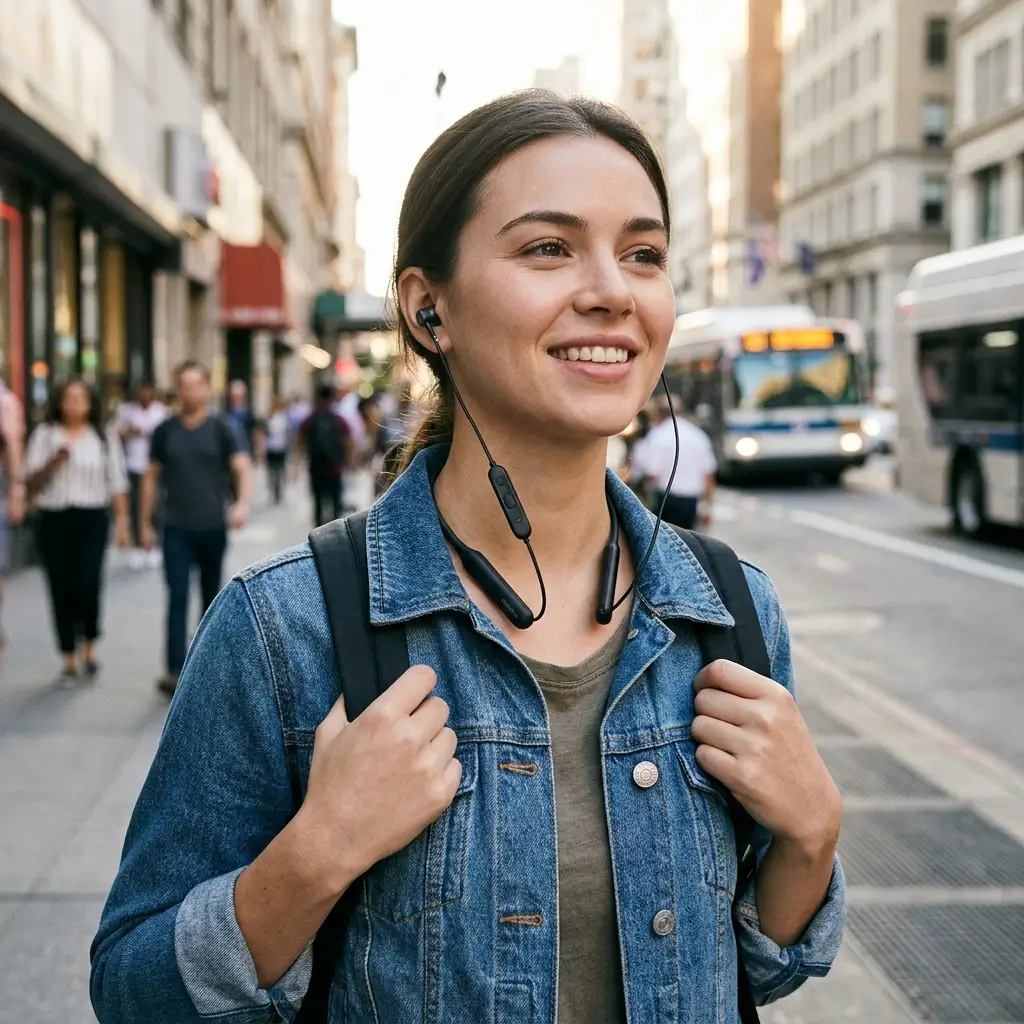
The Sony WI-C100 is a practical choice for people who want lightweight neckband headphones for commuting, working, studying, and listening to music throughout the day.
Its flexible neckband rests around the back of the neck, while the connected earbuds sit inside the ears. Weighing approximately 20 grams, it has a lightweight construction that is convenient for everyday use.
One of its strongest features is battery life. Sony advertises up to 25 hours of continuous music playback, which can be useful for people who do not want to charge their headphones every evening.
The WI-C100 also has an IPX4 water-resistance rating, making it suitable for handling sweat and light splashes. It is not designed for swimming or complete submersion in water.
Other useful features include Bluetooth 5.0, support for AAC and SBC audio codecs, physical controls, and compatibility with Sony’s sound customization application.
Why consider it?
The combination of lightweight construction, long advertised battery life, and simple controls makes the Sony WI-C100 a sensible everyday option.
Potential drawback: It does not have active noise cancellation, and its USB charging connection is less convenient than the USB-C connections found on many newer devices.
Best for: Commuters, students, office workers, and people looking for straightforward wireless headphones.
Check the Sony WI-C100 on Amazon
2. Beats Flex Wireless Earphones – Best for Flexible Everyday Listening

The Beats Flex is another option worth considering if you prefer a flexible neckband rather than completely wireless earbuds.
Its lightweight design connects the two earbuds through a flexible cable that rests around your neck. The earbuds feature magnetic backs, allowing them to attach when they are not being used.
This is particularly useful when moving between activities. Instead of putting the earbuds away every time someone approaches you, you can simply remove them and let them rest against your chest.
The headphones provide up to 12 hours of advertised listening time. They also include Fast Fuel charging, which provides approximately 1.5 hours of playback from a 10-minute charge.
Another advantage is their compatibility with both Apple and Android devices. Apple users benefit from additional ecosystem features, while Android users can still enjoy Bluetooth audio and hands-free calling.
Why consider it?
The magnetic earbuds, flexible cable, and convenient charging make the Beats Flex a useful choice for people who regularly listen to music while working or travelling.
Potential drawback: Twelve hours of advertised battery life is lower than what some competing neckband models offer. The flexible cable can also move around during more vigorous exercise.
Best for: Everyday commuting, casual listening, and people who frequently switch between music and conversations.

3. Shokz OpenRun Pro – Best for Running and Outdoor Fitness

Not everyone enjoys wearing earbuds that sit inside the ear canal. For runners and cyclists, being able to hear surrounding sounds can also be an important consideration.
The Shokz OpenRun Pro takes a different approach through bone conduction technology.
Instead of placing traditional speakers inside the ears, this headset uses transducers that rest against the cheekbones and deliver sound through vibrations. Its frame wraps around the back of the head, leaving the ears uncovered.
This makes it particularly useful for outdoor activities where awareness of surrounding traffic, people, and other environmental sounds matters.
The OpenRun Pro weighs approximately 29 grams and offers up to 10 hours of advertised battery life. Its IP55 rating provides protection against dust and water jets within the limits of that rating.
It also features a built-in microphone, Bluetooth 5.1, and magnetic charging.
One thing to understand is that bone conduction headphones do not produce exactly the same listening experience as traditional in-ear headphones. Bass response and sound isolation can differ, and loud environments may make audio harder to hear.
Why consider it?
Its open-ear design is useful for people who want to listen to audio while remaining more aware of their surroundings.
Potential drawback: It does not provide the passive noise isolation of silicone ear-tip headphones. It is also more expensive than many basic neckband models.
Best for: Outdoor runners, cyclists, walkers, and people who dislike placing earbuds inside their ears.
4. JBL Tune 125BT – Best for Budget-Friendly Music Listening

If you enjoy music with noticeable bass and prefer a simple wireless neckband, the JBL Tune 125BT is worth comparing.
This model features JBL Pure Bass Sound, a lightweight in-ear design, and a flat cable that helps reduce tangling when the headphones are stored in a bag or pocket.
Its advertised battery life reaches up to 16 hours, making it suitable for regular commuting, studying, and listening to music during work breaks.
The headphones also feature three-button controls and a built-in microphone for hands-free calls.
Another convenient feature is multipoint connectivity, which allows compatible devices to be connected and switched between according to the supported connection behavior.
The USB-C charging connection is also useful for people who already use modern charging accessories.
Why consider it?
The Tune 125BT combines a familiar neckband design, physical controls, and JBL’s bass-focused sound profile without requiring the expense of premium headphones.
Potential drawback: It does not have active noise cancellation, and its wired earbuds may not be the most secure choice for intense running.
Best for: Students, music listeners, commuters, and budget-conscious buyers.
5. LG TONE Flex – Best for Retractable Earbud Convenience
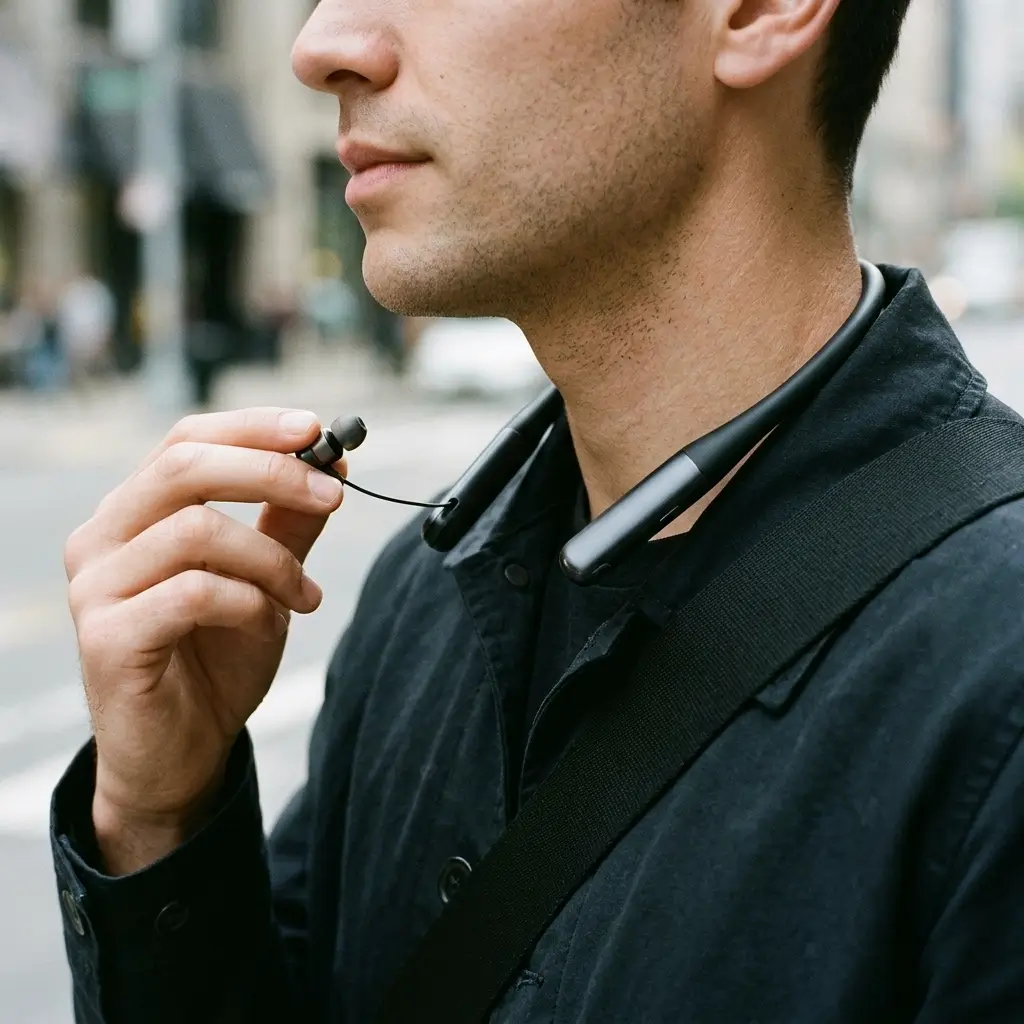
People who dislike having headphone cables hanging loosely around their neck may appreciate the LG TONE Flex design.
Unlike conventional neckbands, the TONE Flex features retractable earbuds housed inside a flexible neck-worn frame. When you want to listen to music, you pull out the earbuds. When finished, you retract them into the housing.
This design helps keep the cables organized and reduces the chances of them catching on clothing or other objects.
It is particularly useful for people who spend much of their day answering calls, listening to audio, and moving between different tasks.
Depending on the particular TONE Flex model and regional version, available features can include Bluetooth connectivity, audio enhancements, and hands-free calling.
Before purchasing, check the exact model number and its specifications. LG has released several products under the TONE name, and their features are not necessarily interchangeable.
Why consider it?
The retractable cable system offers a tidy alternative to conventional neckband earphones, particularly for people who frequently remove their headphones.
Potential drawback: Retractable mechanisms introduce additional moving parts, and availability of particular TONE Flex versions may vary.
Best for: Office workers, frequent callers, and people who prefer organized headphone storage.
6. Soundcore Life U2i – Best to Consider for Budget-Conscious Buyers

Soundcore, Anker’s audio brand, has developed a range of wireless neckband headphones aimed at people who want practical features without paying premium prices.
The Life U2i is one model to consider when comparing affordable neckband options.
Its traditional neckband arrangement is designed to keep the main components around the neck, while the connected earbuds provide audio directly to the ears.
For anyone shopping in this category, the most important things to compare are battery endurance, ear-tip comfort, microphone performance, Bluetooth compatibility, and resistance to sweat.
It is worth checking the precise Life U2i product listing before buying, especially because similarly named Soundcore products can have different specifications.
Do not assume that specifications advertised for the original Life U2 or another Soundcore model automatically apply to the Life U2i.
Why consider it?
Soundcore is worth including in a budget comparison, particularly for shoppers who want to explore alternatives to more expensive mainstream brands.
Potential drawback: Confirm the exact model, warranty, charging connection, and advertised water-resistance rating before ordering.
Best for: Budget-conscious shoppers comparing entry-level neckband headphones.
7. Sennheiser CX 150BT – Best for Everyday Audio Clarity
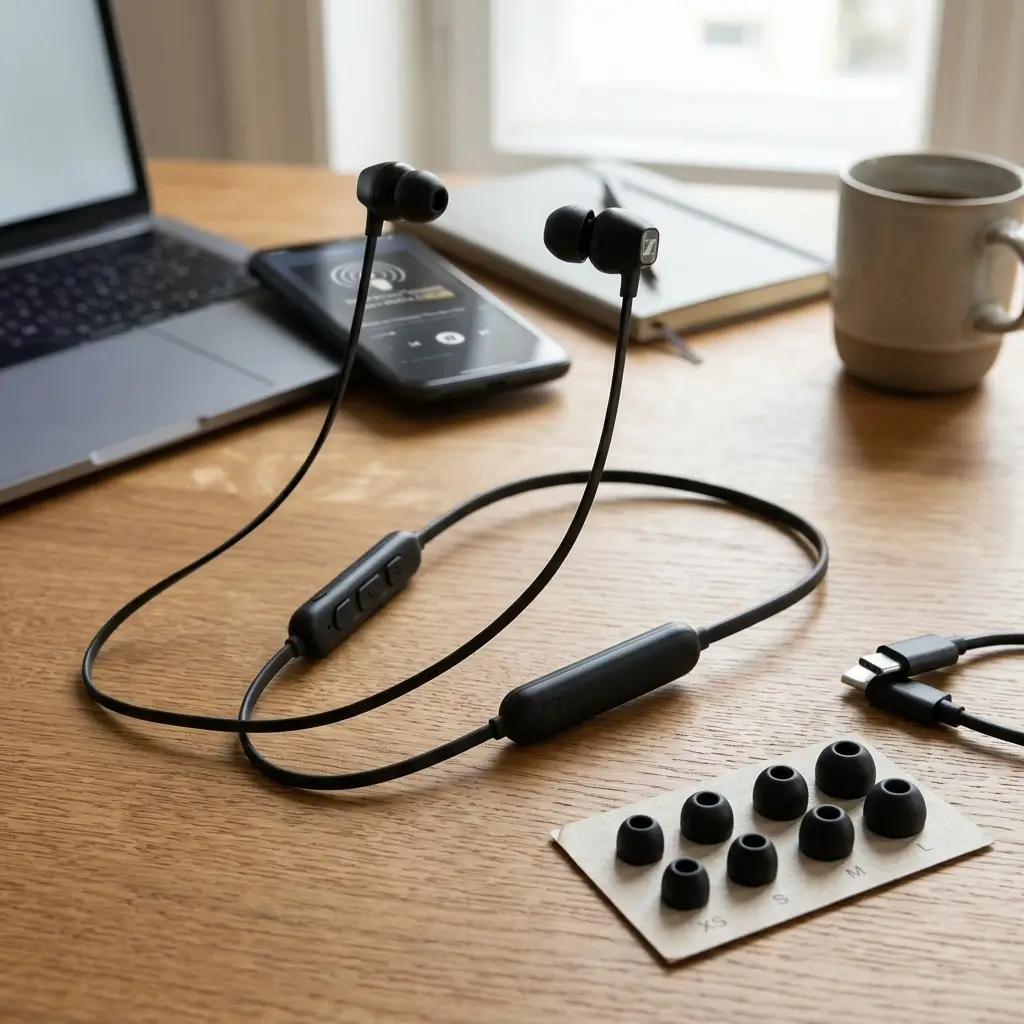
The Sennheiser CX 150BT is a traditional Bluetooth neckband headset designed for people who prefer in-ear listening and a relatively discreet cable arrangement.
It uses 9.7 mm dynamic drivers and supports AAC and SBC Bluetooth audio codecs.
One feature worth noting is its selection of four ear-tip sizes: XS, S, M, and L. Having different sizes available makes it easier to find a comfortable fit and achieve a better seal inside the ears.
That seal matters because properly fitted ear tips can improve passive noise isolation and help preserve bass response.
The CX 150BT offers approximately 10 hours of music playback under the manufacturer’s specified conditions. It also supports Bluetooth 5.0 and multi-connectivity.
For everyday listening, this makes it a useful option for podcasts, music, phone calls, and travel.
Why consider it?
The combination of adjustable ear-tip sizing, lightweight construction, and Sennheiser’s audio-focused design makes it worth considering for people who prioritize listening comfort.
Potential drawback: Its advertised 10-hour battery life is relatively modest compared with some longer-lasting neckband alternatives.
Best for: Music listeners, podcast enthusiasts, and commuters who value a comfortable in-ear fit.
8. Monster Boomerang Neckband Speaker – Best for People Who Dislike Earbuds

The Monster Boomerang offers a different approach to personal audio.
Rather than using traditional earbuds, this wearable speaker rests around the neck and directs sound towards the listener’s ears.
This means you do not have to insert anything into your ear canals. It can be an interesting alternative for people who experience discomfort when wearing in-ear headphones for extended periods.
It may also suit activities around the home, such as preparing meals, organizing a workspace, or completing household tasks.
However, there is an important distinction: a wearable neck speaker is not the same as a pair of wrap around neck headphones.
Its audio is projected into the surrounding space, which means people nearby may hear some of what you are playing. It also does not provide the sound isolation of traditional headphones.
Check the exact model’s battery capacity, microphone features, connectivity, and water-resistance specifications before purchasing.
Why consider it?
It provides a hands-free listening alternative without requiring earbuds or a headband.
Potential drawback: It is less suitable for private listening in quiet offices, public transport, and shared spaces.
Best for: Home activities, casual listening, and people who dislike traditional earbuds.
Comparison of the Best Wrap Around Neck Headphones
Choosing between these products becomes easier when their main purposes are compared side by side.
| Product | Design | Advertised battery life | Best use |
|---|---|---|---|
| Sony WI-C100 | Flexible neckband | Up to 25 hours | Everyday use |
| Beats Flex | Flexible neckband | Up to 12 hours | Commuting |
| Shokz OpenRun Pro | Bone conduction | Up to 10 hours | Outdoor fitness |
| JBL Tune 125BT | Flexible neckband | Up to 16 hours | Music listening |
| LG TONE Flex | Retractable neckband | Check exact model | Calls and work |
| Soundcore Life U2i | Neckband | Check exact model | Budget shopping |
| Sennheiser CX 150BT | Flexible neckband | Up to 10 hours | Everyday audio |
| Monster Boomerang | Wearable speaker | Check exact model | Home listening |
Battery figures are manufacturer-advertised maximums where verified, not independently measured results. Actual playback times vary. Products with unverified model-specific figures are deliberately marked for confirmation.
How to Choose the Right Neckband Headphones
Before spending money on a new pair, think about where and how often you will use them. A model that works perfectly for an office worker may not be the best choice for someone who runs several kilometres every morning.
Here are the most important factors to consider.
1. Battery Life and Charging Time
Battery capacity is one of the main reasons people choose neckband headphones.
If you regularly travel, attend long meetings, or listen to podcasts throughout the day, consider a model with at least 12 to 15 hours of advertised playback.
However, battery life is not the only consideration. Check how long the headphones take to recharge and whether they support quick charging.
Remember that advertised battery performance is usually measured under controlled conditions. Listening at higher volumes or making frequent calls can reduce actual playback time.
2. Comfort and Neckband Design
A comfortable neckband should rest naturally without creating unnecessary pressure around your neck.
Flexible cable-style models are generally easier to store in a small bag, while structured designs can provide a more stable fit.
Pay attention to the weight, collar material, cable length, and position of the control buttons.
If possible, try the headphones before purchasing, especially if you intend to wear them for several hours at a time.
3. Water and Sweat Resistance
If you plan to exercise with your headphones, water resistance deserves attention.
An IPX4 rating indicates protection against water splashes from different directions. Higher ratings, such as IPX5, provide protection against water jets under specified testing conditions.
However, water resistance does not automatically mean a device is waterproof.
Check the manufacturer’s instructions before exposing your headphones to heavy rain, washing, or excessive moisture.
4. Sound Quality and Ear-Tip Fit
Sound quality is influenced by several factors, including the drivers, audio tuning, Bluetooth codecs, and how well the earbuds fit.
For in-ear neckbands, the ear tips are particularly important.
A poor seal can reduce bass and allow outside noise to interfere with your listening experience. A properly fitted ear tip can make a noticeable difference without requiring expensive audio equipment.
If possible, choose a model that includes several ear-tip sizes.
5. Microphone Quality
If you regularly answer work calls or make phone calls while commuting, microphone performance should be part of your buying decision.
A good microphone should capture your voice clearly without making conversations difficult in ordinary surroundings.
Remember that not all built-in microphones offer effective wind or background-noise reduction.
If call quality is important, look for independent microphone tests rather than relying entirely on marketing descriptions.
6. Bluetooth Connectivity
Check the Bluetooth version and the connection features supported by your preferred headphones.
Bluetooth multipoint can be especially useful if you regularly use a smartphone and laptop.
For example, you may listen to music from your computer while keeping your phone connected for incoming calls.
Not every Bluetooth headset supports multipoint, so check the exact manufacturer’s specifications before buying.
7. Physical Controls and Ease of Use
Physical buttons can be more convenient than touch controls when exercising, travelling, or wearing gloves.
Look for clearly positioned buttons that allow you to adjust the volume, pause music, skip tracks, and answer calls without removing your headphones.
Also consider whether the controls are easy to distinguish by touch.
Practical Tips for Getting Better Performance
Even good headphones can become uncomfortable or perform poorly when they are not fitted or maintained correctly.
These simple practices can help you get more from your purchase.
Choose the correct ear-tip size.
Do not assume that both ears require identical ear tips. Some people find that a medium tip fits one ear while a larger or smaller size works better for the other.
A comfortable seal should keep the earbuds secure without creating painful pressure.
Keep the neckband in its natural position.
Avoid twisting or stretching flexible cables unnecessarily. Let the collar rest naturally around your neck so that the earbuds and microphone remain in their intended positions.
Clean your headphones regularly.
Sweat, dust, and skin oils can accumulate around ear tips and control buttons. Use a soft, slightly damp cloth on appropriate external surfaces and follow the manufacturer’s cleaning instructions.
Remove silicone ear tips when necessary and clean them separately. Allow everything to dry completely before using or charging the headphones.
Store your headphones carefully.
Do not force structured neckbands into small spaces or wrap cables too tightly. Excessive bending can damage internal wiring over time.
A small protective pouch can help prevent scratches and accidental damage when travelling.
Avoid listening at excessive volume.
Listening at high volumes for extended periods can damage your hearing. Keep the volume at a comfortable level and take breaks during long listening sessions.
Keep charging connections clean and dry.
Dust and moisture around charging ports can interfere with charging. Make sure the device is dry before connecting it to a power source.
Common Mistakes to Avoid When Buying Neckband Headphones
Even when a product has excellent reviews, it may not be suitable for your particular needs.
Here are some mistakes worth avoiding.
Buying based on battery life alone
A headphone advertised with 25 hours of playback may sound like an obvious winner. However, comfort, sound quality, microphone performance, and durability also matter.
Assuming every neckband is suitable for running
Some lightweight models work well during walking and casual exercise but may bounce when you run. If fitness is your main priority, pay attention to stability and the manufacturer’s recommended activities.
Confusing water resistance with waterproofing
An IPX4 rating does not make headphones suitable for swimming. Always check the precise protection level before exposing electronics to water.
Ignoring compatibility
Check whether your preferred headphones work properly with your smartphone, tablet, or computer. Pay attention to Bluetooth compatibility and any additional application requirements.
Overlooking product versions
Brands sometimes release several products with similar names. A particular model may have a different battery capacity, charging connection, or microphone configuration from another version.
Always check the full model number before purchasing.
Choosing headphones without considering their intended use
Traditional neckband earbuds, bone conduction headphones, and wearable speakers are designed for different listening experiences. Decide which design suits your routine before comparing prices.
Pros and Cons of Wrap Around Neck Headphones
Like any audio device, neckband headphones have advantages and disadvantages.
| Advantages | Disadvantages |
|---|---|
| Convenient for frequent listening | Less compact than completely wireless earbuds |
| Earbuds remain connected to the neckband | Cables can sometimes catch on clothing |
| Many models offer long battery life | Some designs can bounce during running |
| Physical buttons are easy to locate | Fewer choices with advanced noise cancellation |
| No separate charging case required | Neckbands can feel uncomfortable to some users |
| Useful for commuting and everyday tasks | Some older models may have limited availability |
The best choice depends on which advantages matter most to you.
Frequently Asked Questions
Are wrap around neck headphones good for running?
Yes, some models are suitable for running, particularly lightweight neckbands that remain stable during movement. However, not every design is intended for high-impact exercise.
Bone conduction headphones, such as the Shokz OpenRun Pro, are another option because they leave the ears uncovered. Regardless of the design, choose a comfortable fit and remain aware of traffic and your surroundings.
Do neckband headphones hurt your neck?
Most lightweight neckband headphones are designed to rest comfortably around the neck. However, comfort depends on the weight, shape, material, and how well the design fits your body.
If you experience pressure or irritation, consider a lighter model with softer materials. You should not have to tolerate discomfort simply to continue listening.
Are neckband headphones better than wireless earbuds?
Neither option is automatically better. Neckband headphones are useful for people who want connected earbuds, convenient physical controls, and potentially longer battery life.
True wireless earbuds are usually more compact and easier to carry in a pocket or small charging case.
Your choice should depend on comfort, battery requirements, storage preferences, and how you use your headphones.
Can you wear neckband headphones while sleeping?
Although some lightweight models may feel comfortable initially, sleeping with headphones around your neck is generally not recommended.
The band and cables can become uncomfortable when you change positions. If you need audio while sleeping, consider a purpose-designed sleep audio product instead.
How long do neckband headphones last?
Their lifespan depends on battery quality, usage, storage, charging habits, and overall construction.
The rechargeable battery may gradually lose capacity over time, just as it does in other wireless electronics. Physical damage to cables, charging connections, and earbuds can also shorten the useful life of a headset.
Proper cleaning, careful storage, and following the manufacturer’s charging instructions can help extend its lifespan.
Can you connect neckband headphones to a laptop?
Yes. Most Bluetooth neckband headphones can connect to compatible laptops, tablets, and smartphones.
Put the headphones into pairing mode, open your device’s Bluetooth settings, and select the headset from the available devices.
For calls, make sure the laptop selects the headphone microphone as its input device.
Do neckband headphones have noise cancellation?
Some models offer noise-reduction features, but not every neckband includes active noise cancellation.
Traditional in-ear models can provide passive noise isolation when their ear tips create a proper seal.
Bone conduction headphones generally leave the ears uncovered, so they do not provide the same isolation as sealed in-ear designs.
Check the product specifications carefully if blocking outside noise is important to you.
Are neckband headphones suitable for phone calls?
Yes. Many models include built-in microphones that support hands-free calling.
However, microphone quality varies considerably. If you regularly make calls in noisy environments, look for independent microphone tests and features designed to reduce wind or background noise.
Key Takeaways
Before choosing your next pair of wrap around neck headphones, remember these important points:
- For everyday use: The Sony WI-C100 offers a lightweight design and up to 25 hours of advertised playback.
- For commuting: The Beats Flex provides magnetic earbuds and convenient everyday controls.
- For outdoor fitness: The Shokz OpenRun Pro offers an open-ear bone conduction design.
- For budget-conscious shoppers: Compare the JBL Tune 125BT and Soundcore alternatives.
- For organized storage: Consider the retractable design of LG TONE Flex.
- For in-ear comfort: The Sennheiser CX 150BT includes multiple ear-tip sizes.
- For earbud-free listening: A wearable neck speaker offers a different alternative.
Most importantly, compare the features that matter to your daily routine rather than choosing a product simply because it has the longest advertised battery life.
Final Thoughts
Wrap around neck headphones remain a practical option for people who want comfortable wireless listening without constantly handling small earbuds.
Whether you spend your day commuting, working at a desk, exercising, or moving between different activities, the right design can make listening more convenient.
The Sony WI-C100 is worth considering if battery life is your priority, while the Beats Flex offers a flexible everyday listening experience. For outdoor exercise, the Shokz OpenRun Pro provides an alternative that leaves your ears uncovered. Meanwhile, models such as the Sennheiser CX 150BT and LG TONE Flex cater to different preferences for fit and convenience.
Before making a purchase, compare battery life, comfort, connectivity, water resistance, and microphone performance. Also check the exact model number and current availability so that you know what you are paying for.
A little research before buying can help you find headphones that fit your lifestyle rather than spending money on features you may never use.