If you have ever stepped outside into 10°F (-12°C) weather with your favorite wireless headphones, you probably know the frustration: within fifteen minutes, your battery drops from 60% to 10%, the earcup touch panel stops responding to your gloved hand, and icy wind howls straight through your noise-canceling microphones.
Most consumer headphones are engineered for climate-controlled offices, airplanes, and mild outdoor walks—not sub-zero commutes, snow-shoveling marathons, or winter trail runs. Cold weather attacks audio gear from multiple angles at once. It slows down battery chemistry, stiffens plastic hinges, turns capacitive touchpads useless, and introduces moisture the second snow melts against your warm skin.
Whether you are trying to keep your ears warm on a brisk city walk or need earbuds that won’t short out during a wet sleet storm, choosing the right winter headphones requires looking past standard audio reviews. Below, we break down what actually happens to electronics in freezing temperatures, the specific hardware features that survive the cold, and eight standout models built to handle harsh winter conditions.
Disclosure: This post contains affiliate links. If you buy through these links, we may earn a small commission at no extra cost to you. Always check current availability and pricing on Amazon before purchasing, as stock and prices fluctuate.
What Freezing Weather Actually Does to Your Headphones
Understanding why standard headphones fail in winter makes it much easier to spot gear that will last:
- The Lithium-Ion “Voltage Sag”: Batteries don’t actually lose their stored energy in the cold; rather, freezing temperatures thicken the liquid electrolyte inside the cell. Ions move sluggishly, causing the voltage to drop suddenly. Your headphones think the battery is dead and shut off prematurely.
- Dead Touch Controls & “Ghost” Pauses: Capacitive touch panels rely on tiny electrical currents from bare skin. Thick wool mittens or leather gloves block that connection completely. Worse, when wet snowflakes land on a touch-sensitive earcup, the water can mimic a finger tap—pausing your music or triggering your voice assistant at random.
- Brittle Plastics and Cracked Pads: Standard ABS plastic and cheap faux-leather (protein leather) stiffen in sub-zero air. Pulling earcups wide apart to fit over a bulky beanie can snap a cold headband, while cheap earpads eventually peel and crack from repeated freeze-thaw cycles.
- Wind-Mic Turbulence: Active Noise Cancellation (ANC) uses tiny external microphones to listen to ambient noise and cancel it out. When sharp winter gusts hit those mic grilles, the ANC processor often amplifies the wind into a loud, rumbling static right inside your ear.
8 Best Headphones for Freezing Weather
1. Marshall Monitor III A.N.C. — Best for Heavy Mittens and Extreme Battery Life
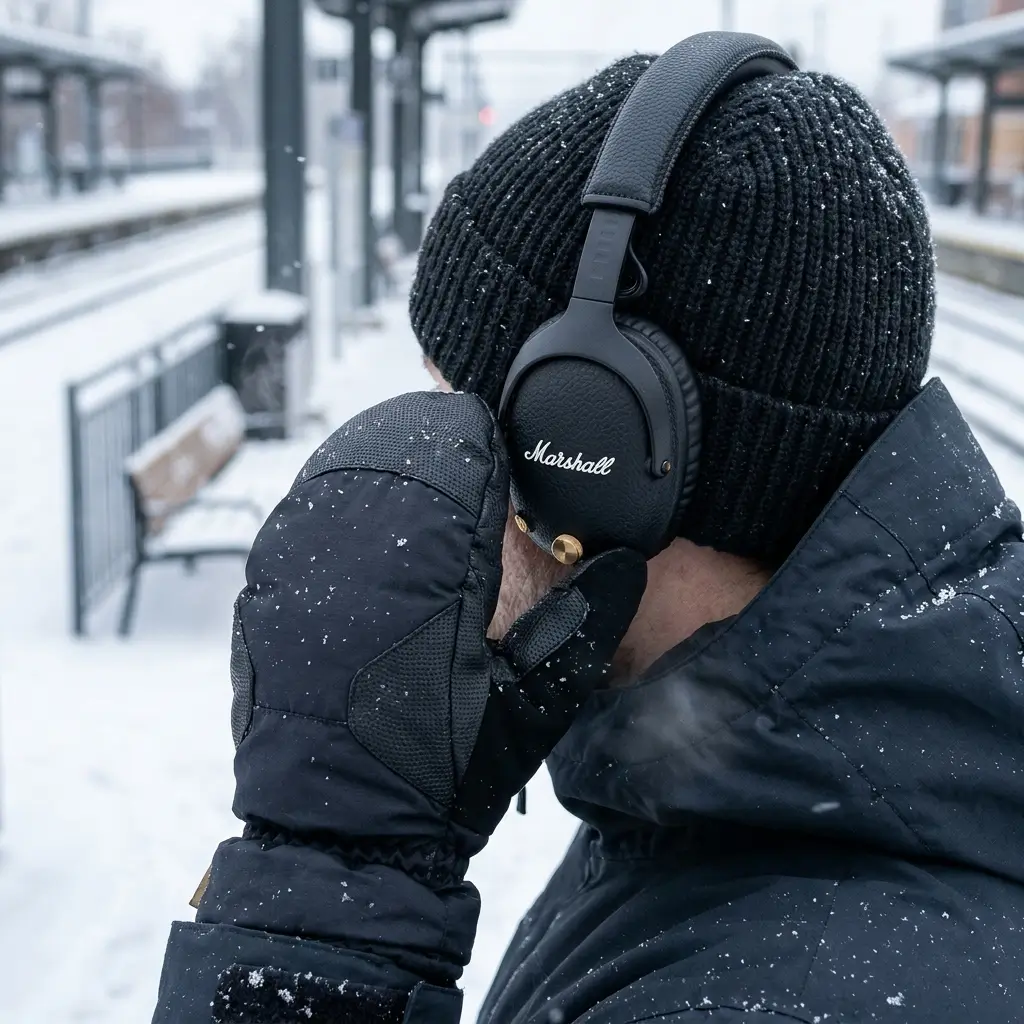
If you refuse to take your mittens off just to skip a song or turn down the volume, the Marshall Monitor III A.N.C. is built for you.
Instead of finicky touchpads, Marshall uses a multi-directional brass control knob on the earcup alongside dedicated physical buttons.
Even with thick ski mittens on, you can easily click up, down, left, or right to control playback without guessing where your fingers are.
Cold weather drains batteries fast, so Marshall’s massive battery rating 70 hours with ANC turned on and up to 100 hours without it gives you a huge buffer against winter voltage drops.
The plush, textured ear cushions seal tightly over your ears to block biting wind, and the rugged hinges fold down neatly into a compact hard case when you step onto a crowded train.
- Best for: Commuters wearing thick gloves and travelers who hate charging cables.
- Winter watch-out: Like most over-ear headphones, they lack an official IP waterproof rating—fine for dry cold and light flurries, but keep your hood up in heavy wet snow.

2. Shokz OpenRun Pro 2 — Best for Winter Runners and Cyclists
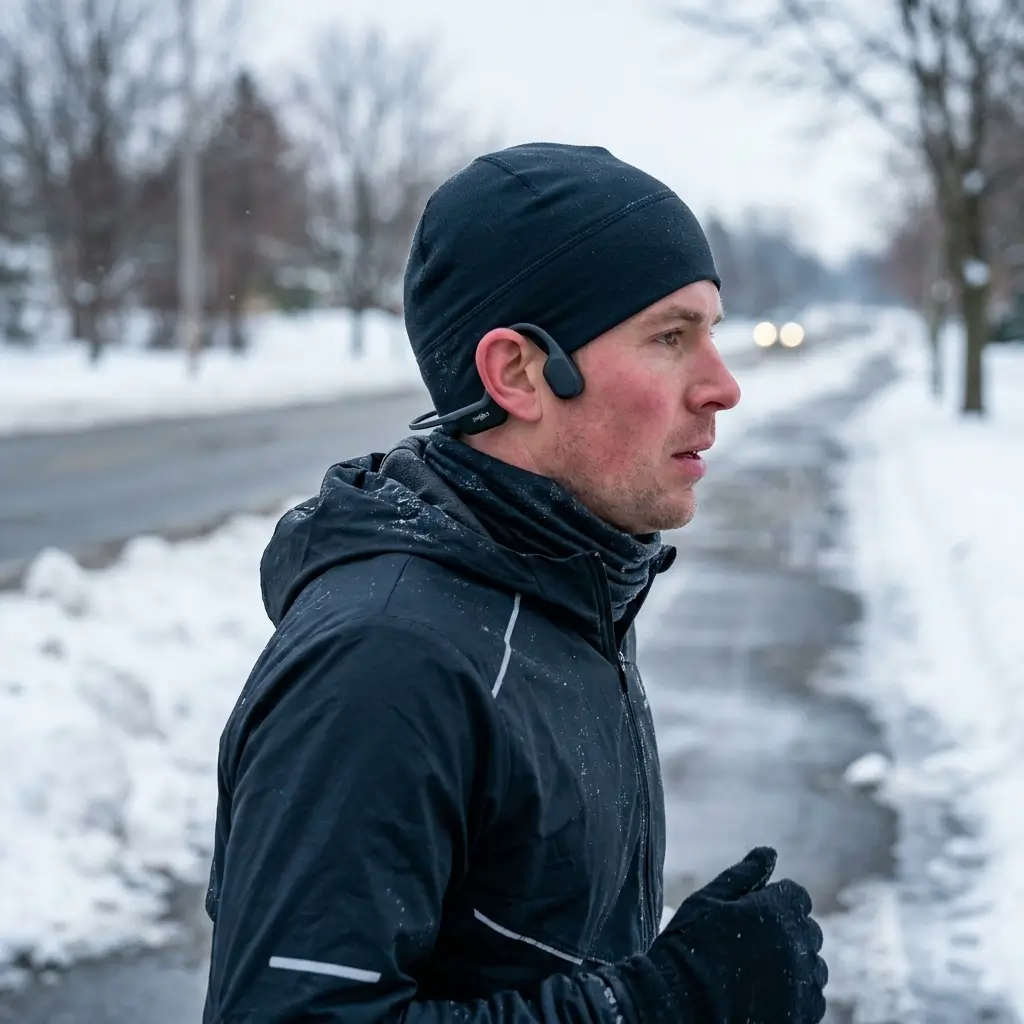
Running on icy roads or plowed bike paths in winter is risky when your hearing is completely blocked. The Shokz OpenRun Pro 2 solves this by using bone-conduction and directional air-conduction drivers that rest on your cheekbones, leaving your ear canals completely open to hear approaching cars, snowplows, or other runners.
Because the wraparound titanium frame sits behind your neck rather than over the crown of your head, it slides effortlessly underneath tight thermal beanies, balaclavas, and bike helmets without creating painful pressure points. It carries an IP55 rating to shrug off freezing sweat and wet snow, and features physical, raised buttons that are easy to press with running gloves.
- Best for: Cold-weather runners, cyclists, and cross-country skiers who need situational awareness.
- Winter watch-out: Open-ear designs won’t keep your ears warm on their own, so pair them with a lightweight fleece headband or thin running beanie.
3. Bose QuietComfort Headphones (Standard Edition) — Best Physical-Button Over-Ears

While many flagship noise-canceling headphones have switched entirely to swipe gestures, Bose kept tactile physical buttons on the standard QuietComfort Headphones.
You get dedicated raised buttons for volume, play/pause, and switching between Quiet (ANC) and Aware modes—making them vastly easier to operate in freezing temperatures than touch-heavy rivals.
Bose is also famous for low clamping force and cloud-soft ear cushions, which means they stay comfortable even when worn over a thin knit beanie.
Their wind-blocking algorithms do a respectable job taming urban wind gusts, and the 24-hour battery life holds up reliably for daily winter commutes.
- Best for: Windy city walks and listeners who want flagship noise cancellation without touch controls.
- Winter watch-out: Avoid the “Ultra” model if gloves are a priority, as the Ultra uses a capacitive touch strip for volume.
4. Beats Powerbeats Pro 2 — Best Earbuds for Snowy Workouts and Skiing
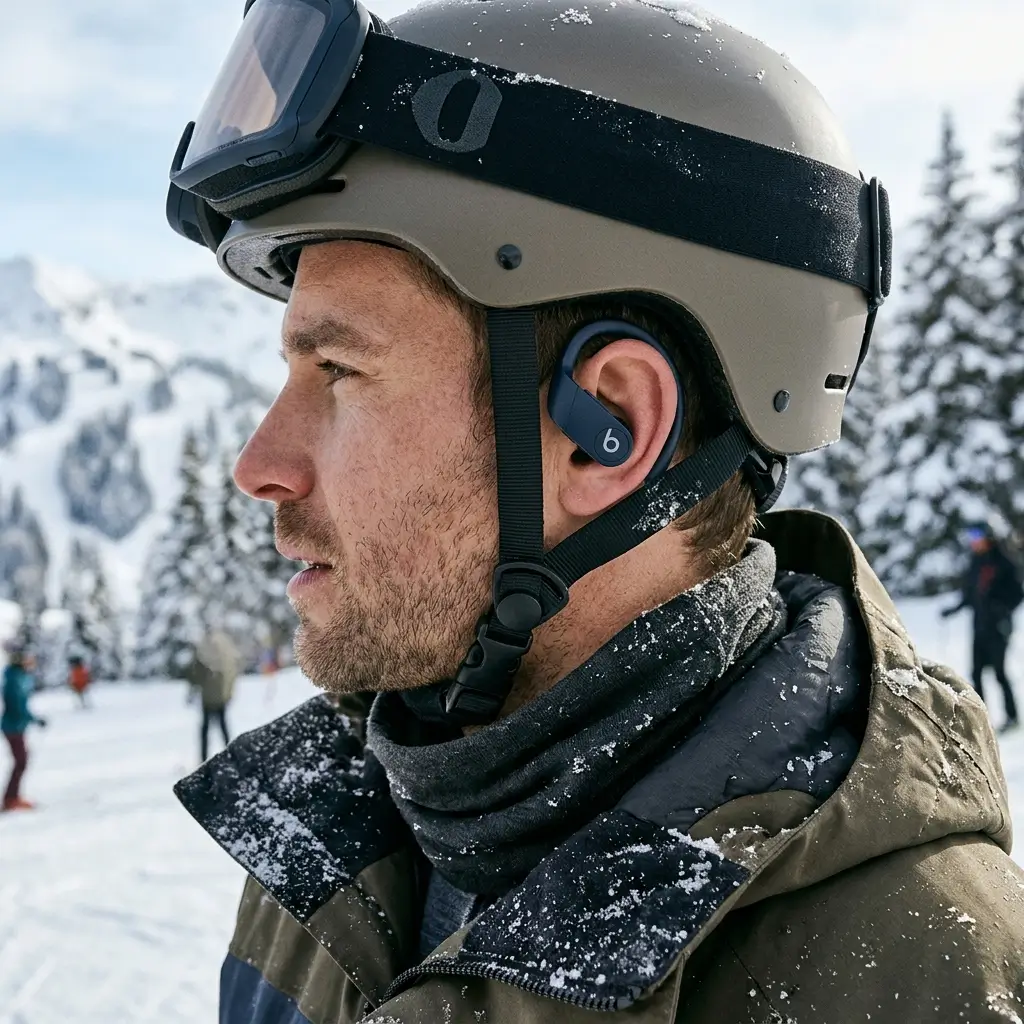
Standard wireless earbuds have a nasty habit of popping out of your ears the moment you pull a wool hat over your head and dropping a white earbud into a snowbank is a nightmare.
The Beats Powerbeats Pro 2 eliminate that worry with flexible, over-ear hooks that lock securely around your ears beneath ski helmets, hoods, or heavy winter hats.
Each earbud features a physical tactile “b” button and a dedicated physical volume rocker on top, so you never have to fumble with pinch sensors through cold gloves.
An IPX4 rating protects against snow flurries and heavy sweat, and the 10-hour per-charge battery life easily survives a full day on the slopes.
- Best for: Skiing, snowboarding, shoveling snow, and winter trail running.
- Winter watch-out: The charging case is fairly bulky compared to standard earbuds, so it takes up noticeable pocket space in a fitted jacket.
5. Sennheiser Momentum 4 Wireless — Best Marathon Battery & Ear Warmth
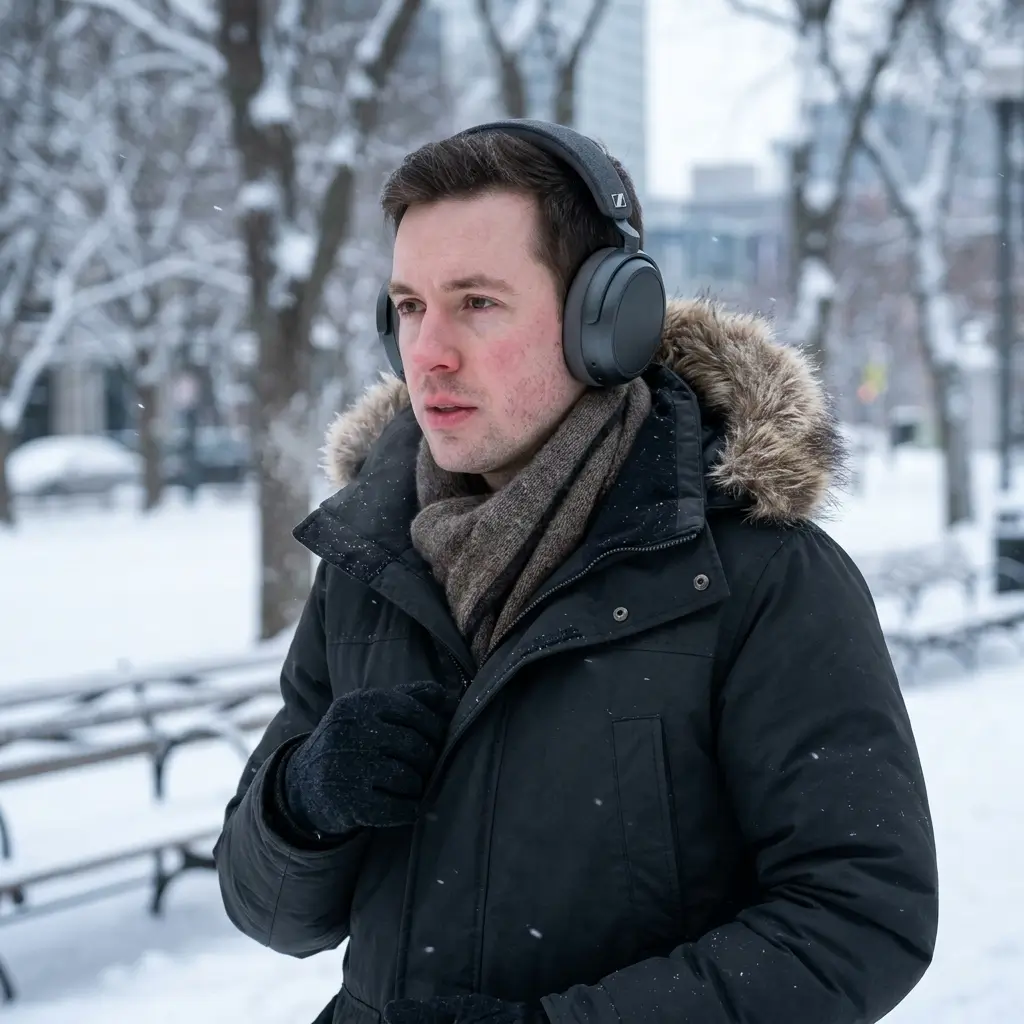
When temperatures plunge well below zero, large over-ear headphones double as legitimate earmuffs. The Sennheiser Momentum 4 Wireless features deep, generously padded memory foam earcups that trap body heat around your ears while delivering rich, detailed sound.
Its standout winter feature is its 60-hour battery life. Even if sub-zero temperatures temporarily reduce battery efficiency by 20% or 30%, you still have over 40 hours of listening time left—meaning you won’t get stranded with dead headphones halfway through a freezing week.
- Best for: Long, freezing walks and commuters who want maximum ear warmth and battery endurance.
- Winter watch-out: The right earcup relies on touch gestures. While Sennheiser’s Smart Control app lets you disable touch controls completely (preventing accidental pauses from snow or hood friction), you will need to control volume from your phone or smartwatch while wearing gloves.
6. JLab Go Air Sport — Best Budget “Beater” Pair for Slush and Snow
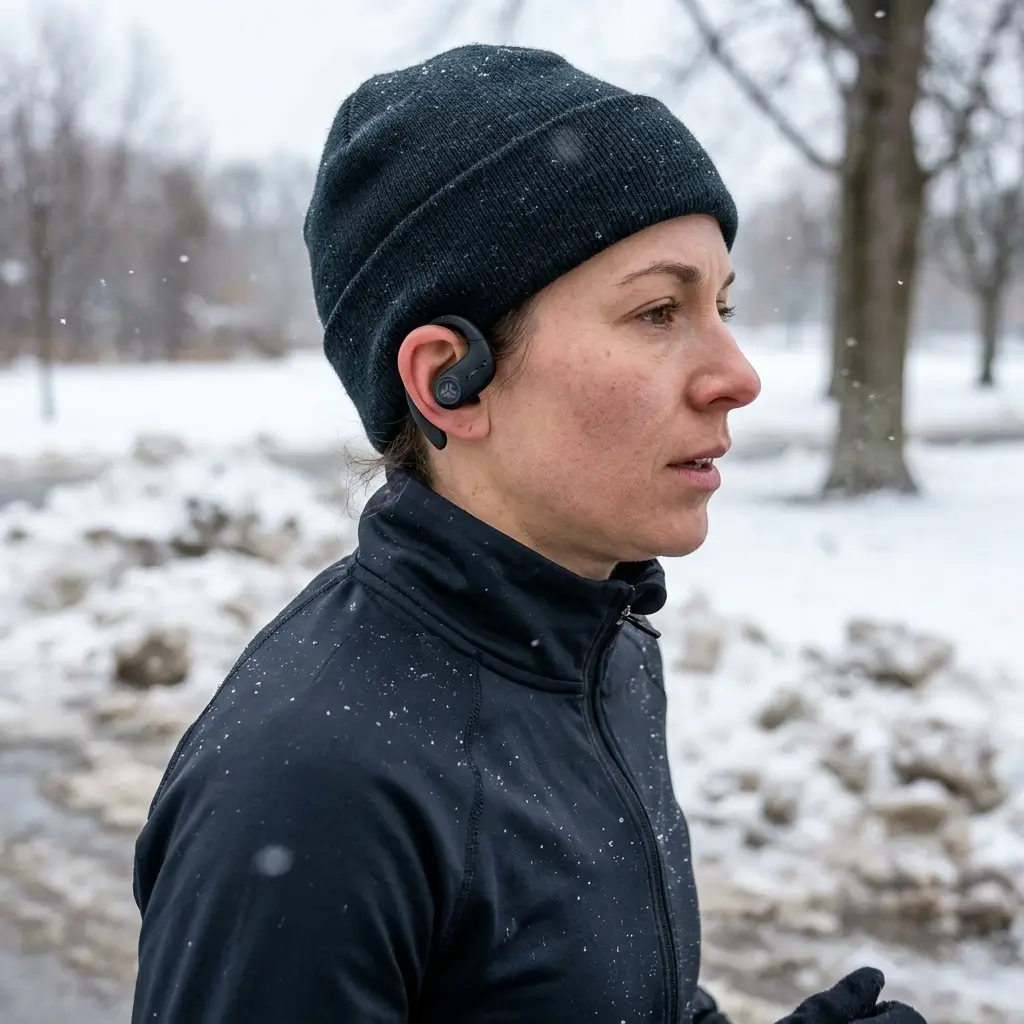
Sometimes the smartest winter audio strategy isn’t buying expensive flagship gear it’s picking up a rugged, inexpensive pair you won’t panic about if they get dropped in a slush puddle.
The JLab Go Air Sport costs around $30, carries an IP55 sweat- and weather-resistance rating, and uses wraparound earhooks that stay put under any winter hat.
Despite the budget price, they deliver over 8 hours of continuous playback per charge (32+ hours with the integrated USB-cable case) and hold up surprisingly well in damp, freezing conditions.
- Best for: Shoveling driveways, messy sleet storms, and budget-conscious winter shoppers.
- Winter watch-out: They use touch sensors on the outside of the buds, so tap them before pulling your hat down over your ears.
7. Beats Fit Pro — Best Low-Profile Earbuds Under Tight Beanies
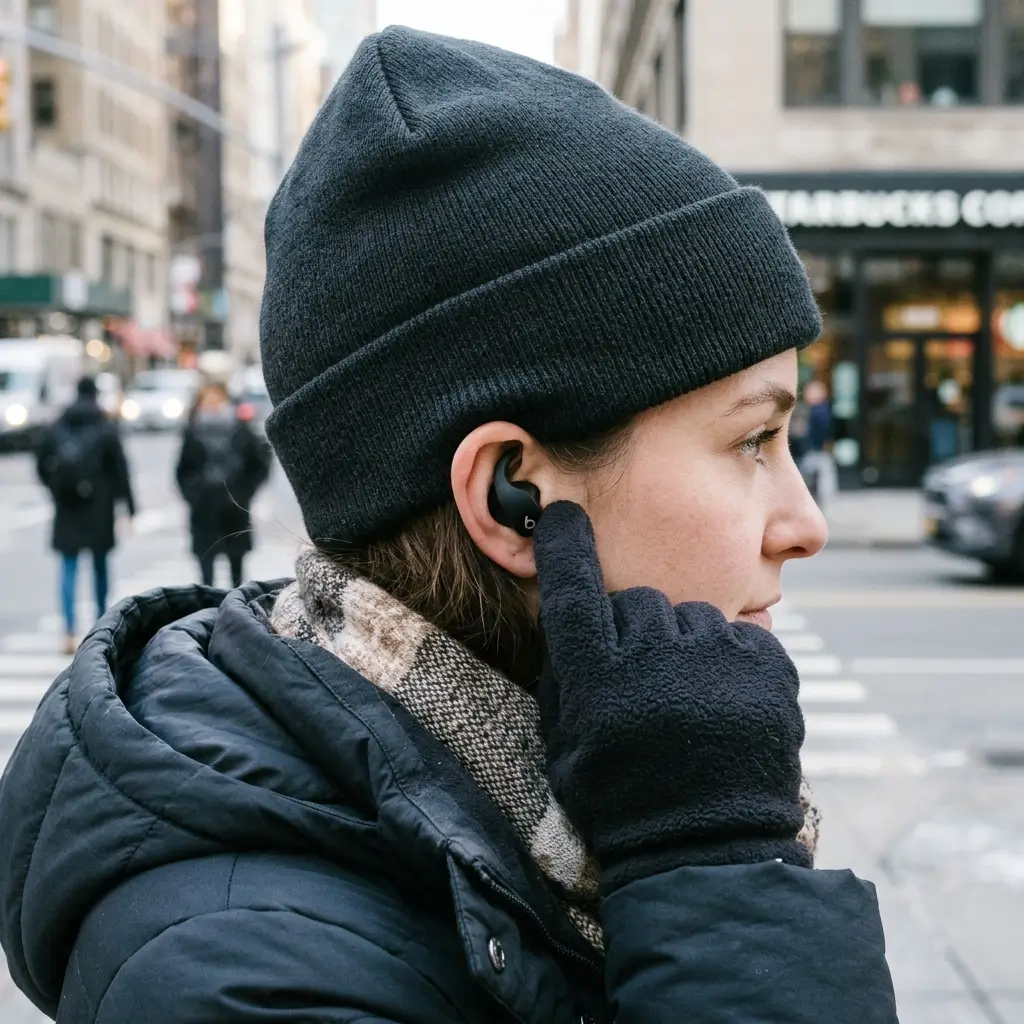
If earhooks feel too bulky under tight-fitting winter hats or earmuffs, the Beats Fit Pro offer a sleek, flush fit. Instead of an external hook, a flexible silicone wingtip tucks neatly into the upper ridge of your ear, keeping the earbud anchored without protruding outward where a tight beanie could press it painfully into your ear canal.
Crucially, Beats equipped both earbuds with physical click-buttons rather than touch surfaces, making it effortless to toggle Transparency mode when ordering a hot coffee or crossing a busy intersection.
- Best for: Wearing under snug knit beanies, hoodies, and winter headbands.
- Winter watch-out: The 6-hour battery life is decent, though cold air may trim that closer to 4.5 or 5 hours on frigid days.
8. 1MORE SonoFlow Pro HQ51 — Best Affordable Over-Ears for Cold Commutes
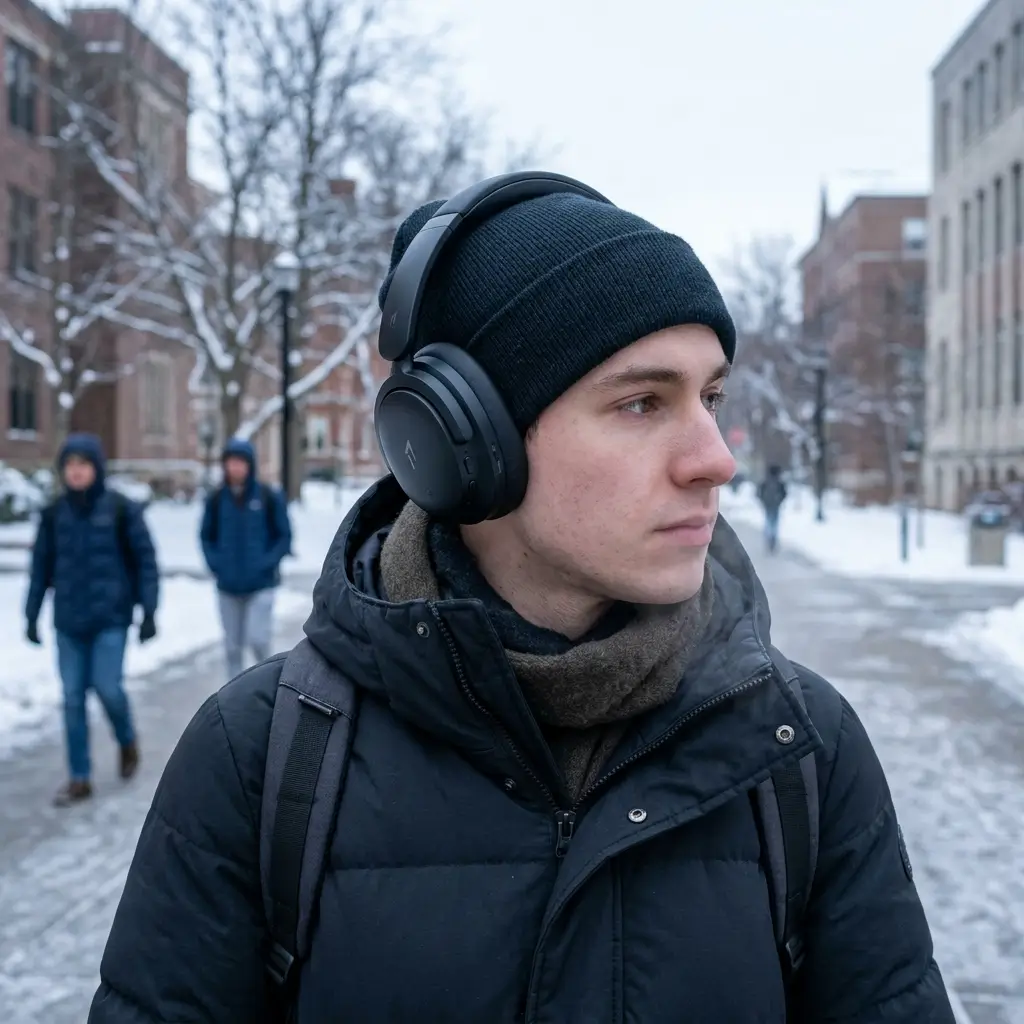
You don’t need to spend $300+ to get serious winter battery reserves and physical buttons. The 1MORE SonoFlow Pro HQ51 packs an impressive 65 hours of ANC playback (100 hours with ANC off) and full physical button controls into a sub-$100 package.
Soft protein-leather earpads create a cozy barrier against biting wind, and the lightweight frame folds flat into a sturdy carrying case. For students walking across freezing campuses or commuters looking for reliable cold-weather backup headphones, they hit a great price-to-performance sweet spot.
- Best for: Students, campus walkers, and budget-focused commuters.
- Winter watch-out: Like other budget over-ears, they aren’t waterproof—keep them dry during wet snowfall.
Buying Guide: 4 Specs That Matter Most in Sub-Zero Weather
If you are comparing other models on your own, check these four details before buying:
- Physical Buttons Over Touch Panels: Look closely at product photos. Raised mechanical buttons, toggles, or joysticks work through gloves and won’t misfire when wet snow hits them. If you already own touch-based headphones, check the companion app to see if touch controls can be locked in winter.
- An IP Rating of at Least IPX4 (or IP55+ for Snow): An IP (Ingress Protection) rating tells you how well electronics resist moisture. IPX4 handles light snow flurries and splashes, while IP55 or IP57 protects against melting snow, freezing rain, and sweat. Note: Almost zero over-ear headphones carry an IP rating, making earbuds or bone-conduction headsets much safer in wet winter weather.
- Oversized Battery Reserves: Because cold air temporarily reduces lithium-ion output, add a 25% “cold tax” to whatever battery life the box claims. Aim for at least 40–50+ hours on over-ear headphones and 7–8+ hours on wireless earbuds.
- Hinge and Frame Materials: Metal sliders (like stainless steel or aluminum headbands) and flexible titanium frames resist snapping in extreme cold far better than all-plastic hinges.
Practical Tips to Make Your Headphones Last All Winter
- Keep Them Warm Before Heading Out: Don’t leave your headphones in a freezing car overnight. Keep your earbud case in an inside jacket pocket close to your body heat until you are ready to put them in.
- Use the “Thin Beanie” Layering Trick: If you wear over-ear headphones, wearing them over a thick, chunky cable-knit hat breaks the acoustic seal—ruining your bass, leaking sound, and letting cold wind whistle into your ears. Instead, wear a thin, flat-knit merino wool beanie underneath the earcups, or put the headphones on first and pull a loose hood over the top.
- Never Charge a Freezing Battery: When you come inside from sub-zero air, let your headphones sit at room temperature for 15 to 20 minutes before plugging them in. Charging a frozen lithium-ion cell can cause permanent internal plating damage—and warm indoor air hitting cold electronics creates internal condensation near the charging port.
- Wipe Down Melted Snow Immediately: Snow looks harmless until you step indoors and it melts into the seams of your earpads or microphone grilles. Keep a dry microfiber cloth near your coat rack to wipe down cushions and hinges after snowy walks.
Over-Ear Headphones vs. Earbuds in Winter: Which Should You Pick?
- Choose Over-Ear Headphones if: Your winters are mostly dry, windy, and brutally cold. The earcups double as insulated earmuffs, block wind noise better, and house much larger batteries that resist voltage drops.
- Choose Weather-Sealed Earbuds or Bone-Conduction if: You deal with wet snow, sleet, or freezing rain, or if you wear tight winter hats, ski helmets, or heavy parka hoods that get in the way of a headband.
Frequently Asked Questions
Do cold temperatures permanently ruin headphone batteries?
Usually, no. Cold air temporarily slows down the chemical reactions inside lithium-ion batteries, causing rapid battery percentage drops while you are outside. Once the headphones warm back up indoors, your normal battery capacity should return. Permanent damage typically only happens if you try to fast-charge the battery while it is still freezing cold.
Why does wind sound so loud when I turn on Active Noise Cancellation?
Noise-canceling headphones rely on outward-facing microphones to detect background sound. When fast winter wind blows directly across those tiny microphone holes, it creates turbulent air pressure that the processor misinterprets as loud noise, amplifying a rushing or crackling sound into your ears. Switching to a “Wind Reduction” mode (if your app has one) or turning ANC off temporarily usually fixes it.
Can I wear over-ear headphones in the snow?
Only in very light, dry flurries—and ideally under a jacket hood. Because almost no over-ear headphones have waterproof ratings, heavy wet snow can melt into the earcup vents and damage the internal drivers or circuit boards.
Why do my touch-screen headphones pause randomly in winter?
Capacitive touch panels are calibrated to detect tiny changes in electrical capacitance. When snow melts on the earcup or when the damp fabric of a hood brushes against the sensor—the headphones register it as a finger tap and pause your audio.
Final Thoughts
The best headphones for freezing weather depend on how you spend your time outdoors. If you want cozy ear warmth, massive battery reserves, and physical controls for dry winter commutes, the Marshall Monitor III A.N.C. or Bose QuietComfort Headphones are hard to beat. If you are running, shoveling, or skiing through wet snow under a heavy hat, weather-sealed, physical-button options like the Beats Powerbeats Pro 2 or Shokz OpenRun Pro 2 will save you endless frustration.
Whichever style you choose, prioritize tactile buttons, give your battery plenty of headroom, and let your gear warm up indoors before plugging it in—and you’ll have reliable audio all winter long.