Active noise cancellation headphones are designed to quiet the world, but blocking human speech is where they hit a wall. ANC works by using microphones to detect steady background noise and then generating opposite sound waves to cancel it out.
This method excels with consistent, low-frequency sounds like airplane engines or traffic rumble. Voices, however, are different. Speech constantly shifts in pitch, rhythm, and volume, living mostly in mid-to-high frequencies.
Because of this unpredictability, ANC can only soften conversations, not erase them. You may notice voices sounding dulled or distant, but rarely silent, especially in busy, social environments.
1. How ANC Works Against Voices
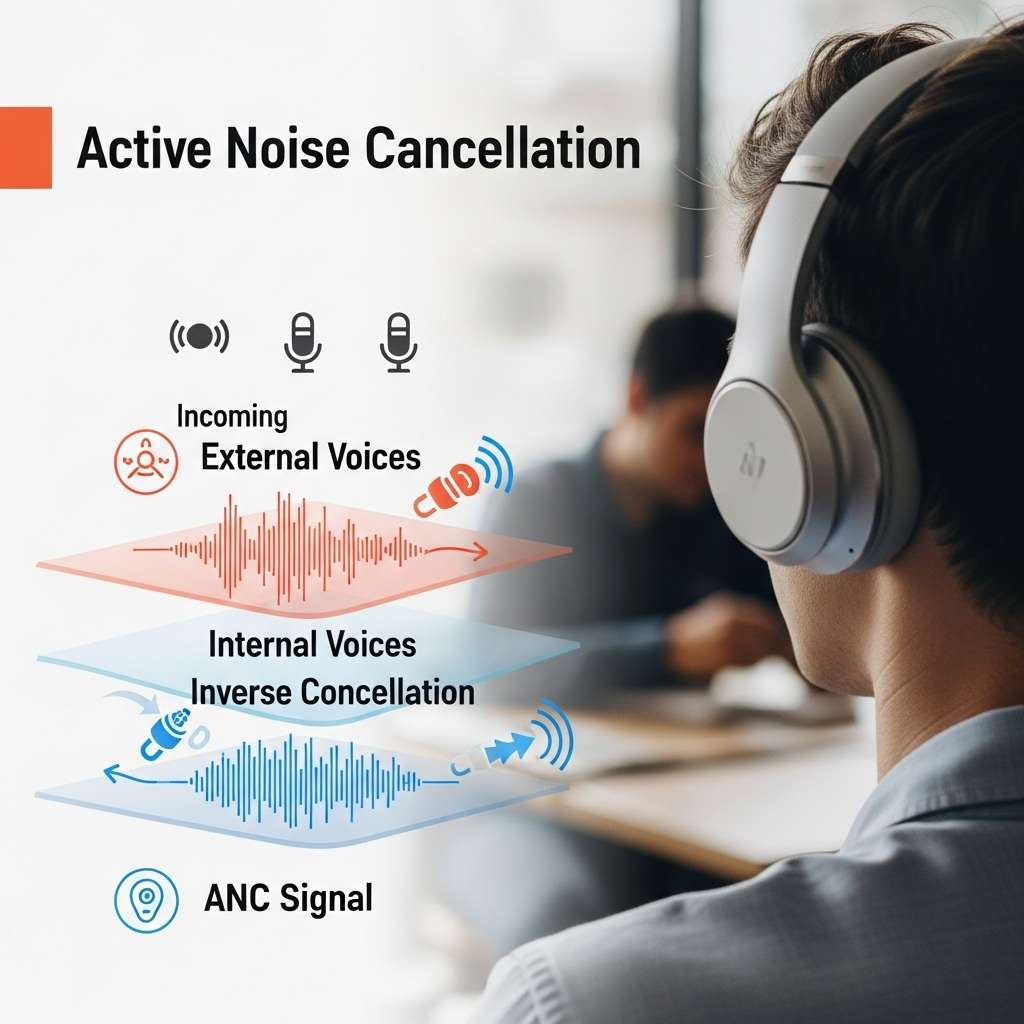
ANC detects ambient noise through built-in microphones and generates opposing sound waves to neutralize it, excelling at steady low frequencies up to 400 Hz where male voices have energy. Human speech spans 100-8000 Hz with sudden bursts and modulations, which ANC processes too slowly to cancel completely, allowing chatter to leak through especially in quiet settings.
Passive isolation from ear cups or tips blocks voices better across mid-frequencies (500-2000 Hz), complementing ANC for hybrid results in offices or cafes.
Real-world tests show ANC mutes distant talk in planes but lets nearby conversations remain audible, as voices exceed 70 dB peaks that conduct via bone. Top models like Sony WH-1000XM6 or Bose QuietComfort Ultra reduce voices noticeably when paired with music or masking sounds, yet no mainstream ANC fully silences direct speech.
2. Why Choose ANC Headphones?
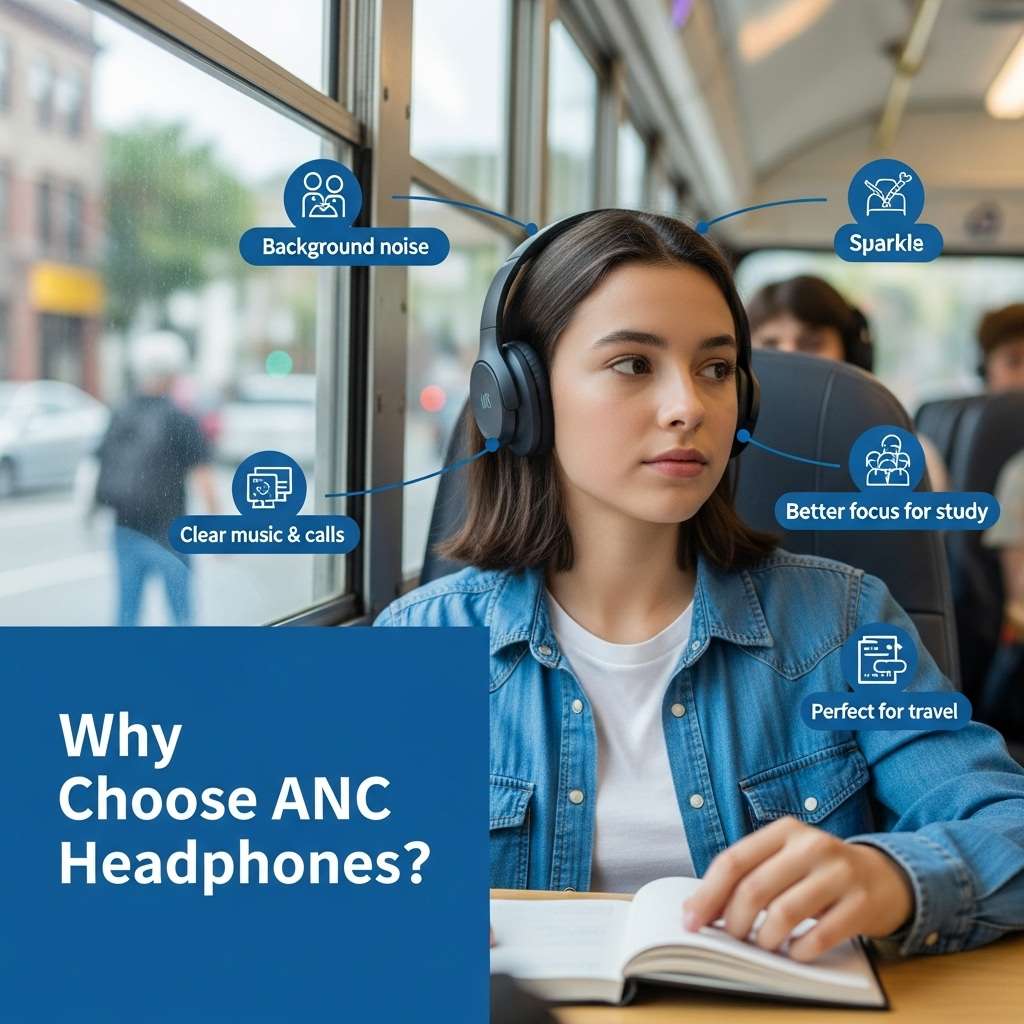
ANC headphones shine for travel, commuting, or open offices where constant drone overwhelms voices, offering comfort over bulky earmuffs. Premium options like Sony WF-1000XM5 provide adaptive ANC that adjusts to environments, blocking low-end speech better than budget pairs while supporting transparency modes for safety.
Battery life up to 30 hours, app controls for EQ, and multipoint Bluetooth make them versatile for work or workouts, unlike passive plugs that fatigue ears quickly.
Users report Bose excels in cafes, reducing crowd babble by emphasizing seals and algorithms tuned for speech ranges, outperforming Sony in raw isolation. For 2025, models integrate AI to predict voice patterns, improving on older tech without full elimination. Durability, wireless freedom, and call quality justify the investment for frequent noise exposure, blending style with function.
3. Top ANC Picks for Voice Reduction
Selecting headphones involves balancing ANC strength, fit, and extras. Bose QuietComfort Ultra Earbuds lead with superior seals blocking voices in crowds, ideal for studying amid chatter. Sony WH-1000XM6 over-ears handle low speech frequencies best, perfect for flights where engine hum masks talk.
| Model | Best For | Voice Blocking Strength | Battery Life | Price Range |
|---|---|---|---|---|
| Bose QC Ultra Earbuds | Crowded spaces | Excellent (with seal) | 6-24 hrs | High |
| Sony WH-1000XM6 | Travel/Offices | Very Good (low freq) | 30+ hrs | High |
| Sony WF-1000XM5 | Portability | Good (adaptive) | 8-24 hrs | Mid-High |
| Apple AirPods Pro 2 | Apple ecosystem | Moderate | 6-30 hrs | Mid |
| Soundcore Space A40 | Budget | Fair (with foam tips) | 10-40 hrs | Low |
These picks prioritize real-user feedback on voice scenarios, ensuring value.
4. Tips to Maximize Voice Blocking
Combine ANC with passive isolation: Use foam tips or over-ears for 15-30 dB mid-frequency cuts, then layer low white noise via apps like myNoise tuned to 500-2000 Hz sliders. Test fit in noisy spots; poor seals let voices dominate, so swap tips for airtight closure.
Play speech-optimized masking like waterfall sounds at moderate volume to drown remnants without distortion, adjusting EQ for your headphones’ weak spots. Enable adaptive ANC modes and position mics outward; avoid wind which disrupts processing. For extreme cases, stack earplugs under headphones or use earmuffs like 3M Worktunes for 30+ dB total reduction.
Maintain via firmware updates for AI improvements, clean mics regularly, and pair with white noise playlists on Spotify for consistent masking. Experiment in your environment cafes favor Bose, planes Sony to dial in 80% voice reduction.
Conclusion
Active Noise Cancellation can reduce the impact of talking, but it isn’t a complete solution on its own. Because ANC works best with steady, low-frequency sounds, human voices often slip through unless supported by strong passive isolation or audio masking.
In busy, real-world environments, this combination makes the difference between distraction and focus. As ANC technology continues to evolve, improved speech filtering is becoming more realistic helping users stay productive, calm, and engaged, even when surrounded by everyday noise and constant conversations.
Frequently Asked Questions
Does ANC block all voices? No, it reduces low-end speech but lets dynamic talk through; combine with isolation for best results.
ANC vs. earplugs for voices? Earplugs excel passively across frequencies, ANC adds low-end punch—use both for loud chatter.
Best cheap ANC for offices? Soundcore options offer solid value with foam tips, blocking moderate talk effectively.
Will ANC work in quiet rooms? Less so, as it shines against background drone; voices stand out without ambient cover.
Future of ANC for speech? AI enhancements in 2025 models like Sony XM6 improve prediction, nearing fuller block.