Picture this: you just boarded a 14-hour flight to Tokyo. You settle into your cramped economy seat and pull out your expensive noise-canceling headphones to block out the crying baby three rows back.
Then, you grab your trusty neck travel pillow to catch some much-needed sleep. Instantly, disaster strikes.
The thick foam pushes your earcups forward, the headband digs into your skull, and you suddenly face a terrible choice. Do you sacrifice your neck or do you sacrifice your sanity?
I know this pain intimately. I spent years arriving at my destinations looking like a sleep-deprived zombie with a severely stiff neck.
You probably wonder the exact same thing I did during those miserable red-eye flights: can headphones be worn with a neck travel pillow? Let us solve this ultimate travel conundrum together.
1.The Short Answer: Yes, But It Takes Finesse
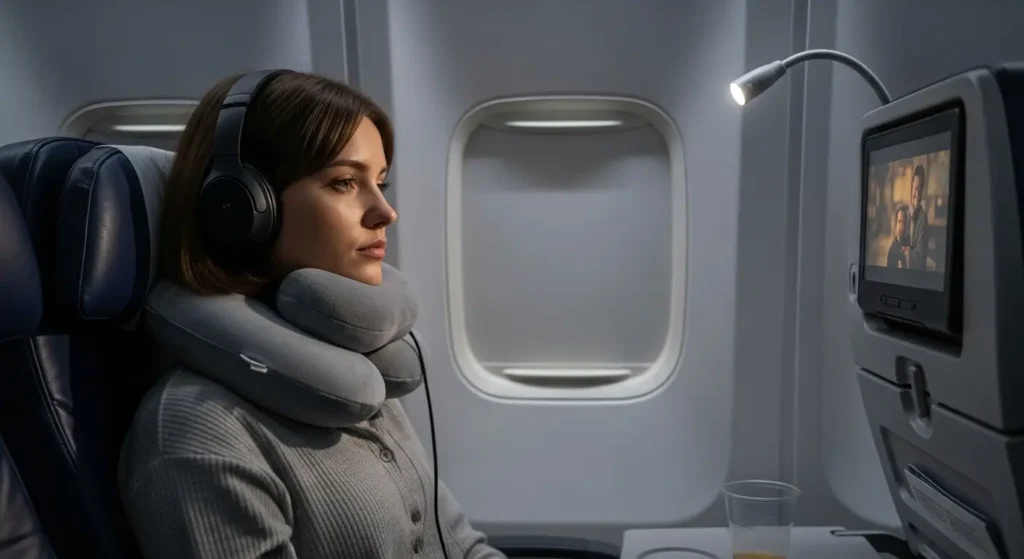
Let me give you the good news right away. You absolutely can wear your headphones and your neck pillow at the exact same time.
You just need to match the right audio gear with the right neck support. You cannot simply smash a massive pair of studio monitors against a bulky, cheap airport pillow and expect stellar results. That amateur combination guarantees a miserable flight
Manufacturers design most standard neck pillows to support your jaw and neck, completely ignoring the precious space your ears occupy.
Therefore, you must become a strategic traveler. You have to curate your travel kit to ensure the two items complement each other rather than fight for real estate on your head.
Ever tried sleeping while a plastic headphone hinge slowly crushes your ear cartilage? I have, and I highly recommend avoiding the experience entirely.
2. The Science of In-Flight Sleep: Why You Need Both
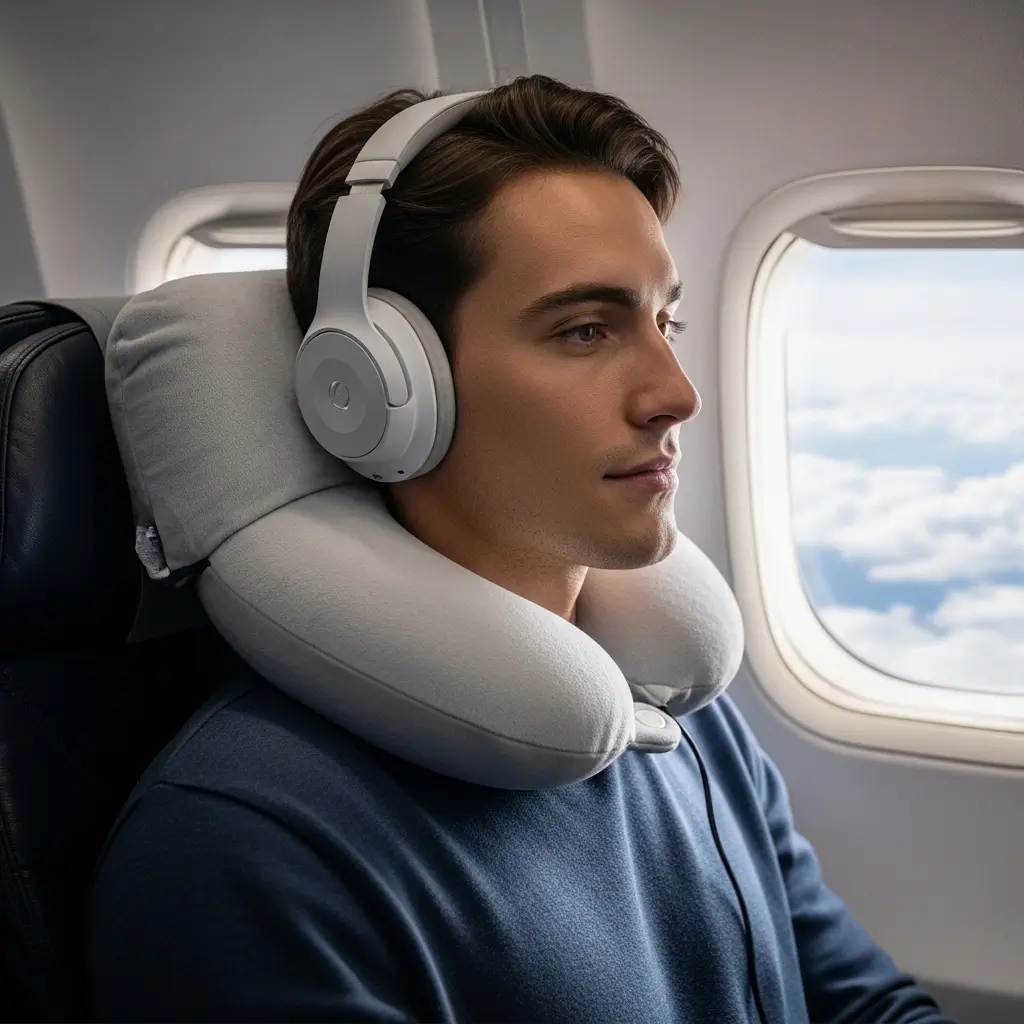
Traveling across multiple time zones wreaks absolute havoc on your circadian rhythm. Your brain requires a specific environment to trigger deep sleep.
You need darkness, quiet, and physical relaxation. Airplanes actively fight against all three of these basic requirements.
The massive jet engines roar at a deafening 85 decibels. Flight attendants constantly turn the cabin lights on and off. The upright economy seats put immense, unnatural strain on your cervical spine.
Therefore, you cannot treat your headphones and your neck pillow as optional luxury items. They represent essential survival tools. Your headphones eliminate the auditory stress.
Active noise cancellation tricks your brain into thinking you sit in a perfectly quiet room. Simultaneously, your neck pillow eliminates the physical stress.
Proper neck support prevents your muscles from constantly firing to keep your heavy head upright. When you combine both tools successfully, you create a micro-environment that actually allows your body to rest.
3. Over-Ear Headphones vs. Earbuds: The Ultimate Showdown
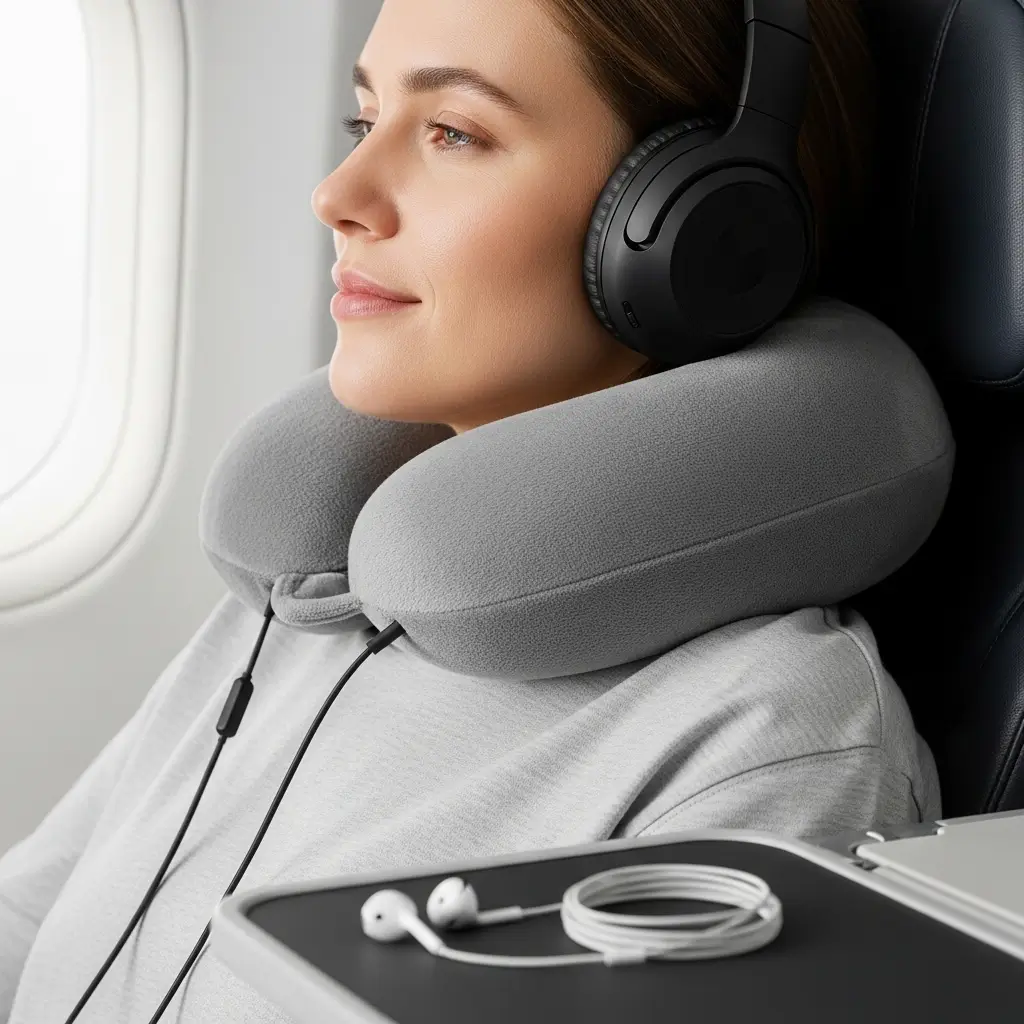
We need to talk about your audio source first. Travelers generally fall into two distinct camps: over-ear headphone loyalists and true wireless earbud fans. Each option brings specific challenges when you add a neck pillow to the equation.
Over-Ear Headphones: The Bulky Champions
I adore my premium over-ear headphones for their magical ability to erase jet engine noise completely. However, over-ear headphones feature massive earcups that extend far past your ears.
When you lean your head back, these cups inevitably crash into the sides of most traditional neck pillows. This collision pushes the headphones forward, breaking the crucial acoustic seal and ruining the active noise cancellation.
To fix this annoying issue, you have to look closely at the headphone’s profile. Slimmer earcups offer a much better experience when you pair them with travel pillows. If you insist on wearing massive audiophile cans, you will need a highly specialized pillow to accommodate them.
True Wireless Earbuds: The Sleek Alternative
Earbuds solve the bulk problem instantly. Earbuds sit flush inside your ear canal, leaving plenty of room for your neck pillow to hug your face securely.
IMO, they offer the easiest path to true in-flight comfort. You simply put them in, wrap your pillow around your neck, and fall asleep.
But earbuds possess a dark side. Have you ever dropped a tiny black earbud into the dark abyss of an airplane seat crevice? I lost a premium left earbud somewhere over the Atlantic Ocean last year, and I still mourn its absence.
Furthermore, wearing earbuds for ten hours straight often causes severe ear fatigue. Your ear canals need a break, or they will ache long after the plane lands.
4. Choosing the Right Neck Travel Pillow
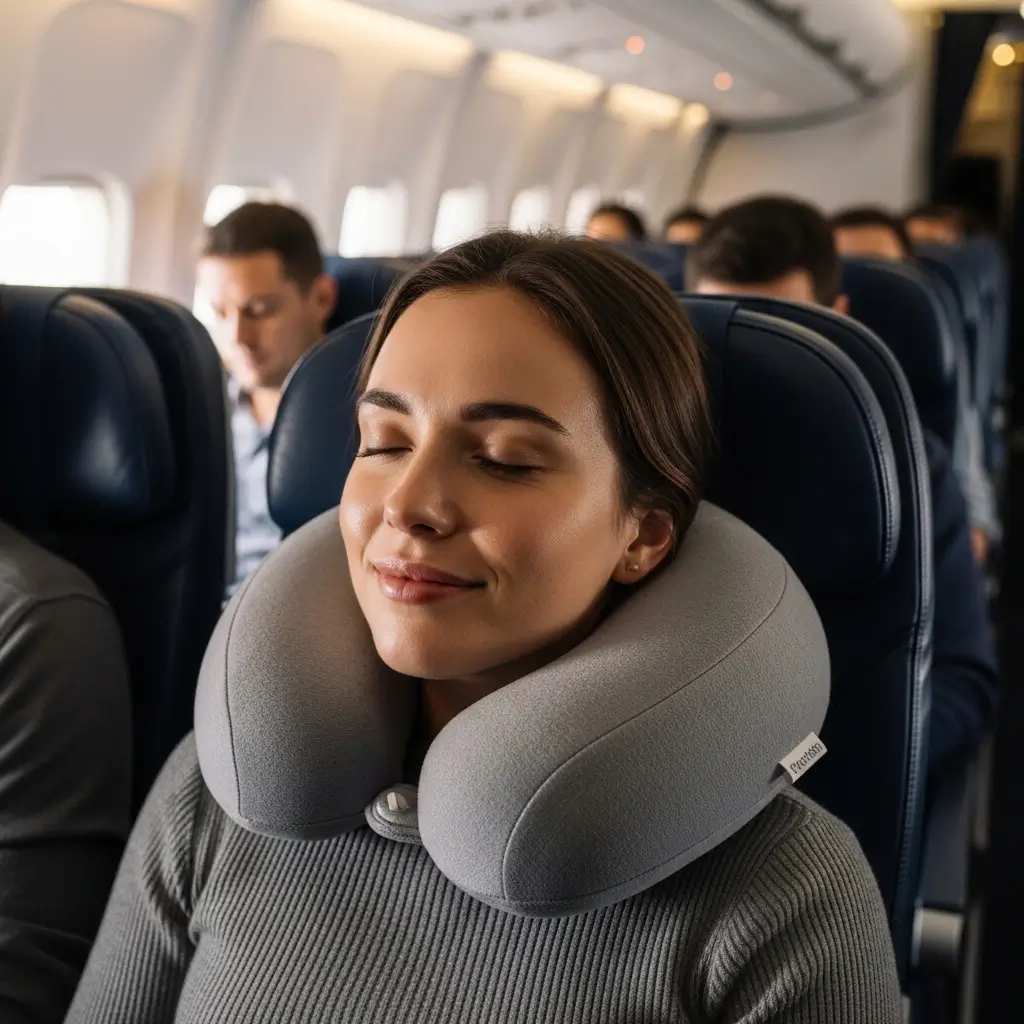
Your choice of pillow matters just as much as your audio gear. You cannot just grab the cheapest, brightest option at the airport kiosk five minutes before boarding. Let me guide you through the primary contenders.
The Classic U-Shaped Memory Foam Pillow
Everyone knows this ubiquitous, horseshoe-shaped accessory. Memory foam offers excellent neck support, but its thick side panels create a literal nightmare for over-ear headphone users. The dense foam refuses to yield, aggressively forcing your headphones off your ears.
If you use sleek earbuds, you can use these thick pillows without any issues at all. If you wear over-ear headphones, you must execute a specific maneuver: spin the pillow entirely around.
Wearing a U-shaped pillow backward supports your chin and leaves the sides of your head completely free for your bulky earcups.
Ever wondered why this works so well? It shifts the bulk away from your ears while preventing your head from bobbing forward. You look slightly ridiculous, but you will sleep like a baby.
The Wraparound Scarf Pillow
Innovative companies revolutionized travel sleep with these modern scarf-like designs. A hidden flexible plastic rib provides structural support for your neck, while soft, cozy fleece wraps around your jaw. These pillows maintain an incredibly slim profile on the side of your head.
I consider the wraparound pillow the absolute holy grail for over-ear headphone users. Because the thin fabric sits perfectly flat against your cheek, your headphones hover right above it. They never touch. Why didn’t someone invent this brilliant design decades ago?
The Inflatable Contoured Pillow
People give inflatable pillows a bad reputation because early models felt exactly like cheap pool toys. However, modern versions feature ergonomic designs and soft velvet covers. You control the exact firmness by adjusting the air pressure.
This adjustability gives you a massive tactical advantage. You can deflate the pillow slightly so it squishes safely out of the way of your headphones. Plus, they pack down to the size of a soda can, saving precious space in your backpack.
5. Materials Matter: Choosing the Right Fabric
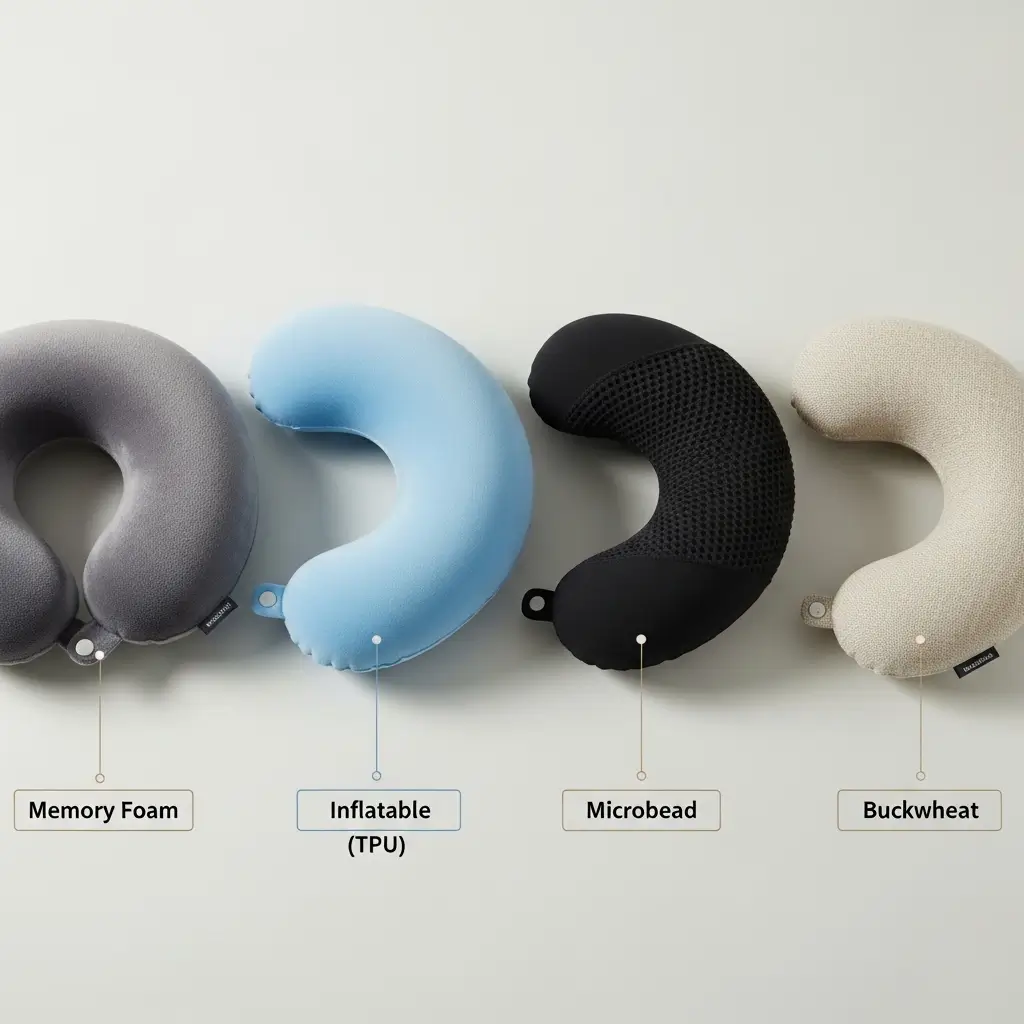
When you press a thick pillow against your skin and slap massive headphones over your ears, you generate a surprising amount of body heat. You must consider the materials of your gear to avoid waking up in a gross pool of sweat.
- Velour and Fleece: These soft materials feel incredibly cozy in a freezing airplane cabin. However, fleece traps heat exceptionally quickly. If your over-ear headphones also feature synthetic leather earpads, your head will feel like a raging furnace.
- Cooling Gel Memory Foam: Many premium U-shaped pillows now incorporate a dedicated layer of cooling gel. This advanced gel absorbs your body heat and keeps your neck at a comfortable temperature throughout the flight. I highly recommend these specific models if you naturally run hot.
- Breathable Mesh: Some modern neck pillows utilize athletic mesh fabrics. These porous materials promote continuous airflow. When you combine a mesh pillow with true wireless earbuds, you maintain a perfectly cool temperature during your entire journey.
6. Wired vs. Wireless: Which Reigns Supreme in the Air?

We also need to address how your headphones connect to your devices. The wired versus wireless debate rages on, and travel exposes the unique flaws of both audio systems.
- The Case for Wireless Bluetooth: Freedom of movement makes Bluetooth gear incredibly appealing for frequent flyers. You never accidentally yank a cord when you reach into your bag for a mid-flight snack. Wireless headphones give you a clean, uncluttered space. However, you constantly monitor your battery life to ensure they survive the trip.
- The Case for the Classic Wire: Call me old-fashioned, but I still love a good wired connection on a long flight. Wired headphones plug directly into the airplane’s in-flight entertainment system. You never worry about charging them. Unfortunately, wires tangle constantly. If your neck pillow features velcro straps or tight snaps, the wire inevitably gets caught in the mechanism.
If you use a traditional U-shaped pillow, go wireless. The lack of annoying cables makes spinning the pillow backward much easier. If you use a minimalist inflatable or wraparound pillow, you can easily manage a wired connection. FYI, some airlines still use those weird two-pronged audio jacks, so always buy a cheap adapter!
7. Winning Combinations for Your Next Flight
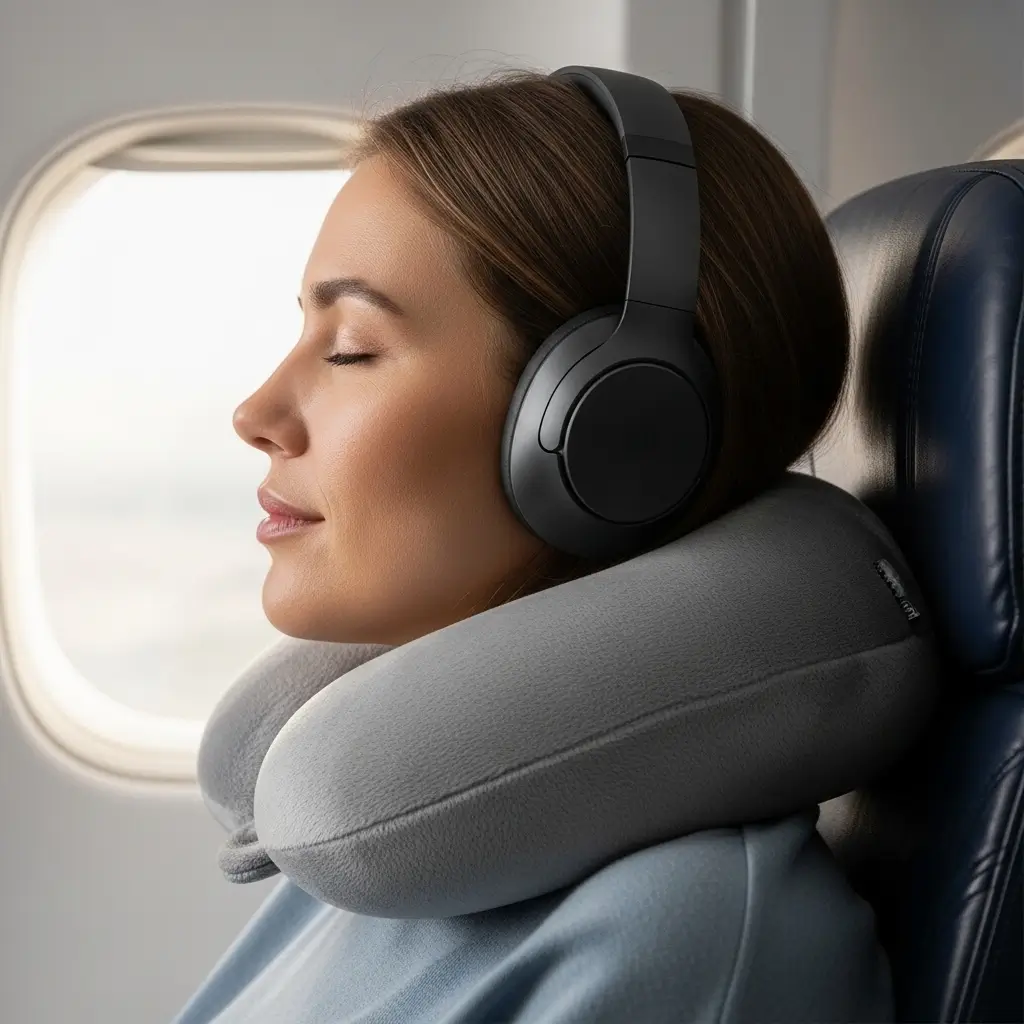
Let us put theory into actual practice. Over the years, I tested countless combinations so you do not have to endure the trial and error. Here are the most effective pairings for long-haul travel.
- The Minimalist Setup: True Wireless Earbuds + U-Shaped Memory Foam Pillow. This setup guarantees absolutely zero physical interference. You get maximum neck support and excellent noise isolation. Just remember to pack your charging case securely so you do not run out of battery mid-flight.
- The Audiophile Setup: Slim Over-Ear Headphones + Wraparound Scarf Pillow. This combination changed my travel life entirely. The scarf supports your neck seamlessly while leaving your ears completely unobstructed. You get premium, room-filling sound without the claustrophobia.
- The Budget Traveler Setup: Standard Wired Earbuds + Inflatable Pillow. You skip the battery anxiety entirely with this approach. Wired earbuds never run out of juice, and a basic inflatable pillow costs next to nothing. You might deal with a tangled wire, but your neck and your wallet will thank you immensely.
8. Pro Tips for Maximum Comfort
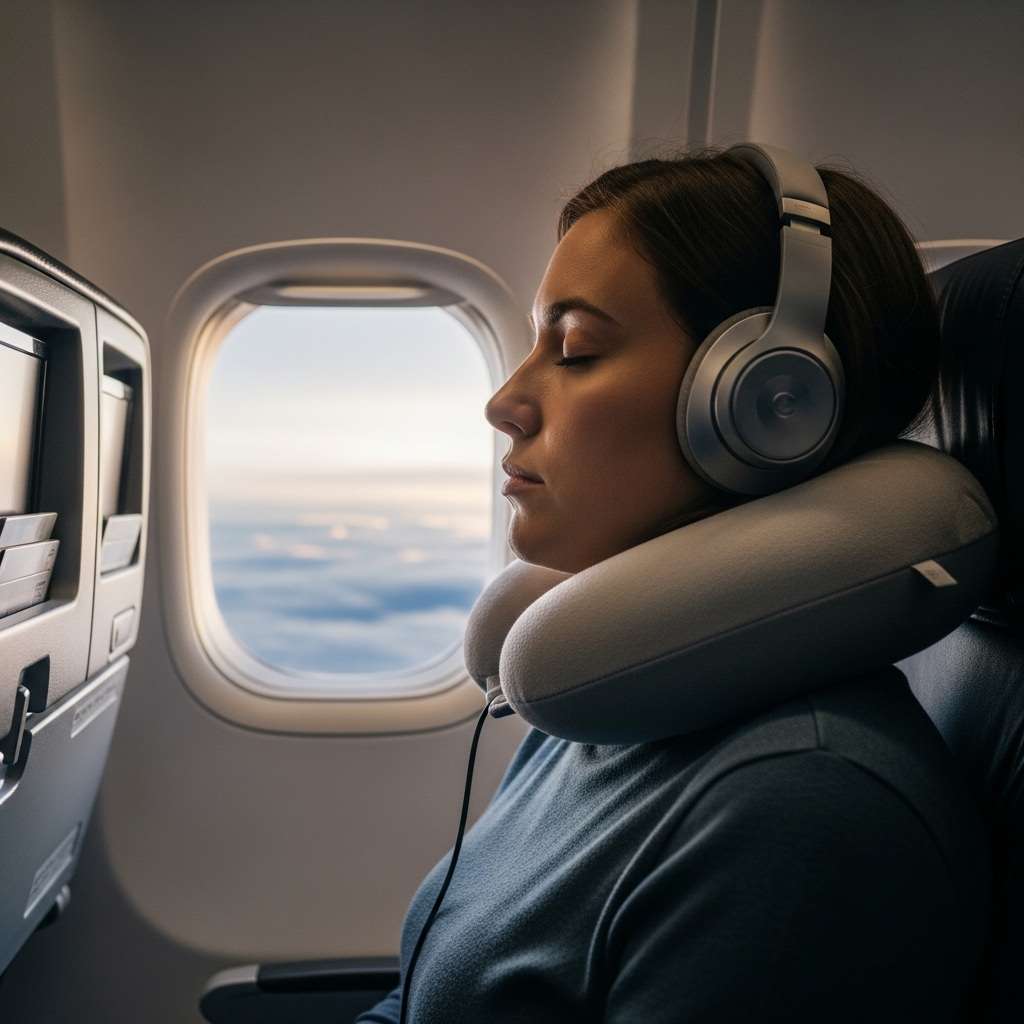
Having the right gear only solves half the puzzle. You also need the proper technique to survive a brutal red-eye flight. Apply these practical tips next time you cross major time zones.
- Spin that pillow backward: I mentioned this trick earlier, but it bears repeating. Resting your chin on the thick part of a U-shaped pillow stops your heavy head from bobbing forward. This simple adjustment magically clears up the necessary space around your ears.
- Turn down the volume: You might want to blast heavy metal music to drown out the loud snoring guy next to you. Do not do it. Prolonged exposure to loud music damages your hearing permanently. Rely on your active noise cancellation to kill the background hum, and keep your music at a reasonable, safe volume.
- Take regular physical breaks: Your body absolutely hates sitting still for hours on end. Take your headphones off and remove your pillow every time you get up to use the restroom. Stretching your neck and letting your ears breathe prevents painful soreness.
- Always bring a backup audio source: Batteries die. Bluetooth connections inexplicably fail. Always pack a cheap pair of wired earbuds in your carry-on bag just in case disaster strikes. You really do not want to stare blankly at the seatback screen for eight miserable hours.
Common Mistakes to Avoid
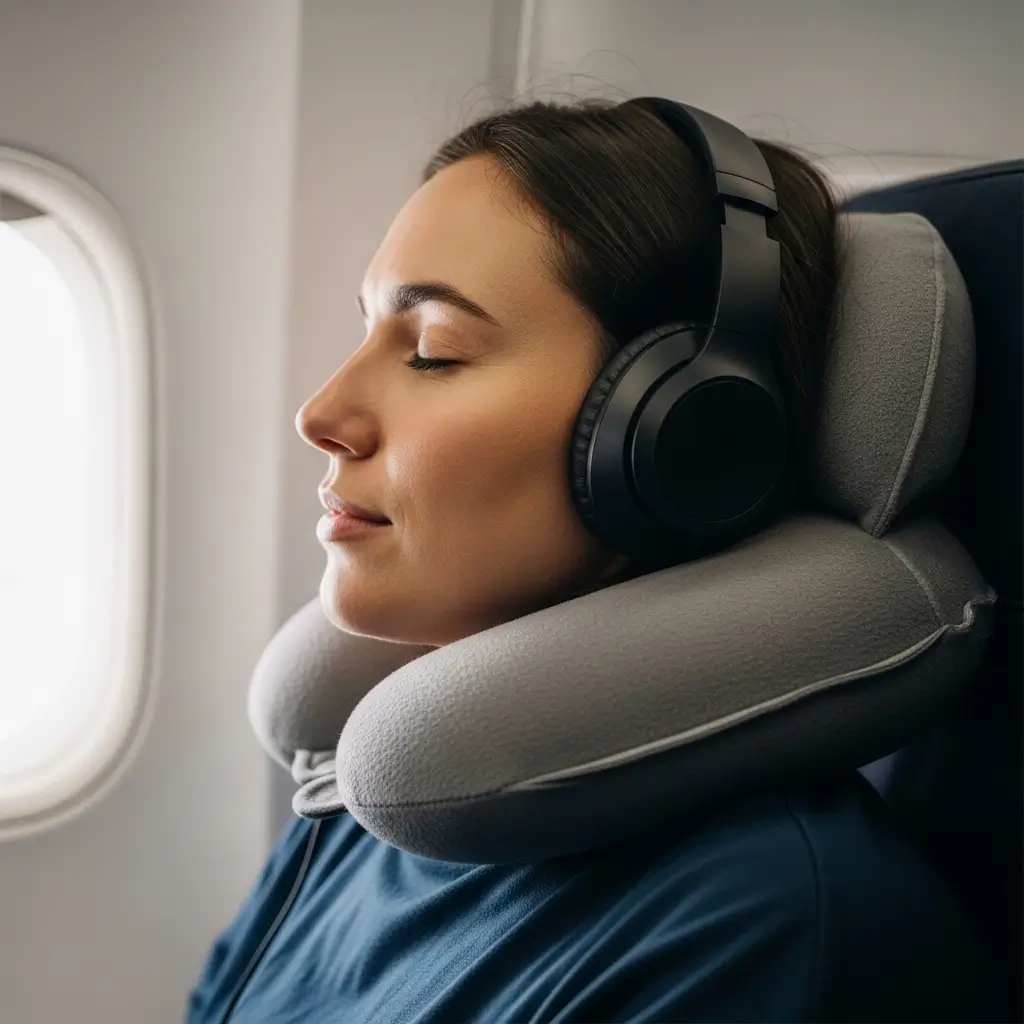
I see amateur travelers make the exact same errors on every single flight. Let me save you some unnecessary embarrassment and severe discomfort. Do not fall into these incredibly common traps.
- Over-tightening your headphones: When people feel the pillow pushing their headphones off, they instinctively tighten the headband. This overcompensation creates unbearable pressure on the top of your skull. Always leave a little slack in your headband to prevent massive tension headaches.
- Ignoring the cabin pressure: As the airplane changes altitude, the atmospheric pressure inside your ear changes rapidly. Noise-canceling headphones sometimes amplify this weird, uncomfortable suction feeling. Pop your ears regularly by chewing gum or swallowing water to relieve the internal pressure.
- Buying bulky gear for small bags: You have severely limited space in your under-seat personal item. Do not buy a massive, uncompressible foam pillow and a giant headphone hard-case. Choose flexible gear that folds, compresses, or clips safely to the outside of your bag.
Conclusion: Master Your Travel Setup
So, can headphones be worn with a neck travel pillow? Absolutely. You just have to stop treating them as two completely isolated items.
Think of your headphones and your pillow as a fully integrated travel system. By choosing the exact right combination whether that means pairing sleek true wireless earbuds with a plush memory foam U-shape, or matching premium over-ear cans with a slim wraparound scarf you can finally achieve the impossible dream.