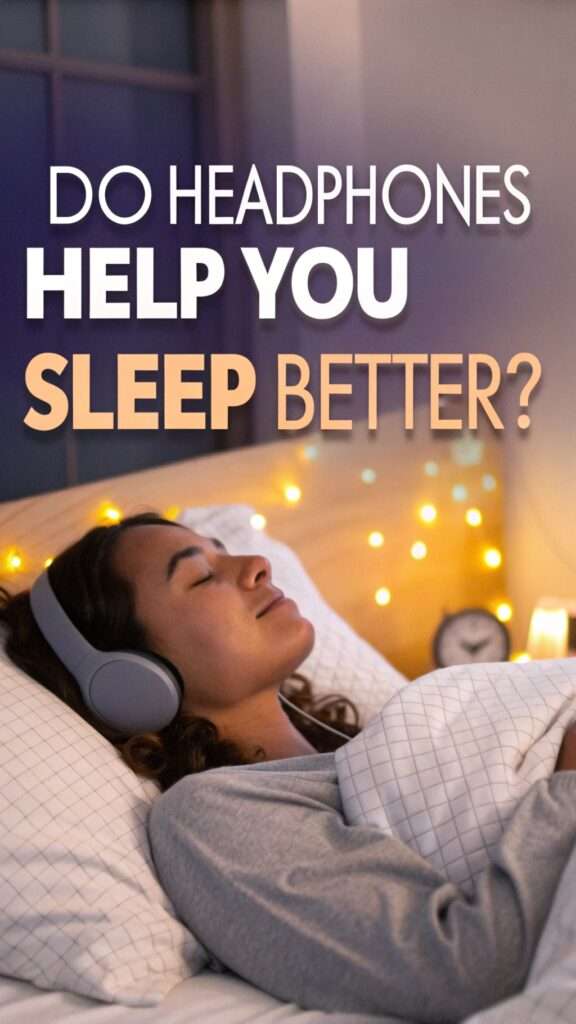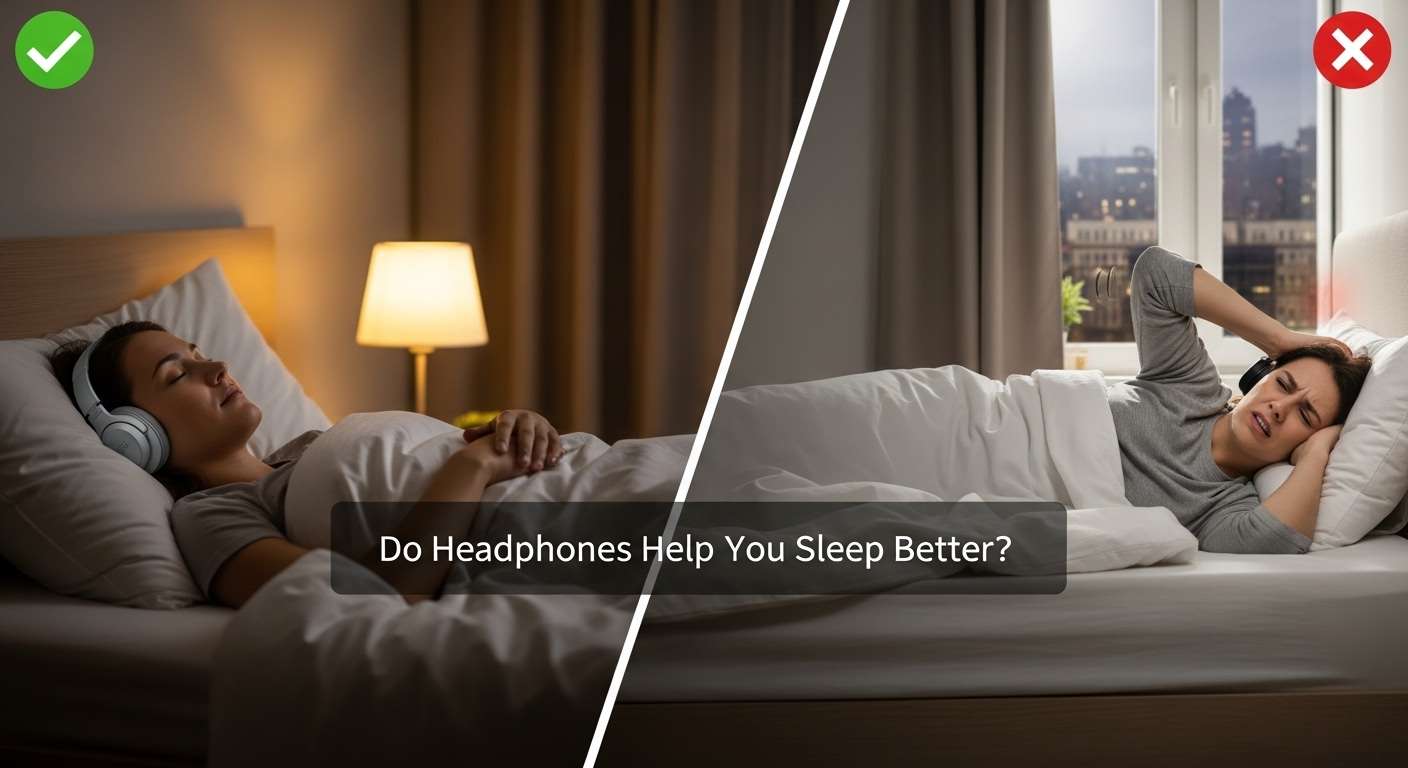
You know the feeling. It’s 2:00 AM, and you’re staring at the ceiling. Maybe your partner is sawing logs next to you, or the neighbor decided that Tuesday night is the perfect time to practice their bass guitar.
You just want some peace. You reach for your headphones, desperate for an escape. But then you pause. Is this actually a good idea? Will I wake up tangled in a cord? Will I ruin my hearing?
I’ve been there. In fact, I spent three years living next to a train station, so I consider myself a reluctant expert on nocturnal noise management. I have taped pillows to my head. I have bought industrial earplugs. And yes, I have slept with just about every type of headphone imaginable.
So, do headphones help you sleep better? The short answer is yes, absolutely—but only if you do it right. Do it wrong, and you’ll wake up with sore ears and a cranky attitude. Let’s figure out how to reclaim your sleep without destroying your ear canals.
1. Why We Need Noise to Beat Noise
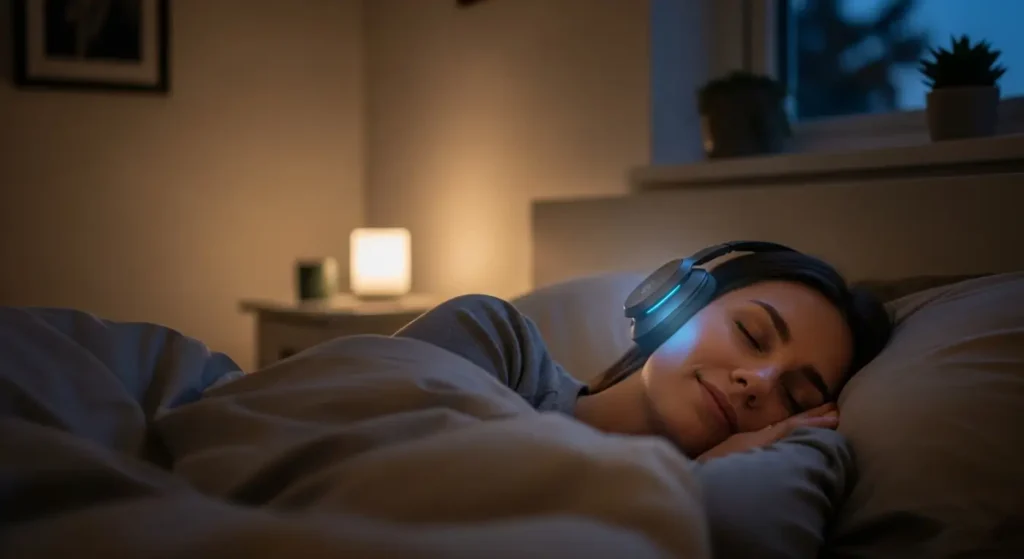
It sounds counterintuitive, right? You want silence, so you pump more sound into your ears. But strict silence usually isn’t the answer for a racing mind or a noisy environment.
The Concept of Sound Masking
Your brain is a security guard. Even when you sleep, it scans the environment for threats. A sudden noise a car door slamming, a dog barking spikes your alertness and wakes you up. This is the acoustic startle reflex.
Headphones don’t just block sound; they replace unpredictable noise with a constant, predictable stream. This raises your “auditory threshold.” Think of it like a candle in a dark room.
If I light a candle in pitch blackness, you notice it immediately. If I light that same candle in a bright room, you barely see it. Audio masking turns your bedroom into that bright room. The sudden noises (the candle) simply blend in.
Pacing Your Brain
Ever tried to sleep while your brain replays an embarrassing moment from 2013? Listening to a podcast or an audiobook gives your brain a focal point. It occupies the cognitive space that anxiety usually claims.
I personally rely on boring history podcasts. They are interesting enough to stop me from worrying about work, but dull enough to knock me out in ten minutes.
2. The Hardware Dilemma: Comfort is King
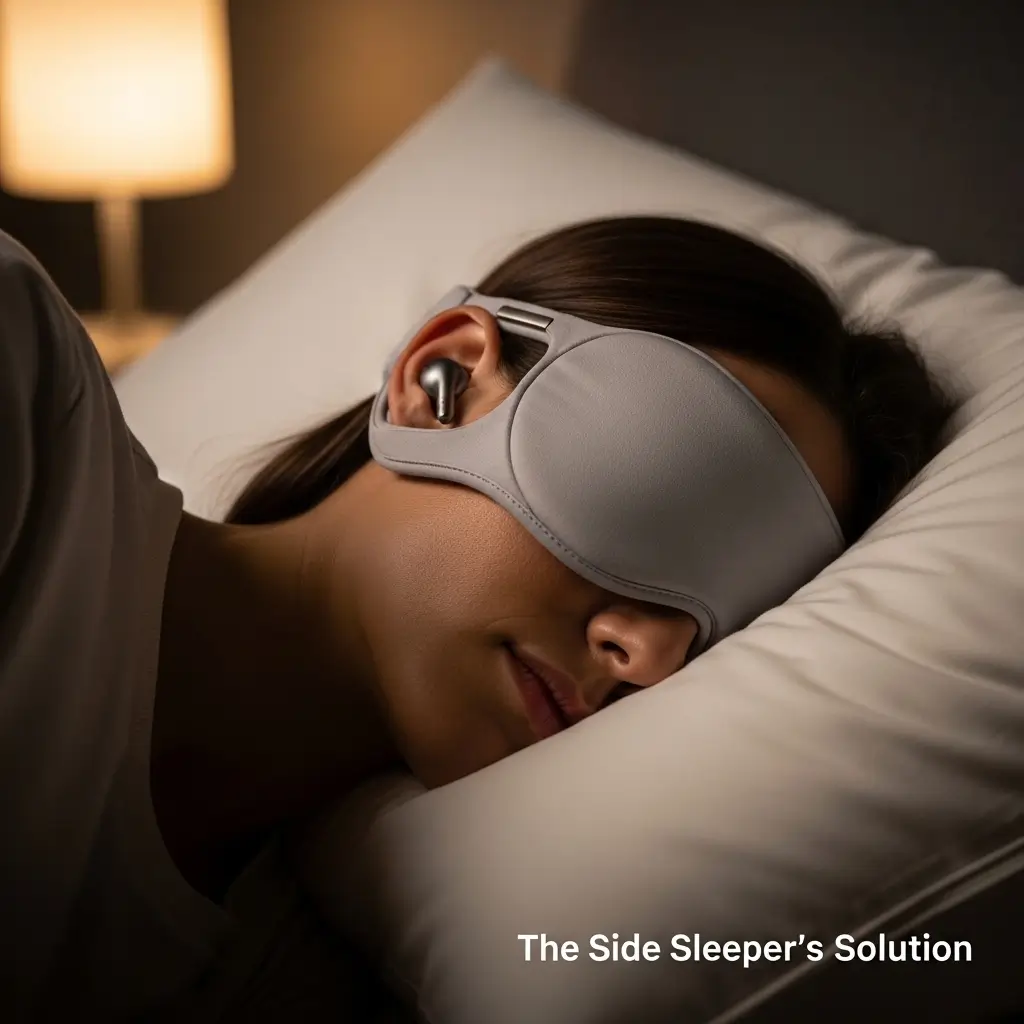
Here is the biggest hurdle. Most headphones are designed for sitting on a bus or working at a desk, not for smashing the side of your head against a pillow. If you are a back sleeper, congratulations! You can wear almost anything. For the rest of us side sleepers (the majority), this is a battle of physics.
Over-Ear Headphones (The “Cans”)
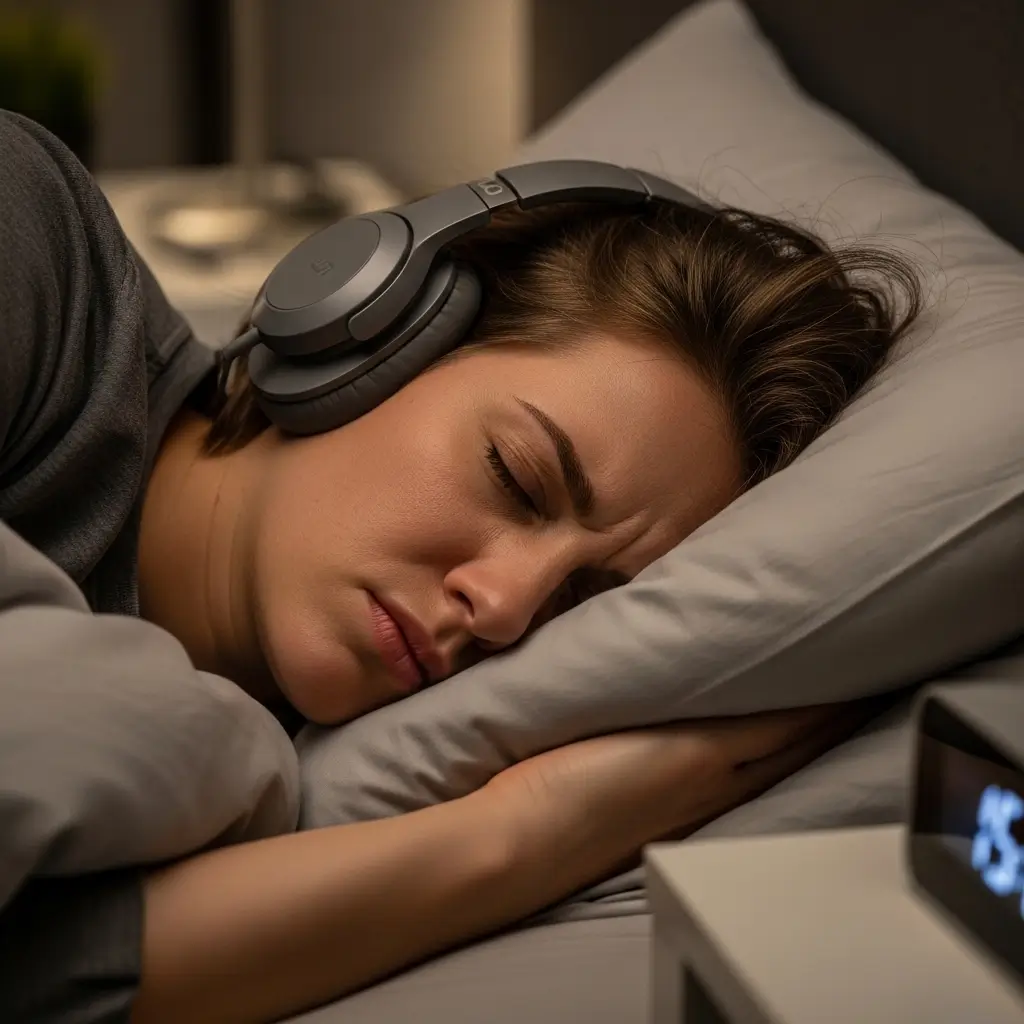
I tried sleeping in my high-end noise-canceling over-ear headphones once. Just once. It felt like sleeping with a neck brace on.
- The Good: Incredible noise cancellation. You won’t hear a thing.
- The Bad: You cannot turn your head. Your ears get hot and sweaty.
- The Verdict: Great for naps on a plane, terrible for a full night in bed.
True Wireless Earbuds
These are the most common go-to because everyone already owns a pair.
- The Good: No wires to strangle you. Good sound isolation.
- The Bad: Battery life is often shorter than a full night’s sleep. Plus, the pressure. If you sleep on your side, the pillow presses that hard plastic bud right into your ear canal. Ouch.
- The Risk: Waking up and panicking because you can only find one earbud (usually stuck to your back).
The Holy Grail: Sleep Headbands
If you take nothing else away from this chat, remember this: Sleep headphones exist, and they are a game-changer. These look like a soft athletic headband but have flat, padded speakers tucked inside the fabric.
- The Comfort: You can lie completely flat on your side. No hard plastic digs into your skull.
- The Utility: They double as an eye mask if you pull them down.
- The Verdict: IMO, this is the only sustainable way to sleep with audio long-term.
3. What Should You Actually Listen To?
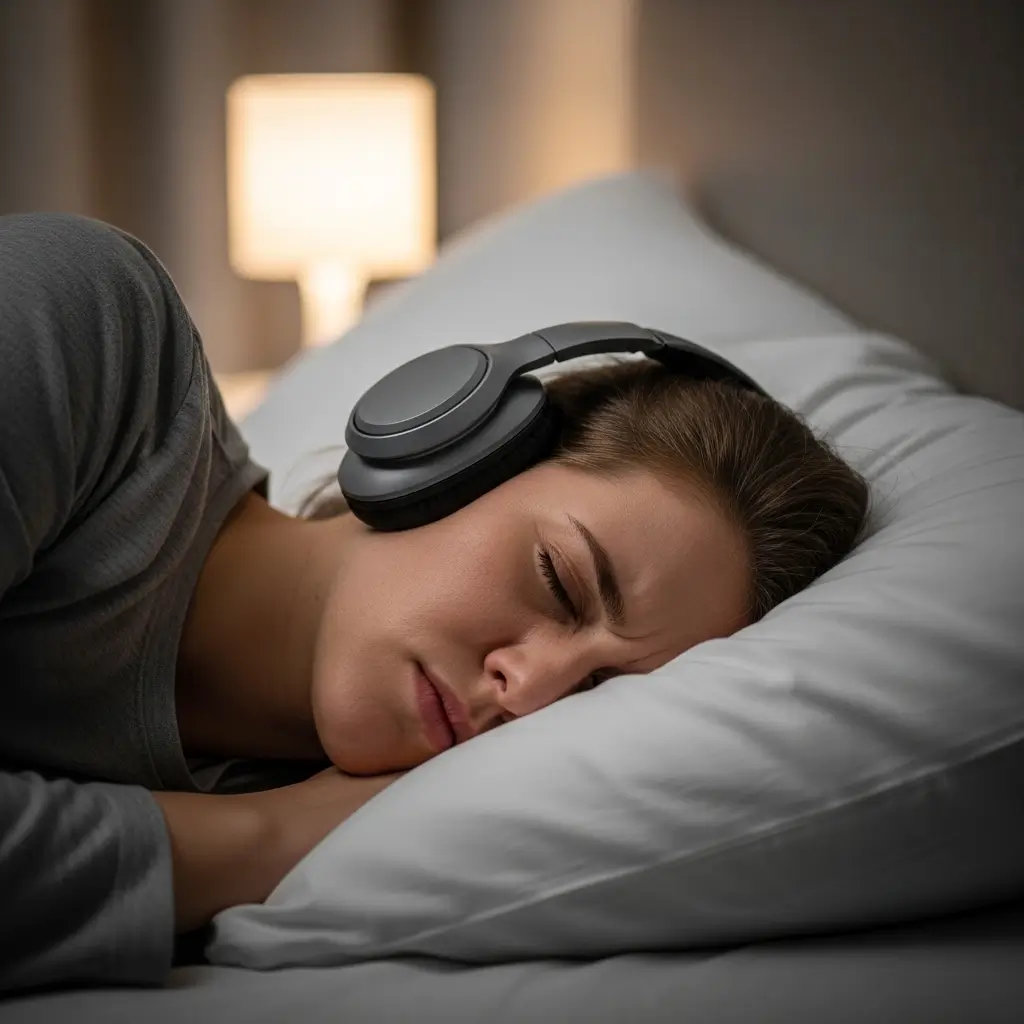
Okay, you have the gear. Now, what do you play? Blasting heavy metal probably won’t do the trick. You need audio engineered for relaxation.
White, Pink, and Brown Noise
You’ve heard of white noise (static, like an untuned TV). But have you met its calmer cousins?
- White Noise: High-pitched and intense. Good for masking, but can be harsh.
- Pink Noise: Lower frequency. Sounds like steady rain or wind.
- Brown Noise: My personal favorite. It’s deep and rumbly, like a distant thunderstorm or a waterfall. It creates a thick “blanket” of sound that drowns out everything.
Binaural Beats
This gets a bit sci-fi. The idea involves playing two slightly different tones in each ear. Your brain tries to reconcile the difference and creates a third, rhythmic tone. Proponents claim this shifts your brainwaves into a “Delta” state (deep sleep). Does it work? The science is still out on this one. I’ve tried it, and frankly, I just felt like I was inside a sci-fi movie. But some people swear by it.
ASMR (Autonomous Sensory Meridian Response)
You’ve probably seen these videos. People whispering, tapping on glass, or crinkling paper. For some, it triggers a tingling sensation down the spine that melts stress. For others, it sounds like someone chewing with their mouth open and makes them want to scream. Give it a try, but don’t force it if it creeps you out :/
4. The Safety Check: Don’t Ruin Your Ears
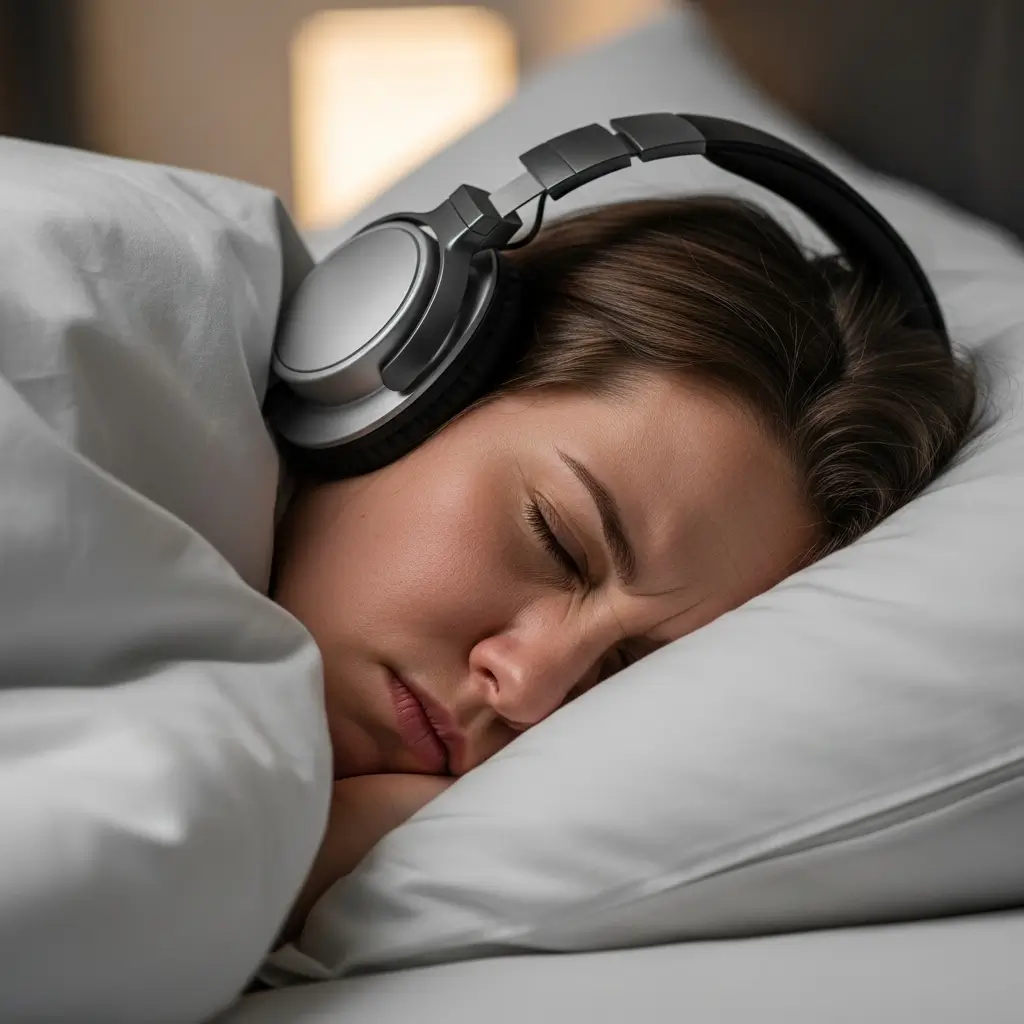
We need to have a serious talk about safety. Sleeping with headphones carries risks if you are reckless. I want you to sleep better, not go deaf.
The Volume Trap
Your ears need a break. If you blast noise all night, you risk noise-induced hearing loss.
- The Rule: Keep the volume at roughly 50% or lower.
- The Test: If you hold your headphones out at arm’s length and can still hear the lyrics clearly, it’s too loud for sleeping.
Ear Hygiene (Yes, it’s gross)
Your ears are self-cleaning ovens. They produce wax to protect themselves. When you jam an earbud in there for eight hours, you trap heat and moisture. This creates the perfect resort for bacteria.
- The Risk: Otitis externa (swimmer’s ear). It hurts. A lot.
- The Fix: If you use in-ear buds, clean them with alcohol wipes every morning. Better yet, use the headband style I mentioned earlier—they sit outside the ear canal and let your ears breathe.
The Cord Factor
If you are still rocking wired headphones, be careful. Waking up with a cord wrapped around your neck is not the way to start your day. It’s a low risk, but why risk it? Go wireless if you can.
5. Pros and Cons: A Quick Breakdown
Let’s simplify this. Here is the cheat sheet for deciding if this route suits you.
The Pros:
- Control: You control your auditory environment, regardless of your location.
- Conditioning: putting on your headphones signals your brain that “work time is over, sleep time is now.”
- Focus: Stops the mental chatter and anxiety loops.
The Cons:
- Discomfort: Sore ears are a real deal-breaker for many.
- Missed Alarms: If your noise cancellation is too good, you might sleep right through your morning alarm. (FYI: Use a vibrating alarm on your watch or phone to solve this).
- Dependency: You might find it hard to sleep without them after a few months.
6. My Personal Routine for Perfect Sleep
I want to share exactly how I do this, so you have a practical blueprint. I don’t do this every night, but when insomnia hits, this is my protocol.
- The Gear: I grab my Bluetooth sleep headband. It’s soft, washable, and the battery lasts 10 hours.
- The App: I use a sound generator app (there are dozens of free ones).
- The Sound: I mix 80% “Heavy Rain” with 20% “Distant Thunder.”
- The Timer: This is crucial. I set a sleep timer for 45 minutes. I don’t want Bluetooth radiation or noise pumping into my head all night if I don’t need it. Usually, I’m out cold before the sound fades out.
7. Troubleshooting Your Night
What if you try this and hate it?
“My ears hurt!” Stop using earbuds. Seriously. Switch to a pillow speaker (a flat speaker you place under your pillow case) or the headband. Your ears are cartilage; they aren’t meant to support the weight of plastic all night.
“I wake up when the music stops.” This happens. The sudden silence can be just as jarring as a sudden noise. You have two options: loop the sound for the whole night (keep the volume low!), or crossfade the audio so it slowly lowers the volume over an hour rather than cutting off abruptly.
“Bluetooth creates anxiety.” Some people worry about having a Bluetooth transmitter next to their brain. While current science says low-energy Bluetooth is safe, I get the concern. If this bothers you, look for “air tube” headphones or simple pillow speakers that connect via a wire to a phone you place on the floor. Peace of mind is part of sleep hygiene, too.
8. The Verdict: Should You Do It?
So, do headphones help you sleep better? Yes, but they are a tool, not a cure.
If you have a noisy environment, they are a godsend. If you have a racing mind, they are a fantastic distraction. But they don’t fix the root cause of insomnia. If you drink three espressos at 5:00 PM, headphones won’t save you. If you scroll through doom-news on your phone until midnight, the headphones won’t save you.
Think of headphones as the final line of defense. Get your room dark, cool your temperature down, and put the phone away. Then, if the sandman still refuses to visit, slip on the headphones.
Ready to Catch Some Z’s?
You don’t need to spend a fortune to test this. You probably have a pair of earbuds nearby. Tonight, try it out. Find a “Brown Noise” playlist, keep the volume low, and see if you can trick your brain into shutting down.
If you find yourself waking up refreshed (and without strangling yourself with a cord), you might just be a sleep-audio convert. Just do me a favor? Wash your ear tips. Your ears will thank you later 🙂