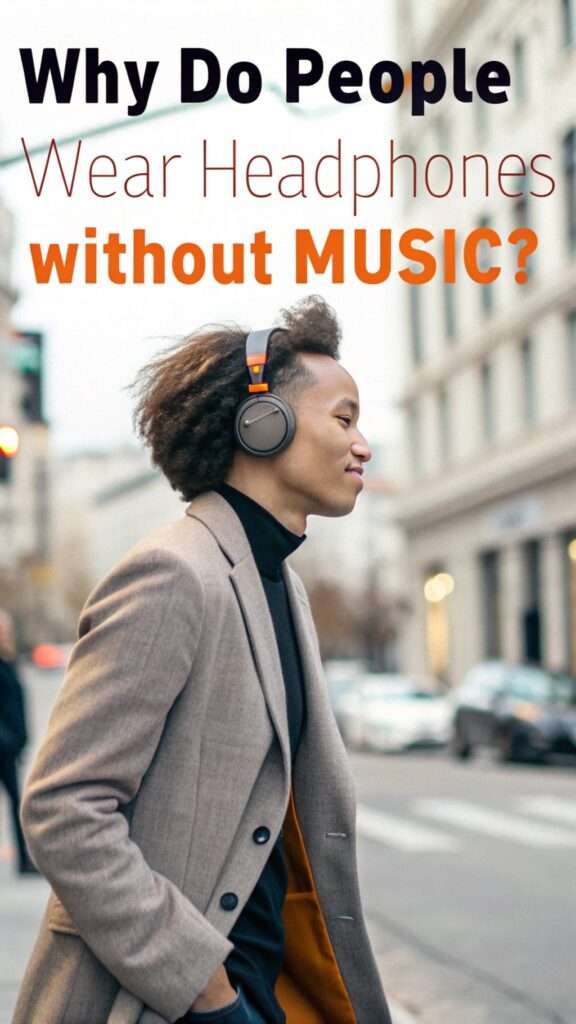
Picture this: You walk into a bustling coffee shop. The grinder is screaming, the barista is shouting names, and a couple in the corner is arguing about whose turn it is to do the dishes. You spot someone sitting calmly in the middle of this chaos. They wear massive, over-ear noise-canceling headphones. They look peaceful. Zen, even.
You assume they are blasting heavy metal or perhaps a lo-fi hip-hop playlist to drown out the world. But here is the kicker: They aren’t listening to anything.
Absolutely nothing. Just silence.
I do this all the time. In fact, I have my headphones on right now, and the only sound I hear is the dull thud of my own typing. It confuses people. My friends ask, “Why wear them if you aren’t using them?” But that question misses the point entirely. We are using them. We just aren’t using them for music.
If you have ever wondered why so many people walk around with silent cans on their heads, you have come to the right place. Let’s break down the psychology, the utility, and the sheer joy of the silent headphone phenomenon.
1. The Universal “Do Not Disturb” Sign
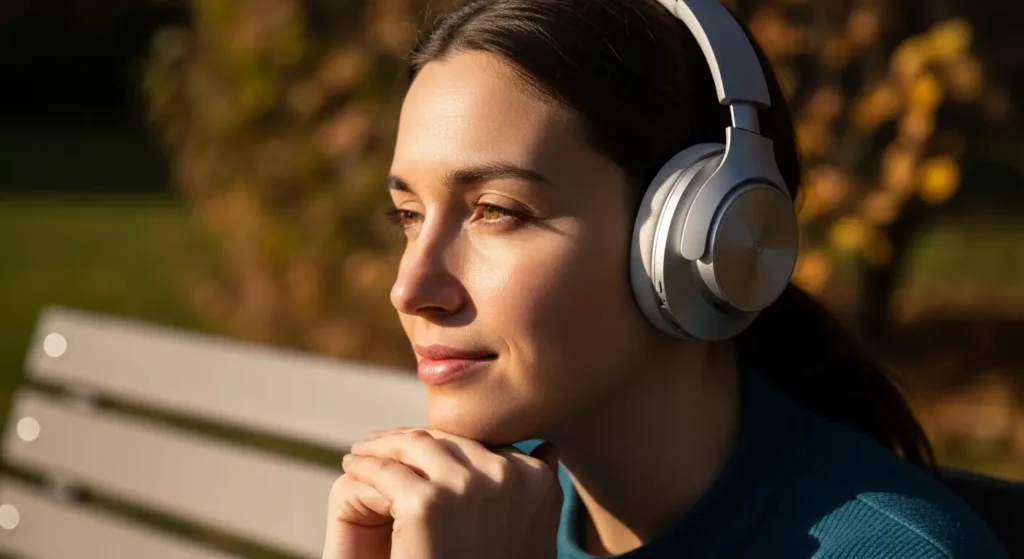
Let’s be honest. Interaction exhausts us sometimes. We love our friends and colleagues, but we also love not talking to them. Headphones serve as the modern, socially acceptable equivalent of a “Keep Out” sign.
Visual Barriers in Open Offices
Open-plan offices destroyed our privacy. Employers thought tearing down walls would foster “collaboration,” but they mostly just fostered distraction. IMO, they are a nightmare for productivity.
When you wear headphones, you send a clear signal to your coworkers. You tell them, “I am in the zone, please do not ask me about the printer.” It creates a psychological barrier. Even if you hear them approach, the headphones buy you plausible deniability. You can pretend you didn’t hear them, keep typing, and hope they walk away. It works like a charm.
The Commuter’s Shield
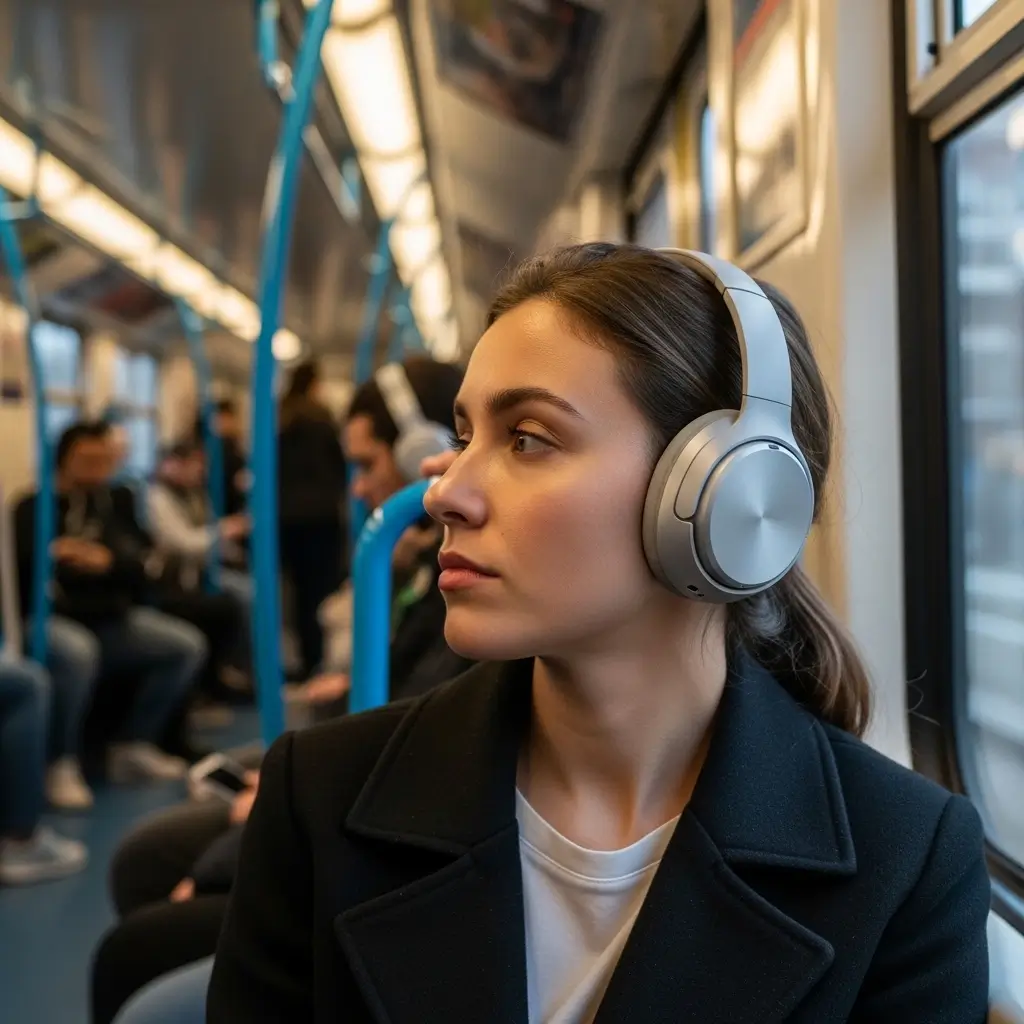
Public transport presents a different battlefield. You have street preachers, loud phone talkers, and that one guy playing TikToks at full volume. Wearing headphones creates a personal bubble.
It signals to strangers that you are not open for a chat. You avoid the awkward small talk with the person sitting next to you on the plane. You protect your energy. We don’t wear them to hear music; we wear them to not hear you.
2. The Magic of Active Noise Cancellation (ANC)
Technology changed the game with Active Noise Cancellation. Before ANC, headphones just muffled sound. Now, they actively destroy it. This feature alone justifies wearing headphones without music.
How ANC Creates “Anti-Noise”
Without getting too bogged down in physics, here is the gist: microphones on the outside of the headphones listen to the environment. The chip inside creates an opposite sound wave that cancels out the external noise.
The result isn’t just quiet; it’s a vacuum of sound.
- Sudden Peace: The moment you toggle that ANC switch, the air conditioner hum vanishes.
- Reduced Stress: Constant low-frequency noise (like airplane engines or traffic) spikes cortisol levels. ANC eliminates this stressor.
- Audio Clarity: You hear your own thoughts clearer when the background drone disappears.
I often wear my Sony XM5s just to mute the refrigerator hum in my kitchen. It’s not about entertainment; it’s about sensory relief.
3. Sensory Regulation and Neurodivergence
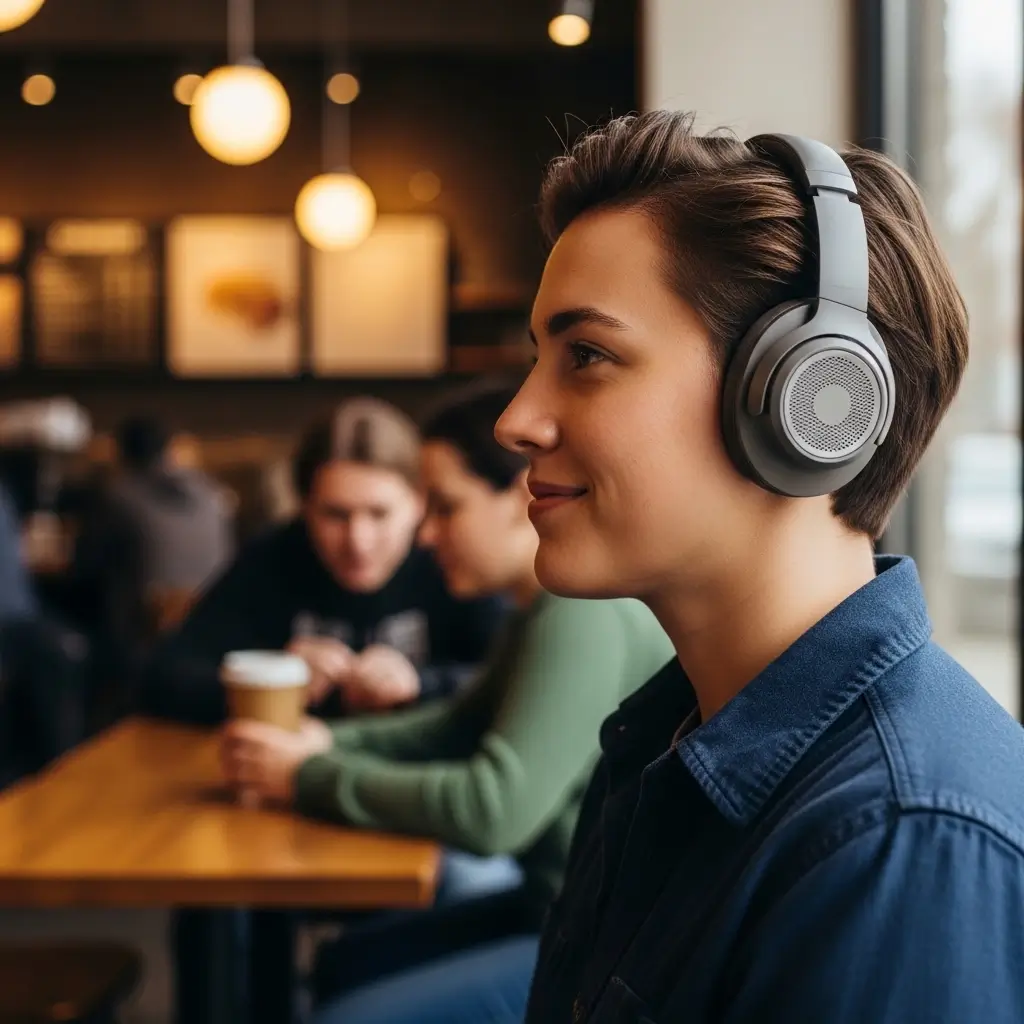
For many people, the world is simply too loud. This rings especially true for neurodivergent individuals, such as those with ADHD or autism, but it affects everyone to some degree.
Turning Down the World’s Volume
Our brains constantly process sensory input. Car horns, fluorescent light buzz, distant chatter—your brain tracks it all. Eventually, you hit a breaking point. This is sensory overload.
Wearing headphones without music acts as a volume knob for reality. It dampens sharp, jarring noises that trigger anxiety. It allows you to exist in public spaces without feeling battered by sound.
Why silence beats music here: Sometimes, adding music just adds more input. If your brain already feels overwhelmed, blasting rock music won’t help. You need a reduction in stimuli, not a replacement. Silence provides a soft, padded room for your mind.
Focus and Deep Work
Ever tried to write a complex email while someone talks about their weekend plans nearby? It’s impossible.
Music can help, but lyrical music often interferes with the language centers of the brain. Instrumental tracks work better, but total silence often reigns supreme. By blocking auditory distractions, you protect your working memory. You allow your brain to hold onto a thought without a random sound knocking it loose.
4. The “Spy Mode” Advantage

Okay, let’s get a little mischievous.
We have all done it. You sit in a public place, headphones on, looking like you are deep in a podcast. But the volume is at zero.
Eavesdropping with Cover
People assume you can’t hear them. They let their guard down. They discuss confidential business deals, messy breakups, or gossip about their friends. And you hear everything.
It provides a fascinating glimpse into human nature. You become a fly on the wall, observing the world without participating.
- The Coffee Shop Drama: You catch the entire trajectory of a first date going wrong.
- The Office Gossip: You learn who is leaving the company before the boss does.
- The Subway Confessional: You hear the unfiltered thoughts of strangers.
Is it slightly unethical? Maybe. Is it entertaining? Absolutely. Wearing headphones without music gives you a superpower: invisibility.
5. The “Safety Blanket” Effect

Headphones offer physical comfort. They feel like a hug for your head. This might sound strange if you don’t wear them often, but enthusiasts know the feeling.
Creating a Safe Space
In a chaotic environment, the pressure of earcups feels grounding. It provides a tactile sense of containment. If you feel anxious or vulnerable in public, this physical sensation helps stabilize you.
It creates a defined boundary between “me” and “the world.” You control that boundary. You decide when to take them off and engage. That control reduces anxiety significantly.
Warmth and Weather
Let’s not ignore the practical side. In the winter, over-ear headphones make excellent earmuffs. They keep your ears toasty while looking tech-forward. I have definitely walked outside with dead headphones just to keep the wind off my ears.
7. The Tech-Fashion Statement
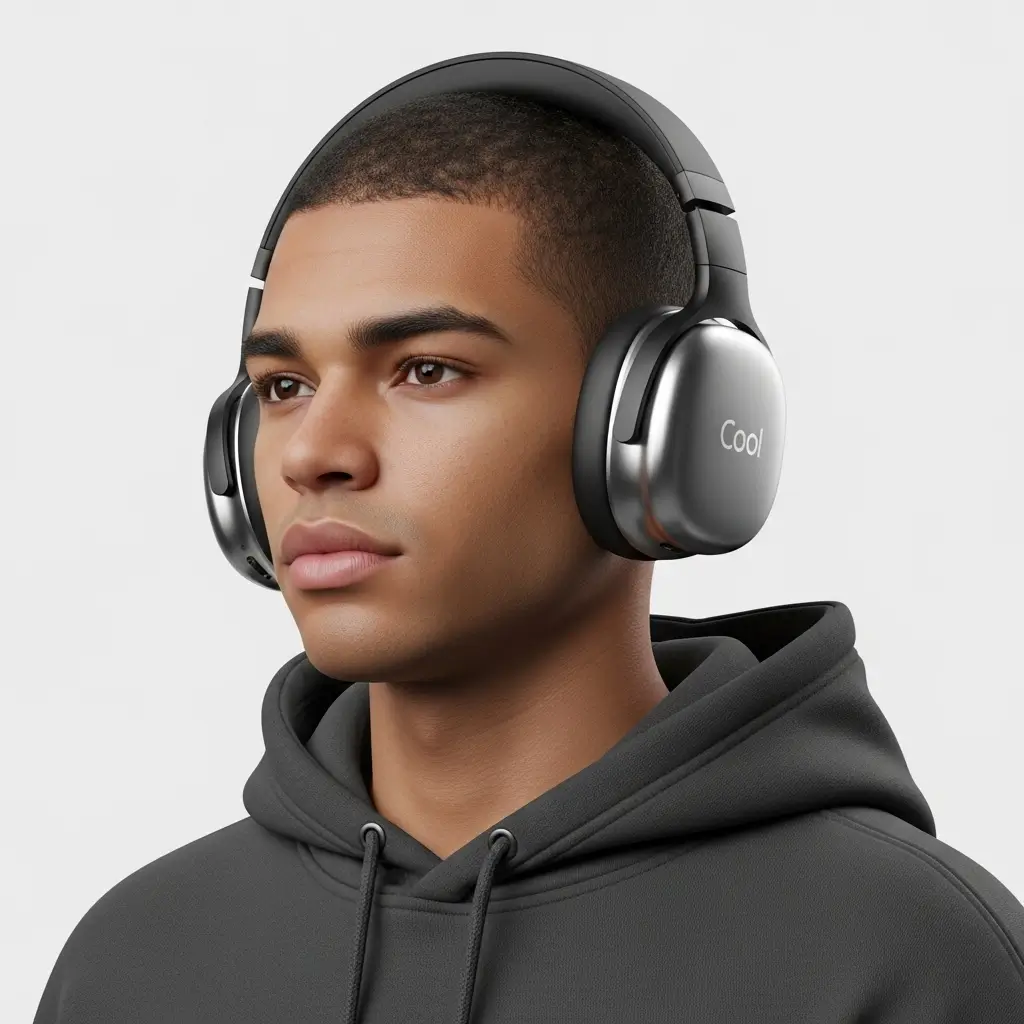
Headphones evolved from clunky tech accessories into legitimate fashion staples. Look at the rise of the Apple AirPods Max. People wear them around their necks or on their heads as a part of their outfit.
The “Cool” Factor
Wearing high-end headphones signals a certain lifestyle. It says you appreciate audio quality (even if you aren’t listening to it right now). It fits the “tech-nomad” or “creative professional” aesthetic.
Sometimes, we wear them just because they complete the look. You put on your hoodie, grab your coffee, and slap on the cans. It’s a uniform. If you take them off, you feel naked.
The Forgot-to-Charge Scenario
We must address the accidental silence. Sometimes, we wear headphones without music because we are idiots who forgot to charge them.
You leave the house, put them on, and realize the battery is dead. But you leave them on anyway. Why? Because taking them off and carrying them around your neck is annoying. Or because you still want the noise isolation, even without the active electronics. You commit to the look rather than admitting defeat.
8. Comparing the “Silent” Experience
Not all silence is created equal. The gear you use changes the quality of the quiet. Let’s look at how different types of headphones handle the “no music” lifestyle.
| Headphone Type | Passive Isolation | Active Noise Cancellation | Comfort for Long Wear | Verdict |
| Over-Ear (Closed Back) | Excellent. The earcups physically block sound. | usually High. This is where the best tech lives. | High. Padded cups distribute weight. | The King of Silence. Best for shutting out the world. |
| In-Ear (Earbuds) | Good, if you get a tight seal. | Good, but less effective on high-pitch sounds. | Medium. Ear canals get sore after a while. | Great for portability, less for total isolation. |
| On-Ear | Poor. They sit on the ear, letting noise leak in. | Usually weak or non-existent. | Low. They pinch your ears. | Skip these if you want true peace. |
Export to Sheets
The winner is clear: If you want to wear headphones without music, get a solid pair of over-ear, closed-back headphones with ANC. Brands like Sony, Bose, and Apple dominate this space for a reason. They don’t just play music well; they create silence well.
9. Why We Don’t Just Use Earplugs

You might ask, “If you want silence, why not just wear earplugs?”
That is a valid rhetorical question, but the answer is simple: Social dynamics and versatility.
- Earplugs look medical. If you sit in a cafe with orange foam sticking out of your ears, people think you have an ear infection or you are overly sensitive. Headphones look normal.
- Versatility. I might want silence now, but in ten minutes, I might want to watch a YouTube video. Headphones let me switch instantly. Earplugs are a one-trick pony.
- Ease of Removal. If someone does need to talk to me, sliding headphones off is a graceful motion. Digging an earplug out of my ear canal is… gross.
Headphones offer the option of sound, which is just as important as the silence itself.
10. The Mental Reset
We live in an attention economy. Apps, ads, and notifications constantly demand our brainpower. Silence is the only antidote.
Wearing headphones without music allows your mind to wander. You engage in “constructive daydreaming.” You process the events of the day. You let your subconscious work on problems without the interference of a podcast host telling you to buy a mattress.
Breaking the Dopamine Loop
When we listen to music or podcasts constantly, we feed our brains a steady stream of dopamine. Sometimes, we need to fast. We need to bore ourselves a little bit.
Wearing silent headphones helps break the addiction to constant stimulation. You learn to be alone with your thoughts again. It’s frightening at first, but eventually, it becomes liberating. You realize you don’t need a soundtrack to exist.
Conclusion: Embrace the Silence
So, the next time you see someone sporting a massive pair of headphones and looking staring blankly into space, don’t assume they are rocking out. They might just be enjoying the rarest luxury in the modern world: Silence.
We wear them to focus, to cope, to hide, and to eavesdrop. We wear them to signal boundaries and to look cool. But mostly, we wear them because the world is loud, and we have found the volume knob.
If you haven’t tried it yet, I highly recommend it. Put on your favorite cans, turn on the ANC, and don’t play a single note. Just listen to the quiet. You might find it’s the best track you have heard all day.